Save America’s Forgotten Equines Act of 2021 or the SAFE Act of 2021 This bill prohibits the transporting, receiving, possessing, purchasing, selling, or donation by a person of an equine (e.g., horse) that the person has reason to believe will be slaughtered for human consumption.
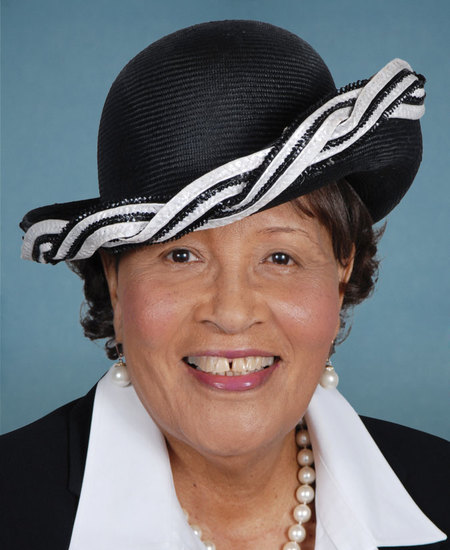
Rep. Alma S. Adams
Sponsored bills
James Weldon Johnson Commemorative Coin Act This bill directs the Department of the Treasury to mint and issue 400,000 $1 silver coins emblematic of James Weldon Johnson, an influential writer, diplomat, educator, lawyer, and civil rights activist. All surcharges received by Treasury from the sale of such coins must be paid to Historic Stanton, Inc. and the James Weldon Johnson Foundation.
Downpayment Toward Equity Act of 2021 This bill establishes a grant program through the Department of Housing and Urban Development for states and other entities to provide qualifying assistance to certain first-time, first-generation home buyers in purchasing their first homes. Qualifying assistance includes assistance for mortgage down payments, mortgage closing costs, reduction of mortgage interest rates, subsidies for shared equity homes, or for certain preoccupancy modifications to a home to accommodate persons with disabilities. The bill also establishes grant requirements regarding home buyer income, types of housing, homeowner occupancy, types of mortgages, and home buyer counseling.
Grandfamily Housing Act of 2021 This bill establishes grants through the Department of Housing and Urban Development for owners of intergenerational dwellings. Grants must be used to (1) provide services such as tutoring, health care services, and after-school care; (2) perform outreach to intergenerational families in the surrounding community; and (3) maintain spaces within the property to be used for programs and services for intergenerational families.
This resolution celebrates the 50th anniversary of the Federal Pell Grant program and expresses support for the designation of National Federal Pell Grant Day.
Accountability for Workplace Misconduct Act This bill requires employers to establish a process for receiving and investigating allegations of discrimination, harassment and retaliation. It also limits the use of nondisclosure clauses in certain settlement agreements.
HBCU Research, Innovation, Security, and Excellence Act This bill directs the Department of Defense (DOD) to establish a pilot program to increase capacity for historically Black colleges and universities (HBCUs) that are designated as high research activity status to achieve and maintain very high research activity status. High research activity status (known as R2 status) and very high research activity status (known as R1 status) are classifications by the Carnegie Classification of Institutions of Higher Education. DOD must award grants to support research activities in the areas of science, technology, engineering, or mathematics (STEM) and critical technologies. DOD may expand the program to other HBCUs beyond those that are classified as high research activity status if DOD determines that the program can support such an expansion. DOD must annually establish a list of research areas for STEM and critical technologies for which grant applicants may seek funding.
Good Jobs for Good Airports Act This bill addresses pay, benefits, and labor standards for certain airport service workers. Airport service workers include security officers, food service workers, cleaning staff, ticketing agents, and retail service workers. Specifically, the bill establishes a minimum wage and benefit standard for such airport service workers at large, medium, and small hub airports. It also prohibits small, medium, and large hub airports from accessing federal funds for airport development projects unless the airports certify that such airport service workers are paid no less than the higher of $15 per hour, the applicable state or local minimum wage and fringe benefits, or the prevailing wage and fringe benefits required under the Service Contract Act as established by the Department of Labor.
This resolution recognizes the historical significance to the nation of Juneteenth Independence Day (commemorating the end of slavery in the United States).
Recovering America’s Wildlife Act of 2022 This bill provides funding for the conservation or restoration of wildlife and plant species of greatest conservation need, including endangered or threatened species, and establishes related requirements. TITLE I--WILDLIFE CONSERVATION AND RESTORATION (Sec. 101) This title establishes and funds a subaccount of the Wildlife Conservation and Restoration Account, which was established under the Pittman-Robertson Wildlife Restoration Act. The subaccount must be used to support efforts of states, territories, or the District of Columbia to recover and manage wildlife and plant species of greatest conservation need. The Department of the Interior must use a portion of the funding from the subaccount for grants to state fish and wildlife departments, the District of Columbia fish and wildlife department, fish and wildlife departments of territories, nonprofit organizations, or regional associations of fish and wildlife departments. The grants must be used for innovative recovery efforts for species of greatest conservation need, species listed as endangered or threatened species, or the habitats of such species. Funding for the subaccount must supplement existing funds available to the states from funds distributed under the Dingell-Johnson Sport Fish Restoration Act and the Wildlife Conservation and Restoration Account. Recipients of the funding from the subaccount must match federal funds as specified by the title. The Government Accountability Office must study and report on the progress of states, territories, the District of Columbia, and Indian tribes in protecting species of greatest conservation need, endangered species, and threatened species. TITLE II--TRIBAL WILDLIFE CONSERVATION AND RESTORATION (Sec. 201) This title establishes and funds a Tribal Wildlife Conservation and Restoration Account to support Indian tribes' efforts to recover and manage wildlife and plant species of greatest conservation need. Indian tribes are not required to provide matching funds. TITLE III--ENDANGERED SPECIES RECOVERY AND HABITAT CONSERVATION LEGACY FUND (Sec. 301) This title establishes and funds through FY2026 the Endangered Species Recovery and Habitat Conservation Legacy Fund. The U.S. Fish and Wildlife Service must use the fund to (1) implement an Endangered Species Recovery Grant Program; (2) address its interagency consultation responsibilities under the Endangered Species Act of 1973; (3) work with nonfederal entities to conserve wildlife habitat and at-risk species, threatened or endangered species, or species proposed to be listed as threatened or endangered species; or (4) address the development and permitting of voluntary conservation agreements under such act. Amounts made available under the fund must supplement other federal amounts made available to carry out such activities. The President must annually submit to Congress, together with the annual budget of the United States, a list of threatened species and endangered species for which recovery plans will be developed or implemented with amounts from the Endangered Species Recovery and Habitat Conservation Legacy Fund. TITLE IV--REPORT (Sec. 401) Interior must also report on information concerning the amount of grants and contracts that were awarded or are allocated under this bill to Historically Black Colleges and Universities, Hispanic-serving educational institutions, tribally controlled colleges and universities, minority-serving educational institutions, minority-owned business enterprises, women-owned business enterprises, and community-based organizations that are principally administered by, operated by, or serving minority communities.