

Longshore and Harbor Workers' COVID-19 Compensation Act of 2022 This bill establishes a conclusive presumption that certain workers diagnosed with COVID-19 are entitled to workers' compensation benefits under the Longshore and Harbor Workers' Compensation Act (LHWCA). It also provides funding to reimburse employers for costs associated with LHWCA benefits related to COVID-19. The LHWCA provides for medical, disability, and survivor benefits for specified private-sector maritime workers. The presumption applies to workers who were diagnosed with COVID-19 between January 27, 2020, and January 27, 2024, and who, during the incubation period, faced a risk of COVID-19 exposure while carrying out job duties. In addition, the bill establishes and provides funding for the Longshore COVID-19 Fund to reimburse employers for costs related to such COVID-19 claims. To be reimbursed, employers must comply with applicable safety and health guidance to prevent occupational exposure to COVID-19.
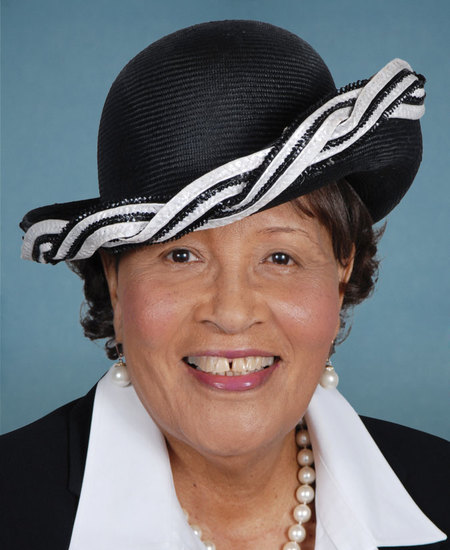
Rep. Alma S. Adams
Sponsored bills
Maximizing Outcomes through Better Investments in Lifesaving Equipment for (MOBILE) Health Care Act This bill allows a health center that currently receives funding through a Health Resources & Services Administration Health Center Program grant to use a New Access Point grant to set up a mobile unit regardless of whether the health center also establishes a permanent health care delivery site. New Access Point grants help health centers establish new delivery sites to provide comprehensive primary care to medically underserved populations. Under current law, health centers may only use the grants to set up a mobile unit if they also establish a permanent site.
Break the Cycle of Violence Act This bill establishes federal grant programs and related entities to support violence intervention initiatives. Specifically, the bill directs the Department of Health and Human Services (HHS) to award grants for coordinated community violence intervention initiatives in communities disproportionately impacted by homicides and community violence. HHS must also establish several related entities, including an Office of Community Violence Intervention to administer programs and activities related to violence intervention; the Community Violence Intervention Advisory Committee to advise and assist the office and HHS; and the National Community Violence Response Center to provide training and technical assistance, coordinate research, and develop data collection policies. Additionally, the bill directs the Department of Labor to award grants for job training and workforce programs in communities disproportionately affected by gun violence to connect youth ages 16 to 24 to in-demand occupations.
This concurrent resolution recognizes the disparity in wages paid to Black women and its impact on women, families, and the nation, and reaffirms Congress' support for ensuring equal pay and closing the gender wage gap.
Social Security Fairness Act of 2021 This bill repeals provisions that reduce Social Security benefits for individuals who receive other benefits, such as a pension from a state or local government. The bill eliminates the government pension offset , which in various instances reduces Social Security benefits for spouses, widows, and widowers who also receive government pensions of their own. The bill also eliminates the windfall elimination provision , which in some instances reduces Social Security benefits for individuals who also receive a pension or disability benefit from an employer that did not withhold Social Security taxes. These changes are effective for benefits payable after December 2021.
This resolution declares that the House of Representatives will not abandon the people of Puerto Rico and the U.S. Virgin Islands and the U.S. citizens who have relocated to the mainland in the aftermath of Hurricane Maria.
Maddy summaryHRES 1363 designates September 19, 2022, as "National Stillbirth Prevention Day" to recognize the approximately 23,000 stillbirths occurring annually in the U.S. and support efforts to reduce them. The resolution specifically acknowledges racial disparities in stillbirth rates, highlighting that Black, Hispanic, and Indigenous families face the highest risks. It requests the President issue a proclamation encouraging nationwide awareness, evidence-based prevention efforts, improved data collection, and education to help reduce stillbirths by 33% over time. This symbolic resolution does not create new laws but aims to raise public awareness and promote existing prevention strategies. It directly affects families impacted by stillbirth and advocates for greater attention to this public health issue.
Peace Corps Reauthorization Act of 2022 This bill reauthorizes through FY2024 and modifies operations of the Peace Corps. Changes include increasing the readjustment allowance paid to volunteers when their service terminates and providing statutory authority for an executive order that grants returned volunteers noncompetitive eligibility for federal civil-service positions. Additionally, the bill entitles returned volunteers to sixty days of health care benefits. The Peace Corps must also provide volunteers with information about enrolling in U.S. health plans before service termination and mental health care during and after service. The bill also includes provisions to address involuntary termination of Peace Corps service in emergencies, including by expediting re-enrollment of involuntarily terminated volunteers. The Peace Corps must also adequately insure volunteers' safety and must coordinate with the Department of State to periodically update agreements concerning the security of Peace Corps volunteers and staff abroad. The bill also authorizes Peace Corps to recruit domestically based volunteers to serve in the United States at the request of another agency or to provide services in a host country virtually, modifies the Peace Corps National Advisory Council's membership and functions, expands whistleblower protections for volunteers, increases the rate of pay that applies to a volunteer's workers compensation claim, requires Peace Corps to implement a zero tolerance drug use policy regarding volunteer involvement with illegal drugs, and emphasizes the use of the internet in Peace Corps programs. Furthermore, the bill requires reporting, including on the provision of mental health services to volunteers.
Sickle Cell Disease Treatment Centers Act of 2022 This bill directs the Department of Health and Human Services to award grants for establishing sickle cell disease treatment centers that operate using a hub-and-spoke framework to provide integrated, longitudinal health care for patients with the disease and individuals with sickle cell trait. Grant recipients must be networks comprised of (1) a hospital, clinic, or university health center; (2) at least one federally qualified health center or other health care organization that incorporates community health workers into the care team; and (3) at least one community-based organization. Sickle cell disease is an inherited blood disorder that can lead to pain, anemia, infections, and stroke.
Lowering Obstacles to Achievement Now Act or the LOAN Act This bill makes various changes to federal student aid programs, including by providing funding to increase the maximum Pell Grant award for each eligible student and reducing the number of monthly loan payments required for loan forgiveness under the Public Service Loan Forgiveness (PSLF) program.