

Maddy summaryHRES 51 is a non-binding House resolution expressing support for designating the week of January 22-28, 2023, as "National School Choice Week." It encourages parents to learn about K-12 education options (including public, charter, private, and homeschooling) and urges public awareness events during that week. The resolution does not create new policies, funding, or legal requirements - it solely serves as a symbolic expression of support for parental choice in education. It directly affects no individuals or entities, as it is a procedural resolution with no legislative force.
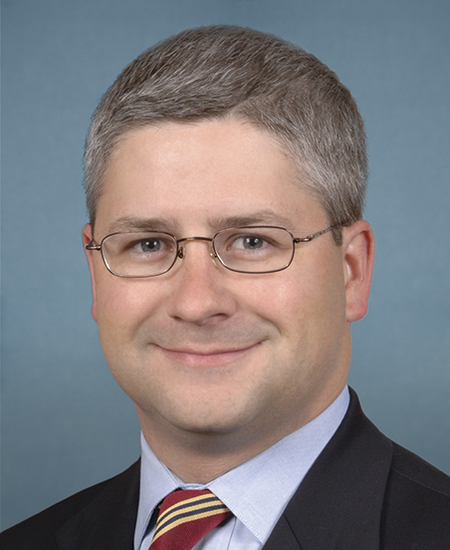
Rep. Patrick T. McHenry
Sponsored bills
Maddy summaryHJRES 8 proposes a constitutional amendment to permanently set the Supreme Court's size at nine justices. The bill would require any future changes to the Court's composition to follow this specific number, locking in the current structure. It does not alter the existing Court size (which has been nine since 1869) but aims to prevent future adjustments through legislative action. The amendment must be ratified by three-fourths of state legislatures within seven years to take effect. This is a procedural proposal focused on constitutional structure, not a direct policy affecting citizens or programs.
Maddy summaryThis bill establishes nationwide recognition for valid concealed carry permits. It allows permit holders from any state to carry concealed handguns in states that either issue such permits or don't ban concealed carry, provided they carry a photo ID and their valid permit. Key provisions include making presentation of a valid permit and ID prima facie evidence of compliance, shifting the burden of proof to prosecutors if challenged, and requiring courts to award attorney fees to successful defendants. It does not override state laws prohibiting concealed carry on private property or government lands, nor does it affect restrictions on federal lands like national parks.
Maddy summaryThis bill would block federal funding to any state or local government that permits non-citizens to vote in federal, state, or local elections. States and localities seeking federal funds must certify they do not allow non-citizen voting as a condition of receiving those funds. The rule applies only to new funding agreements entered into after the bill's enactment, not existing contracts. It directly affects state and local government budgets by tying federal financial assistance to compliance with citizenship requirements for voting.
This act designates the facility of the United States Postal Service located at 123 East Main Street, in Vergas, Minnesota, as the Jon Glawe Post Office.
This resolution promotes increased public awareness of motorcyclist profiling. The resolution also encourages the motorcyclist community and law enforcement to collaborate and communicate on efforts to end motorcyclist profiling.
Cardiovascular Advances in Research and Opportunities Legacy Act This act addresses research, education, and awareness concerning valvular heart disease and its treatment. This disease is caused by damage to or disease affecting any valve that controls blood flow in the heart. The National Institutes of Health may conduct or support research on the disease in consultation with the National Heart, Lung, and Blood Institute (NHLBI). The NHLBI must also conduct a workshop on mitral valve prolapse, which occurs when the valve between the chambers of the left side of the heart seals improperly. The Department of Health and Human Services (HHS) must develop best practices to treat valvular heart disease. HHS may also carry out other projects to increase education and awareness of the disease.
This act designates the community-based outpatient clinic of the Department of Veterans Affairs in Forest City, North Carolina, as the Master Sergeant Jerry K. Crump VA Clinic.
This bill modifies provisions of the Taxpayer First Act relating to taxpayer identity verification (i.e., the electronic Income Verification Express Service) and disclosures of taxpayer information. The bill requires the Internal Revenue Service (IRS) to implement a program that insures that certain disclosures of taxpayer returns or return information are accomplished only after a financial institution or other relevant entity (other than the taxpayer) has formed a reasonable belief that the identity of the taxpayer has been authenticated. The bill requires the IRS to ensure that the taxpayer information disclosure program complies with specified security standards and guidelines, including those relating to security and confidentiality of taxpayer information. The bill prohibits the IRS from requiring a taxpayer seeking a disclosure of information to access any information technology system or service used by the IRS for any purpose relating to a disclosure, including identity verification or the provision of electronic consent.
Financial Services Innovation Act of 2022 This bill addresses the regulation of financial products and services. Specifically, the bill allows persons intending to offer a financial innovation to petition specified financial regulatory agencies regarding existing areas of regulation. A petitioner may request a modification or waiver of an agency regulation. The bill sets forth requirements regarding the petition process, a safe harbor for petitioners from enforcement, and enforceable compliance agreements. Agencies must biannually publish a list of financial regulatory areas the agency would consider modifying or waiving through the petition process. The bill also establishes Financial Services Innovation Offices at these agencies to assist petitioners. These offices must also generally support the development of financial innovations and coordinate with other offices to share data.