

Maddy summaryThe VA Employee Fairness Act of 2024 modifies collective bargaining rules for employees of the Veterans Health Administration (VHA). It removes existing subsections (b), (c), and (d) from the law governing VHA employee bargaining and renumbers the remaining provision. This change streamlines the collective bargaining framework but does not alter the Secretary of Veterans Affairs' existing authorities over incentive pay and expedited hiring. The bill directly affects VHA employees by changing how their collective bargaining rights are structured under federal law. The law remains neutral, focusing solely on procedural adjustments to the existing bargaining framework.
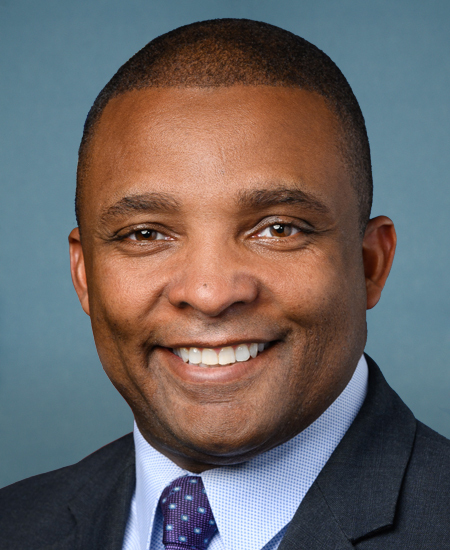
Rep. Donald G. Davis
Sponsored bills
Maddy summaryHRES 1542 is a symbolic resolution designating October 15, 2024, as "National Pregnancy and Infant Loss Remembrance Day" to honor individuals and families who have experienced pregnancy loss or infant death. It directly affects those who have endured such losses by affirming their experiences and promoting awareness of the emotional impact - citing that approximately 1 million pregnancies end in miscarriage, stillbirth, or newborn death annually in the U.S. The resolution requests the President issue a proclamation encouraging nationwide observance through community activities and support. It does not create new laws or funding but aims to reduce stigma and foster understanding around this issue.
Maddy summaryThe Scientific EXPERT Act of 2024 establishes a new process for FDA-led meetings focused on drug development for rare diseases. It requires the Reagan-Udall Foundation to convene at least four annual "science-focused drug development meetings" each year, bringing together medical experts, drug sponsors, patient groups, and FDA staff to discuss scientific challenges and align on approaches like clinical trial designs and endpoints. The bill mandates public reporting of meeting transcripts, summaries, and how FDA incorporated feedback into drug approval decisions, along with annual congressional reports on meeting impacts. This directly affects drug developers working on rare diseases, patient advocacy groups, and FDA review divisions, aiming to improve coordination in addressing unmet medical needs for rare conditions.
Maddy summaryHRES 1537 is a non-binding House resolution condemning Hamas' October 7, 2023, attacks on Israel, which killed over 1,200 people and took 251 hostages, including 7 Americans still held captive. It calls on Hamas to immediately surrender, cease attacks, and release all hostages unconditionally, while reaffirming Israel's right to self-defense. The resolution also urges international organizations to condemn Hamas' actions and address the global surge in antisemitism following the attacks. As a symbolic statement, it does not create new laws or alter policy but expresses congressional position. The bill specifically references the ongoing captivity of seven U.S. citizens: Edan Alexander, Itay Chen, Sagui Dekel-Chen, Gadi Haggai, Judith Weinstein Haggai, Omer Neutra, and Keith Siegel.
Maddy summaryThis bill amends the Clean Air Act to modify ethanol waiver processes and fuel volatility standards. It adds a new provision allowing fuel to enter commerce if it meets Reid Vapor Pressure requirements through similarity to certified vehicles or existing waivers, and adjusts vapor pressure limits from 10% to 10-15% in several sections. Small refineries that retired credits for 2016-2018 compliance years may now have those credits returned or applied to future years if their petitions remained pending as of December 1, 2022. The changes directly affect fuel retailers, ethanol producers, and small refineries by altering compliance pathways for fuel standards and credit management under the renewable fuel program.
Maddy summaryThe SIMSA Act of 2024 creates a new Schedule A for controlled substances in the U.S. Controlled Substances Act, targeting imported substances with chemical structures similar to existing controlled substances that produce comparable effects on the central nervous system. The Attorney General can temporarily place substances in Schedule A for up to 5 years (with possible 180-day extensions), requiring a review for permanent scheduling within 3 years. The bill increases penalties for violations involving Schedule A substances (up to 20 years in prison for first offenses, 30 years for repeat offenses) and requires specific labeling using IUPAC nomenclature. It also includes provisions for research on substances newly added to Schedule A and allows for sentencing review if such substances are later descheduled.
Maddy summaryHRES 1518 designates November 12 as Creutzfeldt-Jakob Disease (CJD) Awareness Day. The resolution supports raising public awareness about CJD, a rare, fatal brain disorder affecting approximately 1-2 people per million annually in the U.S., which causes rapid neurological decline and death within months to a year. It highlights the disease's impact on patients and families and emphasizes the need for ongoing research into prion diseases like CJD, which share similarities with Alzheimer's and related dementias. As a symbolic resolution (not a law), it does not create new programs or funding but aims to increase recognition of this rare condition.
Maddy summaryHR 9816, the Rural Housing Assistance Act, increases financial limits for rural homeowners seeking housing repair assistance through USDA programs. It directly affects low-income rural households applying for Section 504 loans and grants to repair their primary residences. The bill raises the maximum annual loan amount from $7,500 to $15,000 per household and sets new caps: $80,000 total for loans, $20,000 for grants, and $100,000 combined per household per dwelling. These changes aim to better cover repair costs by expanding available funding.
Maddy summaryThis bill prohibits landlords in privatized military housing from requiring service members or their families to sign nondisclosure agreements (NDAs) related to housing issues. It amends federal law to remove language that allowed such agreements, specifically eliminating requirements for NDAs "in connection with the provision by the landlord of services related to the housing unit." The change directly affects military families living in privatized housing by preventing landlords from silencing them about housing conditions. The key mechanism is the removal of mandatory NDA clauses, ensuring families can discuss housing problems without legal restrictions. This creates a clearer path for military families to report issues without fear of being bound by restrictive agreements.
Maddy summaryThis bill prohibits life insurance companies from discriminating against living kidney donors in policy terms, pricing, or coverage based solely on their donation status. Insurers cannot deny coverage, charge more, or limit benefits without proving additional health risks unrelated to the donation. Donors who face such discrimination can sue for damages and legal fees. The law does not override stronger state protections for donors.