

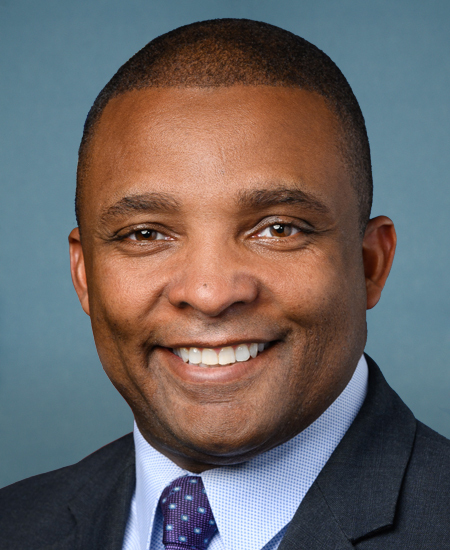
Photo of Donald G. Davis
D United States House · District 1 · North Carolina On the 2026 ballot

Rep. Donald G. Davis

Compare
Total votes
1,879
all sessions
Attendance
97%
53 missed
Near the chamber average
With party
82%
of cast votes
Among the lowest in the chamber
Bipartisan score
9%
crosses aisle rarely
Higher than 98% of chamber peers
Sponsored
1,618
bills & resolutions
Higher than 96% of chamber peers
Committees
7
assignments
1,618 bills and resolutions

Sponsored bills

Total
1,618
Primary
56
Co-sponsor
1,562
This page
1,618
matching current filters
Co-sponsor HR 1657
In committee · United States House · Co-sponsor
Humane Cosmetics Act of 2025

Maddy summaryHR 1657, the Humane Cosmetics Act of 2025, prohibits cosmetic companies from conducting or contracting animal testing for products sold in the U.S. beginning one year after the law takes effect. It also bans the sale or transport of cosmetics developed using such testing after that date, with limited exemptions (e.g., for foreign regulatory requirements or when no non-animal safety alternatives exist). The bill directly affects cosmetic manufacturers, retailers, and distributors by requiring them to shift to non-animal testing methods. The Food and Drug Administration (FDA) will enforce the law, including reviewing records and imposing civil penalties for violations.

In committee Feb 27, 2025 1 co-sponsor
Co-sponsor HR 1707
In committee · United States House · Co-sponsor
Grown in America Act of 2025

Maddy summaryHR 1707, the Grown in America Act of 2025, creates a new tax credit for agricultural businesses that use predominantly domestically produced inputs. The credit equals 25% of a business's domestic agricultural input costs (capped at $100 million annually), but only if the business meets a 3-year average threshold for domestic sourcing (starting at 50% in 2026 and rising to 85% after 2033). It directly affects food and agricultural producers who source inputs like crops or fish raised in the U.S. for products sold domestically without further processing. The bill defines "domestic agricultural input costs" as expenses for U.S.-produced commodities used in U.S.-made food products, excluding certain commodities listed by the Secretary of Agriculture.

In committee Feb 27, 2025 1 co-sponsor
Co-sponsor HR 1659
In committee · United States House · Co-sponsor
Truck Parking Safety Improvement Act

Maddy summaryHR 1659, the Truck Parking Safety Improvement Act, creates a federal grant program to address commercial truck parking shortages on highways. It authorizes $151 million annually (2025-2029) for states, local governments, tribes, and other eligible entities to build or improve public parking facilities for commercial motor vehicles. Projects must be on or near highways, include safety features, and provide free, publicly accessible parking - prohibiting fees for drivers. The bill also requires annual reports to Congress evaluating parking availability and project effectiveness.

In committee Feb 27, 2025 1 co-sponsor
Co-sponsor HR 1735
In committee · United States House · Co-sponsor
Early Action and Responsiveness Lifts Youth Minds Act

Maddy summaryThis bill amends federal mental health law to allow states to use up to 5% of their existing mental health funding for early intervention programs targeting children and adolescents. It requires states to include evidence-based prevention strategies in their plans - such as school-based support or community programs - to delay or reduce the severity of mental health issues before they become serious. States must report biennially to Congress on program details, demographics served (including age), and outcomes like reduced wait times for care. The law directly affects states receiving federal mental health funds and focuses on preventing escalation of mental health challenges in young people.

In committee Feb 27, 2025 1 co-sponsor
Co-sponsor HR 1695
In committee · United States House · Co-sponsor
Guarding Readiness Resources Act

Maddy summaryHR 1695, the Guarding Readiness Resources Act, clarifies how the National Guard Bureau handles reimbursement funds from states. It requires that funds received from states (including Puerto Rico, DC, Guam, and the Virgin Islands) for using military property must be credited to specific accounts and can only be used by the Department of Defense for repairing, maintaining, or replacing assets directly supporting National Guard units operating under state control. This bill directly affects states that reimburse the National Guard Bureau and ensures these funds are restricted to maintaining military assets, not general purposes.

In committee Feb 27, 2025 1 co-sponsor
Co-sponsor HR 1720
In committee · United States House · Co-sponsor
Hospice Recertification Flexibility Act

Maddy summaryThe Hospice Recertification Flexibility Act extends the ability for hospice providers to use telehealth for patient recertifications (verifying ongoing eligibility for hospice care) until December 31, 2027, instead of ending in March 2025. It specifies that telehealth recertifications will not apply in certain cases starting January 1, 2026, such as when patients are in areas with a hospice enrollment moratorium or when providers are under enhanced oversight. The bill also requires hospice claims for telehealth recertifications on or after January 1, 2026, to include a specific modifier or code indicating the telehealth encounter. This change directly affects hospice providers and their patients by modifying how remote eligibility checks are processed under Medicare.

In committee Feb 27, 2025 1 co-sponsor
Co-sponsor HR 469
Passed · United States House · Co-sponsor
Semiquincentennial Congressional Time Capsule Act

Maddy summaryHR 469, the Semiquincentennial Congressional Time Capsule Act, directs the Architect of the Capitol to create and bury a time capsule on the Capitol's West Lawn by July 4, 2026. The capsule will contain representative historical materials about the U.S. Semiquincentennial (250th anniversary), copies of key congressional milestones, a message from current Congress to future lawmakers, and other approved items determined by congressional leadership. It will remain sealed until July 4, 2276, when the Speaker of the House will present it to the next Congress for preservation or use. This procedural bill has no direct effect on citizens or policy, focusing solely on preserving historical materials for future Congress.

Passed Feb 27, 2025 1 co-sponsor
Co-sponsor HRES 166
In committee · United States House · Co-sponsor
Expressing support for the Iranian people's desires for a democratic, secular, and nonnuclear Republic of Iran, and condemning the Iranian regime's terrorism, regional proxy war, internal suppression, and for other purposes.

Maddy summaryHRES 166 is a non-binding House resolution expressing U.S. support for the Iranian people's desire for a democratic, secular, and nonnuclear republic. It condemns the Iranian regime's terrorism, regional proxy wars, internal suppression of ethnic and religious minorities, and human rights abuses - including executions and repression of women-led protests. The resolution calls for holding the regime accountable through sanctions, supports the Ten-Point Plan for Iran’s democratic transition, and urges protection for Iranian political refugees in Albania. It does not create new laws but affirms U.S. policy alignment with Iranian protesters' demands.

In committee Feb 26, 2025 1 co-sponsor
Co-sponsor HR 1641
In committee · United States House · Co-sponsor
Student Debt Alternative and CTE Awareness Act

Maddy summaryThis bill requires the Department of Education to publish detailed information about career and technical education (CTE) programs on its website, including average completion time, program cost, post-graduation employment rates, and state-specific funding opportunities under the Perkins Act. It also mandates adding a one-page summary of this CTE data to the FAFSA application, requiring students to acknowledge it during the initial financial aid process. The policy directly affects students applying for federal student aid by making CTE pathways visible early in their decision-making. No new funding is authorized for these requirements, relying instead on existing resources to update website content and integrate the FAFSA disclosure.

In committee Feb 26, 2025 1 co-sponsor
Co-sponsor HR 1620
In committee · United States House · Co-sponsor
Finn Sawyer Access to Cancer Testing Act

Maddy summaryThis bill expands Medicare, Medicaid, and CHIP coverage for specific cancer diagnostic tests, directly affecting cancer patients enrolled in these programs. It requires Medicare to cover genetic tests like DNA sequencing (80% of cost) and limits testing frequency to once at diagnosis, once for recurrence, and as needed for treatment planning. Medicaid and CHIP must include these tests as mandatory coverage starting January 1, 2027, with states given flexibility to comply via state legislation. The bill also mandates a new HHS education program to inform doctors and the public about genomic testing for cancer care.

In committee Feb 26, 2025 1 co-sponsor
Showing 591 to 600 of 1,618 bills
Previous 1 … 59 60 61 … 162 Next