

Maddy summaryHR 1884, the Veterans Fellowship Act, establishes a 5-year pilot program to help veterans transition to civilian careers. It authorizes the Labor Department to select 3-5 states to partner with nonprofits, placing veterans in employer-sponsored fellowships lasting up to 20 weeks. Each fellow receives a monthly stipend and a potential path to long-term employment with the same employer. The program requires a $10 million annual federal appropriation (2025-2029) and mandates a Comptroller General report on its effectiveness after four years. This directly affects participating veterans, states, and nonprofit organizations involved in the pilot.
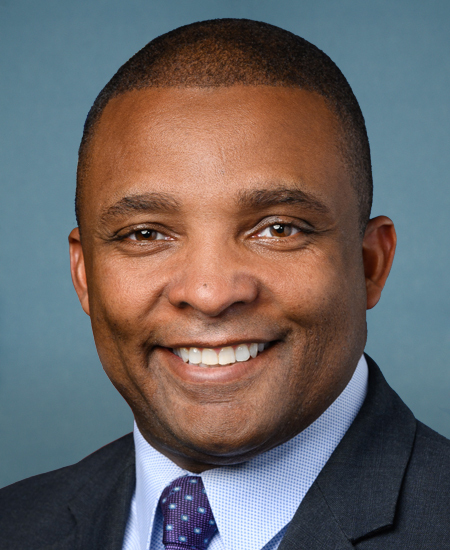
Rep. Donald G. Davis
Sponsored bills
Maddy summaryThis bill strengthens the Voting Rights Act of 1965 by clarifying how to prove voting discrimination and expanding requirements for preclearance of voting changes. It establishes new standards for determining when voting practices dilute minority voting strength or deny/abridge voting rights, requiring plaintiffs to show specific conditions for vote dilution claims and including factors like historical discrimination and racial polarization in court analyses. The bill modifies the criteria for determining which states and political subdivisions must seek preclearance for voting changes, and adds new transparency requirements for jurisdictions to publicly disclose changes to voting qualifications, polling locations, and election districts. It directly affects states and local governments that implement voting policies, particularly those with a history of voting rights violations or that make changes to voting qualifications, procedures, or district boundaries. The bill aims to prevent discriminatory voting practices by providing clearer standards for courts and requiring greater transparency in voting rule changes.
Maddy summaryThe Richard L. Trumka Protecting the Right to Organize Act of 2025 strengthens workers' organizing rights by making it an unfair labor practice for employers to threaten permanent replacement of striking workers, discriminate against workers who support unions, or require employees to attend employer campaigns unrelated to their job duties. It expands the definition of "employee" to make it harder for companies to classify workers as independent contractors and requires employers to post notices about workers' rights in conspicuous locations. The bill establishes a new electronic voting system for union elections, creates a 90-day bargaining period before mediation can be requested, and increases penalties for violations of labor laws. These changes are intended to make it easier for workers to form unions and negotiate better wages and working conditions.
Maddy summaryThis bill directs the State Department to review restrictions on U.S. citizens traveling to North Korea, particularly focusing on humanitarian visits for Americans with relatives there (estimated at 100,000 people). It requires the Secretary of State to submit a report within 180 days detailing how the U.S. will pursue a formal end to the Korean War through diplomatic negotiations with North and South Korea. The bill also mandates a separate report outlining a clear roadmap for achieving a binding peace agreement, including necessary negotiation steps and key stakeholders. These provisions aim to address the ongoing state of war, which the bill states prevents formal U.S.-North Korea relations and family reunifications.
Maddy summaryHR 1827, the Child Care Availability and Affordability Act, increases tax benefits for families with child care needs and employers providing child care. It raises the employer child care credit from 25% to 50% of expenses with a maximum credit of $500,000 (up from $150,000), and creates a new household and dependent care credit allowing families to claim up to 50% of eligible child care expenses, with the credit amount reduced as income increases, up to $8,000 for multiple children. The bill directly affects working parents with children under 13 or dependents needing care, as well as employers offering child care benefits. Key provisions include expanded credit amounts, new definitions for qualifying care, and special rules for small businesses.
Maddy summaryThis bill adds a new tax provision (Section 139J) to the Internal Revenue Code, excluding interest income from certain rural and agricultural loans from taxable income for qualifying lenders. It directly affects banks, insurance companies, and farm credit entities that provide loans secured by rural or agricultural property (including qualifying single-family homes in rural areas), while excluding loans to foreign adversary entities (like those linked to China, Russia, or Iran). The law requires lenders to report on how this tax exclusion impacts loan interest rates, with a Treasury report due to Congress within five years. The policy change aims to reduce lenders' tax burden on these specific loans, potentially lowering costs for borrowers in rural communities.
Maddy summaryHR 668 establishes a 3-year pilot program to coordinate healthcare between the Department of Veterans Affairs (VA) and Medicare for veterans enrolled in both systems (called "covered veterans"). It assigns each participating veteran a VA case manager to create personalized care plans, navigate VA and Medicare services, and coordinate medical records to improve access, outcomes, and cost efficiency. The program tracks specific metrics like care costs, patient satisfaction, and service gaps, and requires quarterly reports to Congress on its implementation and results. The pilot will operate across 3-5 VA facilities in diverse settings (rural, urban, medically underserved areas) to test coordination models before potentially expanding the approach.
Maddy summaryThis bill requires every Department of Veterans Affairs (VA) hospital and urgent care facility to employ at least one Sexual Assault Nurse Examiner (SANE) or a qualified healthcare provider to perform sexual assault forensic examinations. It mandates that after such an examination, veterans must be verbally referred to mental health services, either at the VA hospital or via a Veterans Care Agreement if VA wait times exceed 30 days. The bill explicitly prohibits any reduction in other patient care responsibilities for VA staff while implementing these requirements. The law directly affects veterans seeking sexual assault care at VA facilities by ensuring access to specialized examiners and timely mental health referrals.
Maddy summaryHRES 153 is a ceremonial resolution expressing condolences to the families and loved ones of the 67 victims who died in two aviation incidents: American Eagle Flight 5342 and U.S. Army flight PAT 25, which crashed near Washington, D.C.'s Reagan National Airport on January 29, 2025. It specifically honors the victims - many connected to Wichita, Kansas (known as the "Air Capital of the World") - and extends sympathies to affected communities including Wichita, Kansas, and the National Capital Region. The resolution also commends first responders who aided in the recovery efforts. As a non-binding expression of sympathy with no policy changes, it does not affect laws or regulations.
Maddy summaryThe Care Across Generations Act establishes a competitive grant program to fund multigenerational programs in long-term care facilities. It allows eligible facilities (like nursing homes or assisted living centers) to operate or partner with licensed childcare centers on-site, or coordinate activities between childcare and senior care programs. Facilities receiving grants must evaluate program effectiveness and report outcomes to the federal government, including impacts on both children and seniors. The bill aims to create integrated community spaces where childcare and senior care services coexist, directly benefiting facilities seeking to expand such services and the communities they serve.