

Maddy summaryHR 2947, the Deafblind DATA Act, requires the U.S. Census Bureau to publish an annual data table starting in 2026 showing individuals who reported both hearing and vision loss in the American Community Survey. The table will include demographic details (sex, race, age) and economic factors (employment, education, income, poverty status) for people in each state, without revealing personal identifiers. This bill directly addresses the lack of centralized data on the deafblind population (estimated at 10,000 children and 40,000 adults by the National Center on Deafblindness), which currently prevents accurate service planning. The Census Bureau must also report to Congress within 180 days on feasibility of expanding such data collection. The Act does not change existing services but aims to improve understanding of this population's needs through better data.
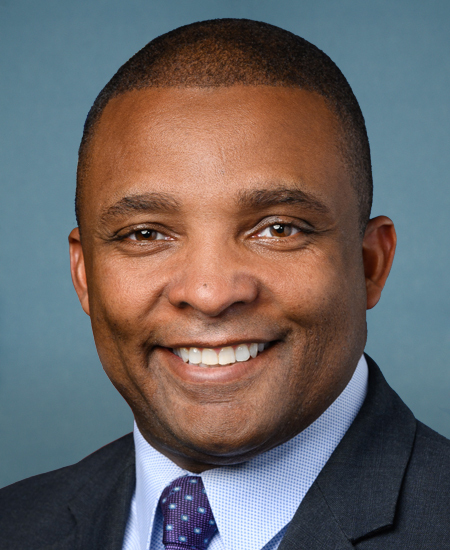
Rep. Donald G. Davis
Sponsored bills
Maddy summaryHR 2910, the Youth Workforce Readiness Act of 2025, establishes a federal grant program to fund community-based organizations in creating after-school and out-of-school-time workforce readiness programs for youth aged 6-18. The bill authorizes $100 million annually (2026-2030) to support activities like career pathway planning, paid work experiences (including apprenticeships), occupational skill training aligned with local job needs, and employer partnerships. It directly affects eligible youth - particularly those in underserved communities - and requires grantees to coordinate with schools, employers, and local workforce boards, while mandating youth councils to advise on program design. The program emphasizes measurable outcomes, including improved school attendance, skill development, and transitions to postsecondary education or employment.
Maddy summaryThis bill amends the Elementary and Secondary Education Act to explicitly include accounting education as part of a well-rounded K-12 curriculum. It requires schools to develop and strengthen programs teaching accounting, including increasing access to high-quality accounting courses for students from groups historically underrepresented in accounting careers. The key provision inserts specific language into existing law, directing schools to promote accounting career awareness and expand course availability through grade 12. This directly affects K-12 students, particularly those from underrepresented backgrounds, by making accounting education a recognized component of career-focused learning.
Maddy summaryThe Neighborhood Homes Investment Act creates a new tax credit for developers who build or rehabilitate affordable homes in distressed communities. The credit is calculated as the lesser of (1) the difference between development costs and sale price, (2) 40% of development costs, or (3) 32% of the national median home price. It applies only to homes sold to qualified homeowners with income up to 140% of area median income in designated "qualified census tracts" (areas with high poverty rates, low median home values, and low median family income). Developers must meet quality standards and repay the credit if the home is sold within 5 years of the affordable sale. This credit aims to address the "value gap" that prevents housing development in distressed communities by incentivizing affordable home construction and rehabilitation.
Maddy summaryHR 2831, the Small Business Energy Loan Enhancement Act, doubles the maximum loan amounts for certain small business energy projects under the Small Business Investment Act of 1958, raising the cap from $5.5 million to $10 million for two specific loan categories. This directly affects small businesses seeking financing for energy-related investments, such as efficiency upgrades or renewable energy installations. The bill requires the Small Business Administration (SBA) to annually report to Congress on which industries and geographic areas receive these loans. These changes aim to increase access to capital for qualifying energy projects without altering eligibility criteria.
Maddy summaryThe Hospital Adoption Education Act of 2025 requires the Secretary of Health and Human Services to develop and distribute accessible adoption education resources for healthcare workers in hospitals and birthing centers. It mandates professional development training for care providers on sensitive adoption interactions, including digital and print materials, and establishes a committee of adoption experts to create these resources. The bill directly affects healthcare staff (like nurses and case managers) who interact with prospective birth mothers and adoptive families, aiming to improve their understanding of adoption. It authorizes $5 million (2026-2029) for implementation and requires a 3-year evaluation to track hospitals adopting the training and care providers receiving education.
Maddy summaryHR 2810, the Family Cord Blood Banking Act, allows individuals to deduct payments for private umbilical cord blood or tissue banking as medical expenses on their federal taxes. It directly affects people who pay for these private banking services through accredited providers meeting specific federal safety standards. The bill amends the tax code to add private cord banking services as a qualifying medical expense, effective for tax years starting after December 31, 2024. This change simplifies tax treatment for those using private cord banking without altering insurance coverage or public banking access.
Maddy summaryHR 2812, the Youth Lead Act, amends an existing agricultural act to allocate $5 million annually for youth organizations from fiscal years 2026 through 2030. This funding is specifically designated for youth organizations under the amended section of the Agricultural Research, Extension, and Education Reform Act of 1998. The bill does not create new eligibility rules or define "youth organizations," but directs existing federal funds toward this purpose. It directly affects qualifying youth organizations that receive these annual grants. The provision is a straightforward funding mechanism with no other substantive policy changes.
Supplemental Oxygen Access Reform Act of 2025 or the SOAR Act of 2025 This bill establishes certain requirements with respect to the payment and provision of supplemental oxygen and related services under Medicare. For example, the bill provides for separate payments, indexed to inflation, of oxygen and related equipment, supplies, and services under Medicare (rather than under the competitive acquisition program). It also specifically covers services that are provided by respiratory therapists under Medicare and provides for an additional payment adjustment for these services. Additionally, the bill (1) requires the Centers for Medicare & Medicaid Services to develop an electronic template for providers to use when prescribing oxygen and related equipment, supplies, and services; and (2) establishes certain rights for beneficiaries receiving these items and services, such as the right to choose their suppliers and to receive clear communications and be informed about the services provided.
Maddy summaryThis bill amends federal law (18 U.S.C. § 1362) to explicitly include broadband internet access service infrastructure under protections against destruction. It directly affects entities that operate or damage broadband facilities, such as internet service providers, infrastructure owners, and individuals who might intentionally destroy such infrastructure. Key changes expand the definition of protected "means of communication" to specifically cover broadband facilities and broaden liability to include "any other person or entity" beyond government-controlled systems. The amendment removes the prior exemption for infrastructure used in "military or civil defense functions," ensuring all broadband infrastructure receives equal legal protection. This strengthens existing penalties for damaging broadband networks but does not create new regulatory requirements for service providers.