

Maddy summaryHR 3349, the Healthy Dog Importation Act, requires importers to provide electronic health documentation before bringing dogs into the U.S., including proof of vaccinations, parasite treatment, health status, and permanent identification. It directly affects importers and import transporters who move dogs across borders, mandating these requirements for all dogs except specific exceptions like returning U.S. military working dogs or dogs under veterinary care. Key mechanisms include a centralized database for tracking health certificates, annual reporting on import origins and purposes, and penalties for noncompliance. The bill also establishes a 18-month timeline for implementing regulations and repeals outdated importation rules under the Animal Welfare Act.
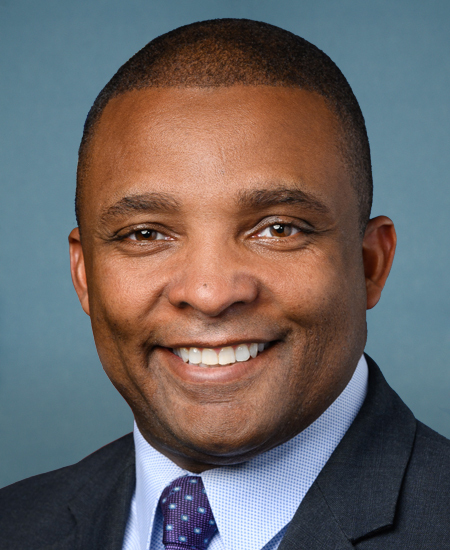
Rep. Donald G. Davis
Sponsored bills
Maddy summaryHR 3270, the Air Traffic Control Workforce Development Act of 2025, aims to strengthen the pipeline of air traffic controllers by improving training programs and retention. It provides $20 million annually (2026-2031) for colleges to develop specialized curricula and equipment through the Enhanced-Collegiate Training Initiative program, allowing graduates to be hired noncompetitively as controllers. The bill also establishes a committee to modernize training curricula and the Air Traffic Skills Assessment exam, while creating retention bonuses for certified controllers and mental health training for medical examiners. These changes directly affect colleges offering air traffic control programs, prospective controllers, and current FAA air traffic controllers.
Maddy summaryThe Fiscal Commission Act establishes a 16-member commission to address the federal government's fiscal challenges, including reducing debt and deficit while aiming for a debt-to-GDP ratio of 100% by 2039. The commission must educate the public about fiscal issues, identify policy recommendations, and submit a detailed report with legislative language by November 2026 (with possible extension to April 2027). This report requires bipartisan approval, needing at least two Republican and two Democratic members for majority support. If approved, the recommended legislation would become an "implementing bill" considered under expedited procedures in both congressional chambers. The commission's work directly affects federal budget decisions and public awareness of fiscal policy, with hearings required to gather input from experts and government officials.
Maddy summaryHR 3277, the Ensuring Lasting Smiles Act, requires group health plans and health insurance issuers to cover medically necessary outpatient and inpatient treatments for congenital anomalies or birth defects primarily affecting the eyes, ears, teeth, mouth, or jaw. This includes reconstructive procedures, dental/orthodontic support during treatment, and follow-up care, but excludes purely cosmetic surgery not tied to a medical diagnosis. Cost-sharing (like copays) for these services must not be stricter than for other medical benefits. The law takes effect for plan years beginning January 1, 2026, and mandates insurers to provide notice about this coverage to beneficiaries.
Maddy summaryThe SERVICE Act of 2025 creates a federal grant program to fund local veteran response teams within law enforcement agencies. These teams, composed of veteran officers and community partners, will provide 24/7 crisis response for at-risk veterans, coordinate with the Department of Veterans Affairs, and offer mental health training focused on military-related issues like PTSD. The program directly affects veterans in crisis and law enforcement agencies that receive grants to establish these teams. It requires teams to track outcomes and share best practices, with funding tied to existing crime control grants for fiscal years 2026-2030.
Maddy summaryThis bill amends the Higher Education Act to clarify eligibility for Public Service Loan Forgiveness (PSLF). It corrects a technical wording error in the law that previously required borrowers to be *currently employed* in public service at the time of application. The change specifies that borrowers only need to have *completed* 10 years (120 payments) of qualifying public service employment to qualify. This directly affects federal student loan borrowers working in government or nonprofit roles who were previously disqualified due to the outdated wording. The amendment removes a barrier preventing eligible borrowers from receiving loan forgiveness they earned.
Maddy summaryHR 3295, the Federal Animal Research Accountability Act of 2025, requires research institutions receiving National Institutes of Health (NIH) funding to submit detailed annual reports on animal use. These reports must categorize animals by species and specify: (1) animals used with no pain/distress, (2) animals with pain/distress using pain relief, (3) animals with pain/distress where pain relief would interfere with research, and (4) animals bred but not yet used. The NIH must make these reports publicly accessible online within three months of submission through a searchable database. The bill applies to all NIH-funded research entities and takes effect two years after enactment.
Maddy summaryHR 3304, the Providing Child Care for Police Officers Act of 2025, establishes a federal grant program to help law enforcement agencies provide child care for officers' minor children during nonstandard shifts. The program awards competitive 3-year grants to state or local "lead agencies" (like state child care offices) to fund child care services through eligible law enforcement agencies or consortia, with 20% of funds reserved for small agencies (under 200 officers). Grants cover startup costs, provider training, sick child care, facility construction, and other needs, requiring local matching funds (10% to 33% over three years). The program is authorized for $24 million annually from 2026-2030 and includes studies to evaluate its impact on child care access for officers and other first responders.
Maddy summaryHR 3229, the Foreign Agents Transparency Act, amends the Foreign Agents Registration Act (FARA) to strengthen transparency for individuals working as agents of foreign governments. It clarifies that agents must register for the entire period they represent a foreign principal (not just during active work) and allows the Attorney General to issue compliance orders even after an agent’s work with a foreign principal ends. The bill also requires the Attorney General to submit annual, machine-readable reports to Congress detailing enforcement actions against agents, including the names of individuals involved, the rationale for actions, and their current status. These changes apply to agents who served within five years before the bill’s enactment.
Maddy summaryThe Law Enforcement Officers Equity Act expands federal retirement benefits to include specific non-traditional law enforcement roles, such as IRS tax collection officers, U.S. Postal Inspection Service employees, Department of Veterans Affairs police, and certain U.S. Customs and Border Protection seized property specialists. It directly affects current and future federal workers in these positions who were previously excluded from law enforcement retirement benefits under the Federal Employees Retirement System and Civil Service Retirement System. The bill allows current employees (incumbents) to elect to count prior service toward retirement by paying a deposit covering the difference in retirement contributions, with government contributions made over 10 years. It also temporarily exempts law enforcement officers from mandatory separation for three years after enactment.