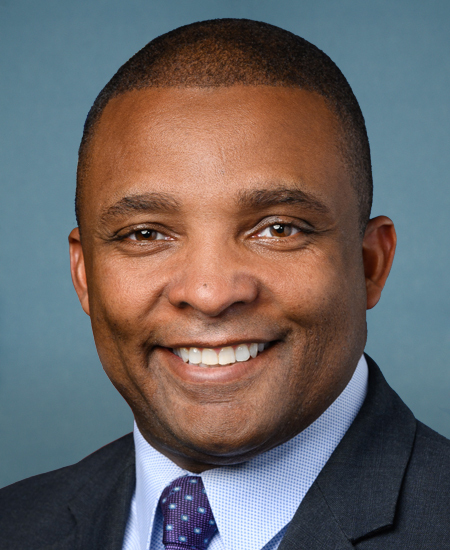
Photo of Donald G. Davis
D United States House · District 1 · North Carolina On the 2026 ballot

Rep. Donald G. Davis

Compare
Total votes
1,879
all sessions
Attendance
97%
53 missed
Near the chamber average
With party
82%
of cast votes
Among the lowest in the chamber
Bipartisan score
9%
crosses aisle rarely
Higher than 98% of chamber peers
Sponsored
1,618
bills & resolutions
Higher than 96% of chamber peers
Committees
7
assignments
1,618 bills and resolutions

Sponsored bills

Total
1,618
Primary
56
Co-sponsor
1,562
This page
1,618
matching current filters
Co-sponsor HR 5145
In committee · United States House · Co-sponsor
Bipartisan Premium Tax Credit Extension Act

Maddy summaryHR 5145, the Bipartisan Premium Tax Credit Extension Act, extends enhanced federal subsidies for health insurance premiums through 2026. It directly affects individuals purchasing coverage through health insurance marketplaces who qualify for premium tax credits. The bill extends the period for increased credit amounts (through 2026 instead of 2025) and maintains the rule allowing tax credits for households earning above 400% of the federal poverty level. These changes apply to tax years beginning after December 31, 2025.

In committee Sep 4, 2025 1 co-sponsor
Co-sponsor HR 4669
In committee · United States House · Co-sponsor
FEMA Act of 2025

Maddy summary# Summary of Proposed FEMA Reform Legislation (FEMA Act of 2025) This comprehensive legislative document proposes significant reforms to the Robert T. Stafford Disaster Relief and Emergency Assistance Act, with four main sections addressing: ## 1. Disaster Assistance Reforms - **Expanded eligibility** for assistance, including clarifying that absence of a fixed address doesn't disqualify individuals from sheltering assistance - **Improved rental assistance** with consideration of local post-disaster rent increases - **Direct assistance** for those unable to use financial assistance, with no requirement to show other assistance can cover costs (except insurance) - **Enhanced notices** for applicants, including documentation of denial decisions - **Clarification of displacement assistance** eligibility, stating insurance shouldn't be considered a duplication of benefits ## 2. Mitigation Program Enhancements - **Preapproved project mitigation plans** requiring states to develop plans with peer review processes - **Improved allocation of funds** with formulas prioritizing vulnerable communities, high-risk areas, and rural/economically distressed communities - **Resilient buildings** requirements for housing retrofits using the latest building codes - **Streamlined application processes** for hazard mitigation funds across multiple programs - **Study on mitigation benefits** to evaluate cost savings and effectiveness ## 3. Transparency and Accountability Measures - **Public dashboards** for both individual assistance (431) and public assistance (432) showing application status, approvals, denials, and funding - **Transparency requirements** for disaster declarations with detailed justifications for approvals/denials - **GAO studies** on numerous topics including: - Identity theft in disaster assistance (409) - Insurance utilization for public assistance facilities (410) - Wildfire management plans (411) - Effectiveness of alerting systems (412) - Cost savings of repair/rebuilding reforms (415) - **Prohibition on political discrimination** in assistance distribution ## 4. Workforce and Operational Improvements - **Study on workforce retention** in noncontiguous communities - **Pilot program** for preliminary damage assessments in remote communities - **Fast-moving disasters working group** to develop best practices for rapid response The legislation focuses on improving efficiency, transparency, and effectiveness of disaster relief programs while prioritizing vulnerable populations and communities with higher risk of disasters. It also emphasizes data-driven decision making through required studies and reports to continuously improve disaster management policies.


In committee Sep 3, 2025 1 co-sponsor
Co-sponsor HR 5031
In committee · United States House · Co-sponsor
Preserving Patient Access to Long-Term Care Pharmacies Act

Maddy summaryHR 5031, the *Preserving Patient Access to Long-Term Care Pharmacies Act*, requires Medicare Part D plans and Medicare Advantage plans with drug coverage (MA-PD) to pay long-term care pharmacies an additional supply fee for each specified prescription dispensed to eligible beneficiaries during 2026 ($30) and 2027 (adjusted for inflation). This fee must be paid alongside existing reimbursements for drug costs and dispensing, with a $10,000 penalty for non-payment. The bill also directs the GAO to study long-term care pharmacy payment sustainability under Medicare, analyzing historical payments for brand/generic drugs and dispensing fees. It aims to ensure uninterrupted pharmacy access for Medicare beneficiaries in long-term care settings, particularly in rural areas.

In committee Aug 22, 2025 1 co-sponsor
Co-sponsor HR 4996
In committee · United States House · Co-sponsor
FORWARD Act

Maddy summaryThis bill permits military retirees and veterans receiving 100% disability compensation (under 38 U.S.C. §1114) to contribute a portion of their retired pay or disability benefits to the Thrift Savings Plan (TSP). It applies only to individuals who already held a TSP account before separating from service. The bill requires the Federal Retirement Thrift Investment Board, with Defense and Veterans Affairs, to issue implementing regulations within 180 days of enactment. This creates a new pathway for these veterans to grow retirement savings using their existing benefit payments.

In committee Aug 19, 2025 1 co-sponsor
Co-sponsor HR 4972
In committee · United States House · Co-sponsor
Create Accountable Respectful Environments (CARE) for Children Act

Maddy summaryThis bill establishes "cottage family homes" as a new foster care placement option under federal law. It defines these homes to require trauma-informed care, prohibit seclusion/restraints (except brief physical restraint for safety), ensure children can participate in normal activities, and maintain family connections. The bill removes time limits on foster care payments for children in these homes and gives states flexibility to classify them as foster family homes if they serve children's best interests. It directly affects foster children placed in cottage homes and the agencies operating them.

In committee Aug 15, 2025 1 co-sponsor
Co-sponsor HR 1569
In committee · United States House · Co-sponsor
CATCH Fentanyl Act

Maddy summaryHR 1569, the CATCH Fentanyl Act, establishes a 5-year pilot program to test nonintrusive inspection technologies at U.S. border ports of entry. The bill requires U.S. Customs and Border Protection (CBP) to evaluate at least five technology enhancements - including AI, machine learning, and quantum sensing - to improve detection of contraband, drugs, weapons, and threats while reducing inspection wait times. Pilot projects must prioritize cost-effective solutions that integrate with existing systems, adhere to privacy protections, and report findings on performance metrics like detection rates and throughput. The program mandates detailed reports to Congress on effectiveness, implementation plans, and privacy impacts, using existing funding without new appropriations.

In committee Aug 15, 2025 1 co-sponsor
Co-sponsor HR 4957
In committee · United States House · Co-sponsor
Rural Housing Service Reform Act of 2025

Maddy summaryThis bill establishes a permanent Rural Housing Preservation and Revitalization Program to help maintain affordable housing in rural areas. It provides mechanisms for loan restructuring, extends rental assistance contracts for up to 20 years, and streamlines application processing for housing assistance. The bill also adjusts rural housing voucher programs to better respond to tenant needs, including allowing for interim and annual reviews of voucher amounts based on income changes. These changes directly affect low-income rural residents living in federally assisted housing and the housing providers who manage these properties.

In committee Aug 12, 2025 1 co-sponsor
Primary HRES 641
In committee · United States House · Lead sponsor
Expressing support for community health centers during National Health Center Week, August 3 through August 9, 2025, and encouraging all Americans to take part in this week by visiting their local community health center and celebrating the important partnership between America's community health centers and the communities they serve.

Maddy summaryHRES 641 is a symbolic House resolution designating August 3-9, 2025, as National Health Center Week. It expresses support for community health centers (CHCs) and encourages all Americans to visit their local CHC during this week to celebrate their role in providing accessible, comprehensive care. The resolution highlights CHCs’ service to vulnerable populations and their economic impact but does not create new laws or funding. It is purely a statement of recognition, not a policy change.

In committee Aug 8, 2025 0 co-sponsors
Co-sponsor HR 4935
In committee · United States House · Co-sponsor
Rural Microentrepreneur Assistance Program Act of 2025

Maddy summaryThis bill increases funding limits for the Rural Microentrepreneur Assistance Program, directly helping small rural business owners seeking loans. It raises the maximum loan amount from $50,000 to $75,000 and changes loan coverage to 100% for eligible project costs (with a 50% cap on real estate improvements like construction). The program's funding period is extended from 2019-2023 to 2026-2030. These changes aim to provide greater financial support for rural entrepreneurs starting or expanding small businesses.

In committee Aug 8, 2025 1 co-sponsor
Co-sponsor HRES 638
In committee · United States House · Co-sponsor
Designating the week of August 3 through August 9, 2025, as "National Farmers Market Week".

Maddy summaryHRES 638 designates the week of August 3-9, 2025, as "National Farmers Market Week" to recognize the role of farmers markets in U.S. communities. The resolution highlights that farmers markets generated $1.7 billion in farmer income in 2020, grew from 1,755 to 8,771 nationwide between 1994 and 2019, and support local economies, sustainable farming, and food access. It does not create new laws or funding but formally supports the designation and acknowledges how these markets connect urban and rural communities while aiding farmers and consumers. This commemorative resolution directly affects farmers markets, their operators, and communities that rely on them for economic and social engagement.

In committee Aug 5, 2025 1 co-sponsor
Showing 301 to 310 of 1,618 bills
Previous 1 … 30 31 32 … 162 Next