

Maddy summaryThis bill limits states to redrawing congressional districts only once after each federal census, unless a court orders changes to comply with the Constitution or the Voting Rights Act. States could later adjust districts through court-ordered processes, legislative action, or statewide referendums, but not before the next census. It explicitly states the law does not affect how states conduct elections for state or local offices. The rule applies to redistricting following the 2020 census and future cycles.
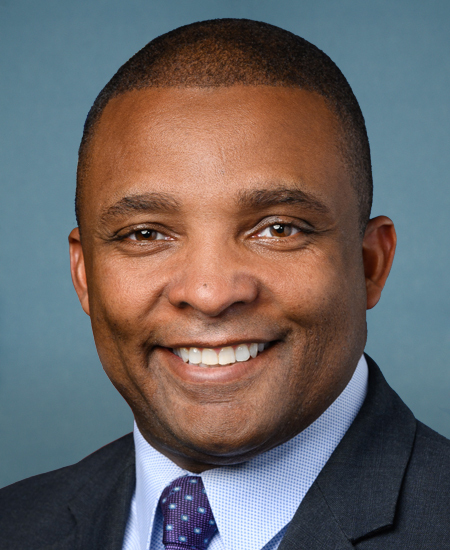
Rep. Donald G. Davis
Sponsored bills
Maddy summaryHR 5819, the Balancing Incentives Act of 2025, requires patent owners to explicitly consent before a petition for inter-partes review or post-grant review of their patent can be filed. This bill amends sections 312(a) and 322(a) of U.S. patent law to add a new requirement that the patent owner must consent to the filing of such petitions. The change directly affects patent owners by giving them control over whether their patents face these administrative reviews. The bill makes no other policy changes and focuses solely on modifying the procedural requirement for initiating these patent reviews.
Maddy summaryThis bill establishes a five-year pilot program to provide hyperbaric oxygen therapy (HBOT) to veterans diagnosed with traumatic brain injury (TBI) or post-traumatic stress disorder (PTSD). The program, limited to three Veterans Health Administration networks, uses donations to fund HBOT through approved medical providers. It specifically requires HBOT devices to be FDA-approved or under investigational exemption. The pilot ends five years after the bill's enactment, with no annual funding restrictions. The bill directly affects eligible veterans seeking this specific treatment option.
Maddy summaryHR 5738, the "No Budget, No Pay Act," requires Congress to approve a budget resolution and pass all annual appropriations bills by October 1 each fiscal year. If Congress misses this deadline, members of Congress (excluding the Vice President) lose pay for the period of non-compliance, as determined by the House and Senate Budget and Appropriations Chairs. The bill specifies that no retroactive pay is allowed for any period during which Congress was out of compliance. This directly affects all elected members of Congress by linking their pay to timely budget passage, creating a financial incentive for meeting the October 1 deadline.
Maddy summaryThis bill allows states and local jurisdictions to give hiring preference to veterans and people with disabilities when filling election worker positions. It also requires jurisdictions to not deny employment to nonresident military spouses or dependents (spouses/dependents of service members living away from the voting area) solely based on lack of local residency. The key provisions clarify that election workers can be chosen based on veteran status, disability status, or military family ties, without requiring local residence for military-connected applicants. This directly affects election workers, veterans, people with disabilities, and military families seeking these roles. The bill makes these hiring preferences explicit in election administration rules.
Maddy summaryHRES 795 is a non-binding resolution condemning Hamas for the October 7, 2023, attacks that killed over 1,200 people, took 251 hostages (including Americans), and involved sexual violence. It demands Hamas immediately surrender and release all remaining hostages - specifically noting 48 people still held, including two U.S. citizens. The resolution also affirms Israel’s right to self-defense, calls for humanitarian aid to reach Palestinians, and condemns global antisemitism following the attacks. As a symbolic congressional statement, it does not create new laws or alter policies.
Maddy summaryHR 5715, the October 7 Gold Medal Act, authorizes Congress to award a gold medal to American hostages and victims of the October 7, 2023 Hamas attack in Israel. The medal, designed by the Treasury Secretary, will be presented to recognize their suffering and sacrifice, with the medal displayed at the Weitzman National Museum of American Jewish History in Philadelphia. The bill also permits the sale of bronze duplicates to cover costs, but does not create new legal obligations or policy changes. This is a ceremonial recognition, not a substantive legislative measure.
Maddy summaryHR 5714, the October 7 Remembrance Education Act, directs the U.S. Holocaust Memorial Museum to create a curriculum for secondary schools within 180 days of enactment. The curriculum will cover Hamas’ October 7, 2023 attacks on Israel, the history of antisemitism, the spread of anti-Israel rhetoric on campuses and social media following the attacks, and how denial or distortion of antisemitism occurs. It specifically requires schools to address the attacks' brutality, historical context of antisemitism, and contemporary manifestations of hate speech. The Museum must submit a report on the curriculum to Congress within 180 days of completion or by 3 years after the bill’s enactment. This bill affects secondary schools using the curriculum and focuses on educational content about the attacks and related antisemitism.
Maddy summaryThis bill adds Medicare coverage for multi-cancer early detection screening tests (blood or biological tests analyzing cell-free DNA) starting January 1, 2028. It directly affects Medicare beneficiaries aged 68 and older (starting in 2028, with the age limit increasing by 1 year annually), requiring tests to be FDA-cleared and deemed reasonable/necessary by the Secretary for early cancer detection across multiple organ sites. Payment will initially match current stool DNA test rates before 2031, then shift to a lower rate or new payment system after 2031, with limits preventing more than one test per year. The bill explicitly states it does not alter coverage for existing cancer screenings like breast, colorectal, or prostate cancer tests.
Fair Pay for Federal Contractors Act of 2025 This bill provides back pay to employees of federal contractors who lost pay due to a lapse in appropriations (i.e., government shutdown) in FY2026. Specifically, the bill provides appropriations for federal agencies that are subject to a lapse in appropriations in FY2026 to adjust the price of contracts to compensate federal contractors for providing back pay to employees who were affected by the lapse in appropriations. The agencies must adjust the price of any contract for which the contractor stopped, suspended, delayed, or interrupted all or part of the work under the contract due to the lapse in appropriations. The price adjustment must compensate the contractor for reasonable costs incurred to (1) compensate employees who were furloughed or laid off, were not working, or experienced a reduction of hours or compensation due to the lapse in appropriations; or (2) restore paid leave taken by employees during the lapse in appropriations if the contractor required or permitted employees to use paid leave as a result of the lapse in appropriations. The maximum amount of weekly compensation of an employee for which an adjustment may be made under this bill may not exceed the lesser of (1) the employee's actual weekly compensation, or (2) $1,442 (or a lesser amount pro-rated for an employee who works less than 40 hours per week). The bill also requires the Office of Federal Procurement Policy to submit a report to Congress on the adjustments made under this bill.