

Maddy summaryThe Kidney Care Access Protection Act (HR 6214) improves access to innovative kidney treatments for Medicare beneficiaries with end-stage renal disease. It extends transitional payment adjustments for new renal dialysis drugs and devices for at least three years, then establishes permanent payment adjustments based on actual utilization and costs. The bill also expands Medicare's annual wellness benefit to include kidney disease screening and increases access to kidney disease education services through renal dialysis facilities. These changes apply to Medicare beneficiaries, renal dialysis facilities, and healthcare providers, with key provisions effective January 1, 2026.
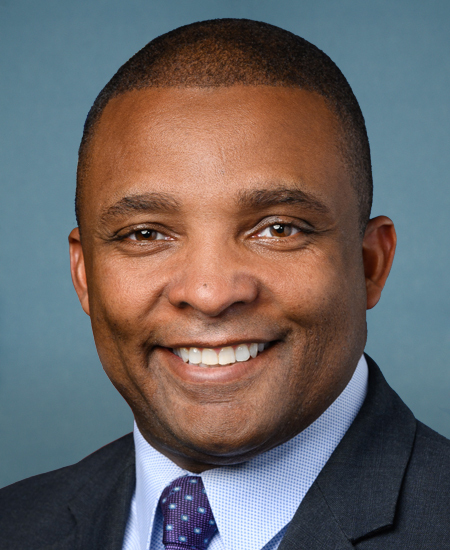
Rep. Donald G. Davis
Sponsored bills
Maddy summaryHR 6190, the Tax Cuts for Veterans Act of 2025, makes military retirement pay and disability-related benefits tax-free for veterans and active-duty service members. The bill amends the tax code to exclude all retirement pay (under Titles 10 and 14 U.S. Code) and disability compensation (under Titles 10, 14, 37, or 38 U.S. Code) from taxable income. This directly affects veterans receiving retirement or disability benefits, including those with combat-related injuries, by eliminating federal income tax on these payments. The policy change applies to taxable years beginning after the bill's enactment.
Maddy summaryHR 6231 extends and enhances the Work Opportunity Tax Credit (WOTC), a federal tax credit for employers hiring from specific target groups like veterans, SNAP recipients, and summer youth workers. The bill extends the program through 2030 (from 2025), increases the credit rate to 50% for certain wages (up from 40%), adds automatic inflation adjustments to the $6,000 wage cap, and expands eligibility to include military spouses and removes age limits for SNAP recipients. Key provisions also modify credit calculations for veterans, agricultural workers, and long-term assistance recipients, while requiring federal agencies to promote hiring from target groups in critical sectors like healthcare and construction. This bill directly affects employers who hire from these designated groups, making the tax credit more valuable and accessible.
Maddy summaryHR 3965, the PEARL Act, requires U.S. Customs and Border Protection (CBP) to establish a 3-year pilot program adopting dogs from local animal shelters to train as support dogs for CBP’s existing Support Canine Program. The program must begin within 60 days of the bill’s enactment and will terminate three years after its start date. This bill directly affects CBP by creating a new mechanism to source and train support dogs from animal shelters, rather than purchasing or acquiring them through other means. The legislation focuses solely on implementing this specific pilot program with no additional policy changes.
Maddy summaryHR 2259 requires the Secretary of Homeland Security to develop a national strategy for securing K-12 schools against terrorism within one year of enactment. This strategy must coordinate existing federal programs, identify security vulnerabilities in schools, and outline actions to address them, while avoiding duplication with current efforts. The Secretary must annually update the strategy through 2033 and report to relevant congressional committees, including certification if no updates are made. The bill directly affects federal agencies (Homeland Security, Education, and others) responsible for school security coordination, but does not create new funding or alter school operations.
Maddy summaryThe Housing Financial Literacy Act of 2025 modifies mortgage insurance premiums for first-time homebuyers who complete approved financial literacy counseling programs. It requires that such counseling be completed before signing a mortgage application or sales agreement. The bill reduces the mortgage insurance premium by 25 basis points (0.25%) below the standard rate established by the Secretary of Housing and Urban Development. This change directly affects first-time homebuyers who participate in qualifying housing counseling programs.
Maddy summaryThe Protect American Fisheries Act of 2025 amends the Magnuson-Stevens Act to expand the definition of "fishery resource disaster" to include "economic cause." This means U.S. fisheries affected by foreign activities - such as illegal fishing, predatory pricing, or harmful subsidies that distort markets or disrupt sustainable harvests - can now qualify for disaster assistance. The bill requires documentation of how foreign actors' actions specifically harm U.S. fishing communities' operational or economic viability. It directly affects U.S. commercial and recreational fisheries facing market disruptions from foreign entities, enabling them to access federal aid previously limited to natural or anthropogenic disasters.
Maddy summaryThe Fisheries Data Modernization and Accuracy Act of 2025 reforms how recreational fishing data is collected and used by the National Marine Fisheries Service. It establishes a standing committee with the National Academies to advise on data collection methods, sets a 30% threshold for data reliability (percent standard error), and requires consultation when data falls below this level. States can develop their own data collection programs that may replace federal MRIP data when they meet specific standards, and the bill creates a grant program to help states improve their systems. The bill requires annual reports on implementation and data quality improvements, affecting recreational fishing management across all coastal states and federal fisheries agencies.
Maddy summaryHRES 891 is a ceremonial House resolution supporting the designation of National Rural Health Day, observed annually on the third Thursday of November (November 20, 2025, this year). It recognizes rural health care providers and the challenges rural communities face in accessing care, citing issues like hospital closures and workforce shortages. The resolution does not create new policies, funding, or requirements; it solely expresses the House's support for the day's goals and commitment to improving rural health accessibility. This is a non-binding acknowledgment, not a legislative action with concrete policy changes.
Maddy summaryThe Biomanufacturing Excellence Act of 2025 establishes a National Biopharmaceutical Manufacturing Center of Excellence under the National Institute of Standards and Technology (NIST). It authorizes $120 million in funding for fiscal year 2026 to competitively award a grant to eligible entities - such as public-private partnerships, universities, or consortia - to create this center. The center will advance biopharmaceutical manufacturing technology, strengthen U.S. supply chains for medicines, and develop workforce training programs, with a focus on products critical to national security, health, and economic security. It requires annual progress reports to Congress and mandates the center to collaborate with manufacturers, research institutions, and educational partners to scale innovative production methods.