

Maddy summaryHR 6718, the Professional Student Degree Act, amends the Higher Education Act to clarify the definition of a "professional degree" for federal education purposes. It replaces the previous definition with a new section listing specific degrees that meet the criteria, including Pharmacy (Pharm.D.), Law (J.D.), Medicine (M.D.), Dentistry (D.D.S.), Veterinary Medicine (D.V.M.), and others like Nursing (D.N.P.) and Business Administration (M.B.A.). This definition requires degrees to signify both completion of academic requirements for professional practice (often requiring licensure) and skills beyond a bachelor's level. The bill directly affects students pursuing these designated degrees by formally recognizing them under federal education law, without creating new programs or changing funding.
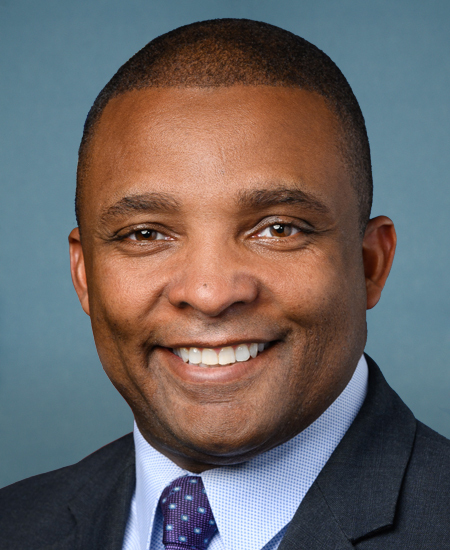
Rep. Donald G. Davis
Sponsored bills
Maddy summaryThe Protect America's Workforce Act cancels an executive order issued on March 27, 2025, that excluded certain groups from federal labor-management relations programs, making it legally unenforceable. It also ensures that all collective bargaining agreements between federal agencies and labor unions, which were active as of March 26, 2025, remain fully effective until their agreed terms expire. This directly affects federal agencies, labor unions, and the employees covered by these agreements. The bill prevents federal funds from being used to implement the canceled executive order while preserving existing labor agreements.
Maddy summaryHR 6651 requires federal agencies (including the FBI, Homeland Security, and USPS) to develop a coordination strategy within 180 days to improve information sharing on organized retail crime networks. The strategy must help state/local law enforcement gather evidence for prosecutions and boost collaboration between agencies, retailers, and crime task forces. Agencies must submit a joint report within 180 days, and the Comptroller General will publish a separate report on private-sector law enforcement cooperation within one year. The bill defines "organized retail crime" as coordinated theft or fraud for interstate distribution of stolen goods, directly affecting federal agencies, law enforcement, and the retail industry.
Maddy summaryThe Safer Schools Act of 2025 establishes a 5-year federal pilot program providing grants to public schools for security risk assessments and physical security upgrades. Public schools that have experienced violent incidents involving multiple people are prioritized for both types of grants. Schools receiving assessment grants must first identify vulnerabilities, while improvement grants fund specific security measures like panic alarms linked to local police, with federal funds covering up to 50% of costs. The program allocates $600 million total ($100M-$300M annually), requiring schools to submit financial reports and post-implementation safety surveys, with annual congressional reports tracking outcomes.
Maddy summaryThis bill prohibits social media platforms from offering disappearing messages (like Snapchat's ephemeral chats) to users under 17. It requires platforms to provide parents with easily accessible tools to approve or block private messaging for minors, with direct messaging disabled by default for users under 13. App stores must also display clear warnings to parents when minors attempt to download apps with private messaging features. These requirements apply to all social media platforms defined under the bill, with enforcement handled by the Federal Trade Commission.
Maddy summaryHR 6575, the CommonGround for Affordable Health Care Act, extends enhanced premium tax credits for health insurance through 2026, directly benefiting millions of lower and middle-income Americans purchasing coverage through the ACA marketplace. The bill modifies income thresholds for premium subsidies, creating new income tiers that maintain or increase financial assistance for households earning up to 1,000% of the poverty level. It includes provisions to prevent fraud in health insurance exchanges by imposing civil penalties on agents and brokers who provide false information, and requires transparency in pharmacy benefit manager contracts to improve drug pricing accountability. The legislation also extends the annual open enrollment period for health insurance exchanges for the 2026 plan year, allowing more time for people to enroll or change coverage.
Maddy summaryThis bill authorizes the placement of a memorial honoring women who supported the U.S. war effort during World War II (including those working as pilots, engineers, and in factories) on federal land in Washington, D.C. It specifies two locations: Area I on the National Mall map or the National Mall Reserve, as defined in existing law. The memorial was previously authorized by Section 702 of the 2023 Consolidated Appropriations Act (Public Law 117-328), and this bill clarifies its permitted locations.
Maddy summaryHR 6509, the SAFE Drugs Act of 2025, limits how often pharmacies and healthcare providers can create custom drug formulations that copy standard medications. It restricts compounding any drug essentially identical to a commercially available product to no more than 20 times per month for individual patients. The bill also requires pharmacies compounding such drugs for out-of-state patients more than 20 times monthly to report details to the FDA, while exempting hospital pharmacies. These changes aim to improve safety oversight of non-standard drug compounding by setting clear limits and reporting rules.
Maddy summaryThe Bipartisan Health Insurance Affordability Act extends and modifies premium tax credit rules to make health insurance more affordable for people with household incomes up to 700% of the poverty line, with specific provisions for different income tiers. The bill requires pharmacy benefit managers to pass through 100% of rebates to health plans, establishes transparency requirements for drug pricing, and creates mechanisms to prevent fraud in health insurance exchanges. It also extends the annual open enrollment period for 2026 and allows qualified Exchange enrollees to establish health savings accounts, with options to prepay annual premiums or direct part of their premium tax credit into a health savings account.
Maddy summaryHR 6490 establishes a pilot program (the "Push-Text Initiative") for members of the Marine Corps stationed at installations in Okinawa, Japan, and their adult dependents. The program automatically enrolls eligible participants using their provided contact information (with an opt-out option) to send text messages containing specific, timely information. Key topics covered include military spouse employment resources, childcare services, TRICARE benefits, and updates on DOD policies affecting service members and dependents. The Secretary of Defense must report on the program's implementation, participation, costs, and potential for Department-wide expansion by October 2027.