

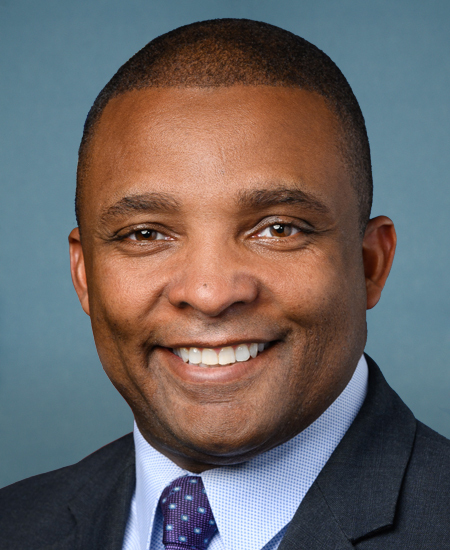
Photo of Donald G. Davis
D United States House · District 1 · North Carolina On the 2026 ballot

Rep. Donald G. Davis

Compare
Total votes
1,879
all sessions
Attendance
97%
53 missed
Near the chamber average
With party
82%
of cast votes
Among the lowest in the chamber
Bipartisan score
9%
crosses aisle rarely
Higher than 98% of chamber peers
Sponsored
1,618
bills & resolutions
Higher than 96% of chamber peers
Committees
7
assignments
1,618 bills and resolutions

Sponsored bills

Total
1,618
Primary
56
Co-sponsor
1,562
This page
1,618
matching current filters
Co-sponsor HR 2539
In committee · United States House · Co-sponsor
New Markets Tax Credit Extension Act of 2023

Maddy summaryHR 2539 permanently extends the New Markets Tax Credit (NMTC) program, which incentivizes private investment in low-income communities. The bill directly affects community development financial institutions (CDFIs) and investors who fund projects in designated low-income areas by ensuring the credit remains available beyond 2025. Key provisions include automatically adjusting the credit amount annually for inflation starting in 2024 and clarifying that the credit can be used to offset alternative minimum tax liability. This maintains the program’s effectiveness in channeling capital to underserved neighborhoods without changing eligibility or funding levels.

In committee Apr 6, 2023 1 co-sponsor
Co-sponsor HR 2537
In committee · United States House · Co-sponsor
BAH Restoration Act

Maddy summaryThis bill amends the law governing Basic Allowance for Housing (BAH) for uniformed service members stationed in the U.S. It changes the calculation method so that BAH amounts must equal the actual monthly cost of adequate housing in each location, as determined by the Secretary of Defense. This directly affects active-duty service members and their families who receive BAH for housing. The key provision replaces the previous formula with a requirement that BAH payments match local housing costs for members in the same pay grade and dependency status. The change ensures BAH reflects current housing expenses rather than an older calculation method.

In committee Apr 6, 2023 1 co-sponsor
Co-sponsor HR 2510
In committee · United States House · Co-sponsor
To amend the Internal Revenue Code of 1986 to make the credit for the adoption of special needs children refundable.

Maddy summaryHR 2510 makes the federal adoption credit for children with special needs refundable, meaning families who adopt such children can receive a cash refund even if they don't owe federal income tax. The bill directly affects adoptive parents who claim the credit for children with special needs, allowing them to get the full credit amount as a refund rather than just reducing their tax bill. Key provisions define "special needs adoption expenses" as qualified costs for these adoptions and adjust tax code language to treat this portion as a refundable credit. The changes apply to taxable years beginning after December 31, 2023.

In committee Apr 6, 2023 1 co-sponsor
Co-sponsor HR 1495
In committee · United States House · Co-sponsor
Precision Agriculture Loan Program Act of 2023

Precision Agriculture Loan Program Act of 202 3 This bill establishes a loan program within the Farm Service Agency to assist agricultural producers in purchasing precision agriculture equipment and technology, such as geospatial mapping, data management and analytics software, and network connectivity products and solutions. Precision agriculture refers to managing, tracking, or reducing crop or livestock production inputs, including seed, feed, fertilizer, chemicals, water, and time, at a heightened level of spatial and temporal granularity to improve efficiencies, reduce waste, and maintain environmental quality.

In committee Apr 5, 2023 1 co-sponsor
Co-sponsor HR 1459
In committee · United States House · Co-sponsor
PRECISE Act

Maddy summaryThe PRECISE Act (HR 1459) modifies existing USDA loan and conservation programs to specifically support farmers and ranchers adopting precision agriculture technologies. It expands eligibility for loan guarantees and increases payments under the Environmental Quality Incentives Program (EQIP) and Conservation Stewardship Program (CSP) for practices involving precision agriculture - such as GPS-guided equipment, soil sensors, and data management software. The bill defines "precision agriculture" broadly to include technologies that reduce input use (like fertilizer or water) while improving efficiency, and requires USDA agencies to coordinate on these programs. Directly affects farmers using EQIP/CSP, with special provisions for socially disadvantaged and beginning farmers. It does not create new programs but adjusts existing funding mechanisms to prioritize precision agriculture adoption.

In committee Apr 4, 2023 1 co-sponsor
Co-sponsor HR 1465
In committee · United States House · Co-sponsor
Violet’s Law

Maddy summaryHR 1465, "Violet’s Law," requires federal research facilities to establish standards for placing eligible animals (dogs, cats, primates, guinea pigs, hamsters, rabbits) no longer needed for research with animal rescue organizations, sanctuaries, shelters, or individuals. Federal departments and agencies operating such facilities must create these placement standards within one year of the law's enactment. The law mandates that animals must be vet-certified as healthy (free of infectious disease or physical issues) before placement and prohibits facilities from using animals for commercial trade, breeding, or public exhibitions. This policy directly affects federal research facilities and aims to provide permanent homes for research animals through defined, safe pathways.

In committee Apr 4, 2023 1 co-sponsor
Co-sponsor HR 1472
In committee · United States House · Co-sponsor
Plant Biostimulant Act

Maddy summaryHR 1472, the Plant Biostimulant Act, removes plant biostimulants from regulation under the Federal Insecticide, Fungicide, and Rodenticide Act (FIFRA). This means products like certain microbial treatments or plant-boosting substances (defined as materials improving plant processes without relying on nutrient content) will no longer require EPA approval as pesticides. The bill also directs the EPA to update regulations within 120 days and requires the Secretary of Agriculture to conduct a study on how plant biostimulants improve soil health, including reducing nutrient runoff and supporting carbon sequestration. The study must be reported to Congress within one year of funding.

In committee Apr 4, 2023 1 co-sponsor
Co-sponsor HR 1436
In committee · United States House · Co-sponsor
To provide additional funding for scholarships for students at 1890 institutions.

This bill provides specified funds to the 1890 Scholarships Program for FY2025 and each succeeding year for student scholarships. The bill also permanently reauthorizes the 1890 Scholarships Program. This National Institute of Food and Agriculture program provides grants to 1890 Institutions (i.e., historically Black colleges and universities that belong to the U.S. land-grant university system) for students who intend to pursue a career in the food and agricultural sciences.

In committee Apr 4, 2023 1 co-sponsor
Co-sponsor HR 1781
In committee · United States House · Co-sponsor
Ensuring Access to General Surgery Act of 2023

Maddy summaryThe Ensuring Access to General Surgery Act of 2023 directs the Health Resources and Services Administration (HRSA) to study how to accurately identify areas in the U.S. with insufficient access to general surgeons, particularly in rural and underserved communities. The study will evaluate current methods for designating health professional shortage areas and propose a new approach using hospital service areas, surgeon-to-population ratios, and factors like wait times and transportation access. HRSA must report findings to Congress within one year and may later establish a formal process to designate "general surgery shortage areas" through rulemaking. If implemented, this would publicly list affected areas to better target resources addressing surgical care gaps.

In committee Mar 31, 2023 1 co-sponsor
Co-sponsor HR 2454
In committee · United States House · Co-sponsor
United States-Israel PTSD Collaborative Research Act

Maddy summaryHR 2454, the United States-Israel PTSD Collaborative Research Act, establishes a grant program to fund joint research projects between U.S. academic or nonprofit entities and Israeli institutions focused on post-traumatic stress disorder (PTSD). The bill directs the Secretary of Defense, with coordination from the Departments of Veterans Affairs and State, to award grants for collaborative research addressing PTSD treatment gaps, building on existing U.S.-Israel scientific cooperation frameworks. It specifically targets research into improved PTSD diagnosis and treatment methods, rather than providing direct services or benefits. The program requires annual reporting to Congress on research outcomes and terminates seven years after the first grant is issued.

In committee Mar 30, 2023 1 co-sponsor
Showing 1,521 to 1,530 of 1,618 bills