

Maddy summaryThe Transparent PRICE Act (HR 3281) requires hospitals to publish detailed pricing information for at least 300 "shoppable" healthcare services in a consumer-friendly, machine-readable format. This includes standard charges, gross charges, negotiated rates with specific insurers, de-identified maximum/minimum negotiated charges, and discounted cash prices. The bill also mandates health insurance plans to provide transparent coverage information through self-service tools showing in-network rates, out-of-pocket costs, and coverage limitations. Hospitals failing to comply face civil monetary penalties, with fines up to $5 million annually for larger facilities. The law aims to increase price transparency in healthcare, helping consumers and employers make informed decisions about healthcare services.
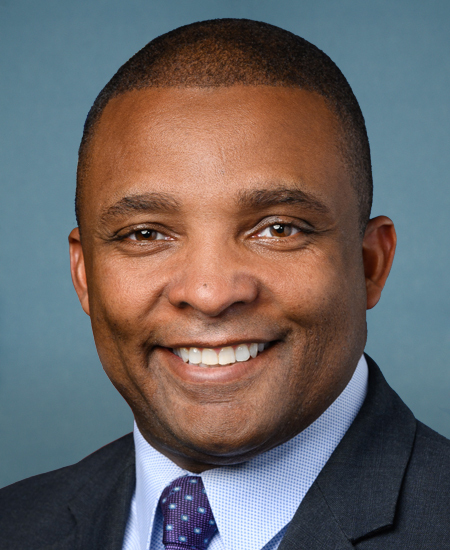
Rep. Donald G. Davis
Sponsored bills
Enhancing COPS Hiring Program Grants for Local Law Enforcement Act This bill allows funds under the Community Oriented Policing Services grant program to be used to provide bonuses for the recruitment and retention of law enforcement officers or career law enforcement officers.
National Law Enforcement Officers Remembrance, Support and Community Outreach Act This bill directs the Department of Justice (DOJ) to establish a National Law Enforcement Officers Remembrance, Support, and Community Outreach Program. The bill further directs DOJ to award a grant under the program to the National Law Enforcement Officers Memorial Fund for the expenses associated with community outreach, public education, and officer safety and wellness programs operated by the of the National Law Enforcement Officers Memorial Fund and National Law Enforcement Museum.
Maddy summaryThe FIGHT Act (HR 2742) amends the Animal Welfare Act to specifically target animal fighting events, such as cockfighting, by defining "rooster" as any male chicken over six months old and banning the live broadcasting (simulcasting) of such events. It prohibits using the postal service or interstate transport to move roosters for animal fighting purposes and adds civil enforcement tools allowing citizens to sue violators after a 60-day notice period. Fines up to $5,000 per violation may be imposed, and property used in animal fighting ventures can be seized. These changes strengthen enforcement against animal fighting by expanding legal remedies for the public and authorities.
Maddy summaryHR 2723 (Local Farms and Food Act of 2023) reforms the Local Agriculture Market Program to support local food systems. It extends funding periods to 2024-2028, increases annual funding to $75 million for program grants and $30 million for partnerships, and creates simplified application processes for projects under $100,000. The bill defines "food hub" to include businesses aggregating and distributing local food products, and adds new project categories like farmers market staff support and food safety equipment. It directly affects small local farms, food hubs, and rural communities by improving access to grants and reducing administrative barriers for market development.
Maddy summaryHR 3249, the Protecting Circuit Boards and Substrates Act, creates a 25% tax credit for businesses purchasing U.S.-manufactured printed circuit boards and establishes a federal program providing financial assistance for domestic manufacturing and research of these components. The bill directly affects U.S. businesses, particularly small, minority-owned, women-owned, and veteran-owned companies, by offering incentives to build or expand facilities within the United States. Key provisions include workforce training requirements for recipients, preferences for projects that increase domestic production capacity or relocate from foreign-controlled areas, and strict restrictions on foreign entities of concern. The program is authorized with $3 billion for 2024-2025 and includes clawback provisions if projects aren't completed on schedule or if recipients collaborate with foreign entities on national security concerns.
Maddy summaryHR 3228 establishes the Mental Health in Schools Excellence Program to expand the workforce of school-based mental health providers. It authorizes the Education Secretary to partner with eligible graduate schools (offering accredited programs in school counseling, psychology, or social work) to cover up to 50% of participating students' tuition costs, with schools matching that contribution. The program prioritizes students who received Federal Pell Grants or attended certain institutions as undergraduates. It directly affects graduate students in school-based mental health fields and participating institutions, aiming to increase the pipeline of licensed providers for schools.
Maddy summaryHR 3234 would allow immigration officers to immediately send back certain individuals attempting to cross the U.S.-Mexico border without proper documents or using fraud, during a 2-year period starting when the bill becomes law. These individuals would be expelled to Mexico by default, unless Mexico refuses to accept them or national security concerns arise, in which case they could be sent to their country of origin or another willing nation. The bill requires officials to refer individuals fearing persecution or torture to an asylum officer for review before expulsion, with specific exceptions for those deemed threats to national security or public safety. It does not apply to people who entered legally but later became deportable, and it includes a process for prioritizing vulnerable individuals like those with medical needs.
Maddy summaryHR 3238, the Affordable Housing Credit Improvement Act of 2023, updates the Low-Income Housing Tax Credit (LIHTC) program to increase the availability of affordable housing across the United States. The bill makes several key changes including increasing state funding formulas, modifying tenant eligibility rules to better serve vulnerable populations (such as domestic violence victims and students), and expanding credit eligibility for projects in rural and Native American communities. Specific provisions raise the credit for properties serving extremely low-income households, clarify rules around tenant income increases, and require housing providers to protect victims of domestic violence. The bill also updates terminology from "low-income" to "affordable" throughout the tax code and enhances program transparency through data sharing requirements. These changes aim to make the LIHTC program more effective at creating and preserving affordable housing units for low-income households nationwide.
Maddy summaryHR 1697, the Promoting Precision Agriculture Act of 2023, directs the Secretary of Agriculture to develop voluntary, industry-led standards for precision agriculture equipment within two years. These standards aim to improve compatibility between farm technologies like GPS systems, soil sensors, and data software, helping farmers reduce input waste (such as water, fertilizer, and fuel) and boost efficiency. The bill requires coordination with the FCC and NIST to address cybersecurity, connectivity needs, and the role of 5G/AI in farming, while mandating annual GAO assessments to track adoption and standard effectiveness. It directly affects farmers using precision tools, technology providers, and standards organizations, without imposing new regulations.