

Maddy summaryHR 940, the Information Security Investment Act of 2023, requires Members of Congress (including delegates and resident commissioners) and the President and Vice President to complete mandatory training on handling classified information. Members must finish this training within 90 days of taking office (or 180 days for the first session of the 118th Congress), while the President and Vice President must complete it within 30 days of starting their term and every two years thereafter. The bill establishes specific deadlines for completing this training and mandates that relevant committees (House Administration and Senate Rules) issue regulations to implement the requirement. This procedural bill directly affects elected officials and the executive branch leadership by imposing standardized training obligations on handling classified information.
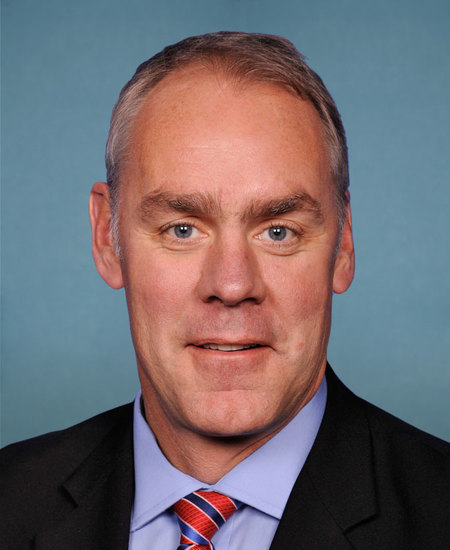
Rep. Ryan K. Zinke
Sponsored bills
Rural Hospital Technical Assistance Program Act This bill provides statutory authority for the Rural Hospital Technical Assistance Program within the Department of Agriculture (USDA). Under the bill, USDA must establish and maintain (directly or by grant, contract, or cooperative agreement) a program to help eligible hospital facilities in rural areas with a population of 50,000 inhabitants or less. The program must provide tailored technical assistance and training to hospital facilities to identify development needs for maintaining essential health care services and support action plans for financial, operational, and quality improvement projects to meet these needs. Development needs include (1) constructing, expanding, and modernizing health care facilities; (2) increasing telehealth capabilities; and (3) acquiring or upgrading health care information systems (e.g., electronic health records). The program must also provide technical assistance and training to help hospital facilities to better manage their financial and business strategies and identify, and apply for assistance from, USDA loan and grant programs. In selecting eligible hospital facilities to participate in the program, USDA must give priority to borrowers and grantees of certain USDA rural assistance programs. USDA must also submit an annual report to Congress on the progress and results of the program.
Maddy summaryHR 5224 reauthorizes the Missing Children's Assistance Act through fiscal year 2028, updating definitions and expanding services to better address child sexual exploitation. It adds specific terms like "sextortion" and "sexting" to clarify key concepts, and requires the Administrator to manage the CyberTipline for reporting missing children and exploitation. The bill mandates new data collection on children missing from state care, including those likely victims of sex trafficking, and increases annual funding authorization from $40 million to $49.3 million. These changes directly affect child welfare agencies, law enforcement, and organizations working with missing or exploited children by improving reporting systems, recovery support, and data transparency.
Maddy summaryHR 5073, titled the "Promoting Domestic Energy Production Act," is a tax code amendment affecting oil and gas companies. It changes how businesses calculate adjusted financial statement income by removing specific deductions related to intangible drilling and development costs from their financial reports. The bill requires companies to disregard depreciation and depletion expenses taken into account on their financial statements for these costs when computing taxable income. This applies to tax years beginning after December 31, 2022, directly impacting oil and gas producers who use these accounting methods. The bill does not create new energy policies but alters tax accounting rules for the industry.
Maddy summaryHR 4832, the Indian Programs Advance Appropriations Act of 2023, changes how funding is allocated for key Native American programs. It requires that starting in fiscal year 2024, new budget authority for specific accounts under the Bureau of Indian Affairs, Bureau of Indian Education, and Indian Health Service must be made available immediately for the current fiscal year *and* include advance funding for the next fiscal year. The bill mandates annual reports by July 31 each year, including workload estimates and resource sufficiency assessments developed with tribal consultation. This affects tribal programs funded through accounts like Operation of Indian Programs, Contract Support Costs, and Indian Health Services, aiming to improve budget planning predictability.
Maddy summaryHJRES 83 is a congressional resolution seeking to block a specific immigration rule. It targets a rule issued by U.S. Citizenship and Immigration Services (USCIS) and the Executive Office for Immigration Review (EOIR) on May 16, 2023, which addressed "Circumvention of Lawful Pathways" in immigration processes. If approved, the resolution would nullify this rule, preventing it from taking effect under federal law. This action directly affects how USCIS and immigration courts apply this particular policy to immigration cases. The resolution uses a standard procedural mechanism (Chapter 8 of Title 5, U.S. Code) to disapprove the rule without altering broader immigration law.
Maddy summaryHCONRES 60 is a symbolic congressional resolution calling for the immediate release of Marc Fogel, a U.S. citizen and former teacher imprisoned in Russia since 2021. It states Fogel was sentenced to 14 years for carrying medical marijuana (prescribed in Pennsylvania for his chronic pain) in his luggage, which the resolution deems an unjust and disproportionate sentence compared to typical Russian penalties for similar offenses. The resolution urges the Russian government to release Fogel, respect his human rights, and allow consular access, while also demanding the release of other detained U.S. citizens like Paul Whelan and Evan Gershkovich. It emphasizes Fogel’s health decline and the U.S. State Department’s failed humanitarian request for his release. As a non-binding resolution, it expresses congressional support but does not alter U.S. policy or law.
Maddy summaryHR 3933, the TAP Promotion Act, requires standardized presentations about Veterans Affairs (VA) benefits during military transition counseling for service members separating from the armed forces. These presentations must be approved by the VA, delivered by authorized veterans service organizations (VSOs), and include information on how VSOs assist with VA claims - without encouraging membership in specific organizations. The bill mandates a one-hour limit per presentation and requires the VA to submit annual reports to Congress detailing which VSOs presented, attendance numbers, and recommendations for improvement. This policy directly affects service members preparing for civilian life and the VSOs providing these transition resources.
Maddy summaryThis bill directs the U.S. Treasury to mint commemorative coins marking the Marine Corps' 250th anniversary in 2025. It authorizes three coin types: $5 gold coins (max 50,000), $1 silver coins (max 400,000), and half-dollar coins (max 750,000), with surcharges of $35, $10, and $5 respectively. The surcharge proceeds will fund the Marine Corps Heritage Center's educational programs, with no net cost to taxpayers as the Treasury must recover all minting costs through the surcharges. The coins can only be issued during 2025, and the Treasury must ensure all costs are covered before distributing funds to the Heritage Foundation.
Strategy To Oppose Purposeful CCP Aggression at the United Nations Act of 2023 or the STOP CCP at UN Act of 2023 This bill requires actions to address efforts by China to expand its influence on the United Nations. Specifically, the bill requires the Department of State to establish the Office of Multilateral Strategy, which must implement a strategy to counter China at the United Nations. The office must report on its work to Congress. The State Department must also increase the number of U.S.-sponsored junior professional officers at the United Nations to match or exceed the number of such officers sponsored by China. Furthermore, the State Department and the U.S. Permanent Representative to the United Nations must report to Congress annually about China's actions to expand its influence on the United Nations, including through coercion, intimidation, and other illegitimate means.