

Maddy summaryHRES 987 is a symbolic resolution introduced in the U.S. House of Representatives on January 31, 2024, by multiple Republican members. It formally denounces the Biden administration’s energy policies as "harmful" and "anti-American," citing specific actions like canceling the Keystone XL pipeline, restricting federal land leasing for oil and gas, blocking LNG exports, and implementing mineral extraction rules. The resolution does not create new laws or affect any group directly; it serves only as a formal expression of disapproval by the House. It has no legal effect and is intended to convey political opposition to the administration’s approach to energy development.
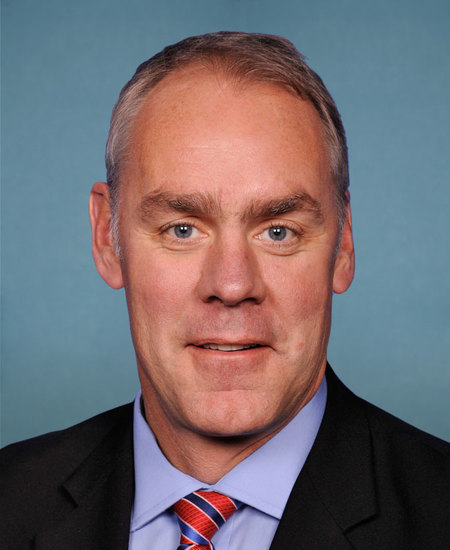
Rep. Ryan K. Zinke
Sponsored bills
Maddy summaryThis bill establishes new eligibility rules for women's and girls' amateur sports by defining "female" and "male" based on biological sex at birth. It prohibits individuals designated as male under these definitions from participating in athletic competitions designated for females, women, or girls. The law amends existing U.S. Code provisions to add this requirement, directly affecting athletes and organizations managing female-designated teams. The key change is a clear ban on male-identified participants in female sports, replacing previous eligibility standards with biological sex criteria.
Maddy summaryThe Expand the Behavioral Health Workforce Now Act requires the U.S. Department of Health and Human Services to issue guidance to states within 12 months of enactment. This guidance must detail strategies for states to improve mental health and substance use disorder provider education, training, recruitment, and retention through Medicaid and CHIP programs. It specifically encourages states to use existing authorities like Medicaid waivers and program flexibilities to expand workforce capacity, with a focus on rural and underserved communities. The bill directly affects states administering Medicaid and CHIP by providing a framework to address provider shortages in critical care areas.
Maddy summaryThe PARC Act requires national parks that charge entrance fees to accept cash payments as a standard option. This applies to all National Park System units where fees are collected, ensuring visitors can pay with physical currency. The bill amends federal law to mandate this change, directly affecting park visitors who rely on cash and park staff responsible for payment systems. It does not alter fee amounts or other park policies, only the accepted payment methods. The requirement is now enforced across all fee-charging park locations.
Maddy summaryThe Laken Riley Act (HR 7511) would require federal authorities to detain non-citizens charged with or convicted of burglary, theft, larceny, or shoplifting offenses. It also creates new legal standing for state attorneys general to sue federal immigration officials in federal court if they believe immigration enforcement decisions (like releasing aliens or granting parole) cause financial harm exceeding $100 to the state or its residents. The bill amends immigration laws to expand detention requirements for certain property crimes and allows states to seek court orders to enforce immigration policies. It does not create new criminal penalties but modifies existing immigration enforcement procedures. The bill’s findings and political language about the Laken Riley case are not part of its policy provisions.
Maddy summaryThis bill amends the Fair Credit Reporting Act to protect Native Americans from credit report damage related to certain medical debts. It defines "Native American's medical debt" as debt from health care authorized by the Indian Health Service (IHS) or wrongly charged by the Department of Health and Human Services (HHS), including debts HHS has wrongfully billed. The bill requires credit bureaus to automatically exclude from credit reports: (1) medical debt under one year old, and (2) fully paid or settled debt previously marked as delinquent. It also creates a dispute process where Native Americans can submit proof of HHS liability to have such debts removed from their reports. The changes apply to Native Americans as defined under federal law and take effect 90 days after enactment.
Maddy summaryHR 7494, the Protect America’s Lands Act, prohibits national securities exchanges from processing transactions involving stocks issued by companies primarily managing land for conservation. It defines "natural asset companies" as those holding rights to ecological performance of specific land areas, with their core purpose being to conserve, restore, or sustainably manage natural assets without causing material harm. The bill directly affects securities exchanges and these specific companies by banning exchange-based trading of their securities. This is a regulatory change to the Securities Exchange Act of 1934, focusing on financial market rules rather than direct land management policies.
Maddy summaryHR 7361, the Flowers for Fallen Heroes Act of 2024, requires the American Battle Monuments Commission to establish a low-cost program allowing the public to order flowers for military gravesites at Commission-managed cemeteries. The bill mandates the Commission to partner with third-party florists (without excess fees) and create a user-friendly website and phone system for ordering by one year after enactment. It also authorizes credit card and electronic payment processing for these orders, with customers responsible for any third-party processing fees, and requires annual reports to Congress detailing program implementation, including order data and florist engagement. This bill directly affects the public seeking to honor fallen service members and the Commission’s operations at 25 overseas military cemeteries.
Maddy summaryHR 7450, the Protecting Privacy in Purchases Act, prohibits payment card networks and covered entities (like payment processors) from requiring or assigning merchant category codes that specifically identify firearms retailers as different from general stores or sporting goods retailers. This directly affects firearms retailers and payment networks by preventing them from using business classification codes that could flag firearm sales. The bill establishes an enforcement process where the Attorney General investigates complaints, issues remediation notices, and can seek court injunctions for non-compliance, while preempting state or local laws on this issue. It does not create private lawsuits for individuals.
Maddy summaryHR 7154 would rename the Department of Veterans Affairs community-based outpatient clinic in Butte, Montana, as the "Charlie Dowd VA Clinic" to honor Charles A. Dowd, a Pearl Harbor survivor and decorated Navy veteran. The bill designates the clinic's new name officially and updates all federal references to the facility to reflect this change. It directly affects the clinic's official identity and records, with no new funding or policy changes. The renaming is purely commemorative, based on Dowd's service during WWII (including his actions at Pearl Harbor and seven Bronze Star medals) and his lifelong advocacy for veterans.