

Maddy summaryThe Military Spouse Hiring Act expands the Work Opportunity Tax Credit to include military spouses. Employers who hire a spouse of an active-duty military member - certified by a local agency as meeting eligibility requirements on the hiring date - can claim this tax credit. The credit reduces the employer's federal tax liability for hiring such individuals. This provision applies to new hires after the bill's enactment date.
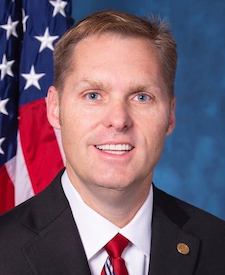
Rep. Michael Guest
Sponsored bills
Maddy summaryThis bill requires colleges to provide pre-loan counseling to students before they take out federal student loans, including an estimate of monthly payments compared to expected income after expenses (using government data) and a full breakdown of all debt (federal, private, and future costs). It also mandates that lenders send borrowers quarterly statements during non-payment periods (like while in school), showing loan balances, interest rates, payments made, and how making small payments can reduce total interest. These changes apply directly to students receiving federal loans, colleges, and loan servicers. The goal is to improve transparency about long-term repayment impacts before borrowing begins.
Maddy summaryThis bill amends the Higher Education Act to exempt certain family-owned assets from being counted when calculating federal student aid eligibility. Specifically, it excludes family farms where the family resides and small businesses with 100 or fewer full-time equivalent employees owned and controlled by the family. These assets will no longer be considered when determining a student's financial need for aid programs. The change directly affects students from qualifying family farms or small businesses when applying for federal financial aid. The exemption applies to assets held by the family, not just the business itself.
Maddy summaryHR 1229, the "Stop CRT Act," codifies Executive Order 13950 into law and restricts federal funding for entities teaching specific concepts about race. It prohibits federal grants to organizations that teach any of six specified ideas, including that race determines moral worth, the U.S. is fundamentally racist, or individuals bear responsibility for historical actions based on race. The bill directly affects schools, nonprofits, and other recipients of federal funds by banning support for educational content matching these prohibitions. Key provisions require federal agencies to deny funding to any entity advancing these concepts, making the executive order legally binding. This policy change alters how federal funds are distributed based on mandated educational content.
Maddy summaryHR 1228 prohibits the U.S. military and Department of Defense-operated academic institutions from promoting specific anti-American or racist theories in training. It bans military programs that teach ideas such as "the U.S. is fundamentally racist," "the Constitution is fundamentally racist," or that "an individual’s worth is determined by race." The bill explicitly states it does not restrict protected speech, research access, or educational contexts that clearly disavow military endorsement of such theories. This directly affects military training curricula, workshops, and educational materials within the armed forces.
Maddy summaryHR 1200, the National Right-to-Work Act, prohibits requiring workers to join a union or pay dues as a condition of employment in both private-sector workplaces (covered by the National Labor Relations Act) and railroad industries (covered by the Railway Labor Act). The bill amends key sections of these laws to eliminate provisions that allowed union security agreements, meaning workers in unionized settings would no longer be forced to pay dues to retain their jobs. This directly affects employees in unionized workplaces across the U.S., particularly those in industries with existing union contracts that included mandatory dues. The law changes the legal framework to ensure union membership and dues payment remain voluntary for all workers.
Women's Public Health and Safety Act This bill allows a state to exclude from participation in the state's Medicaid program a provider that performs an abortion, unless (1) the pregnancy is the result of rape or incest, or (2) the woman suffers from a physical issue that would place her in danger of death unless an abortion is performed. Under current law, a state plan for medical assistance must provide that any individual eligible for medical assistance may obtain required services from any provider qualified to perform them.
Maddy summaryThe STUDENT Act (HR 1125) requires lenders to disclose the total interest a borrower would pay over the life of a federal student loan under a standard 10-year repayment plan. This provision directly affects students taking out federal loans by providing clearer information about the full cost of borrowing upfront. The bill amends the Higher Education Act to add this specific disclosure requirement to loan terms. The change aims to increase transparency in student loan financing without altering repayment terms or interest rates.
Maddy summaryHR 356, the Unleashing American Energy Act, requires the federal government to hold annual offshore oil and gas lease sales in specific Gulf of Mexico regions and Alaska starting in 2023. It mandates that all unleased areas (not restricted by law) be included in these sales, following existing federal leasing rules. The bill also amends federal law to prevent the President from delaying or blocking these leasing processes without explicit congressional approval, creating a rebuttable presumption that such actions are unreasonable. This directly affects federal energy leasing programs and companies seeking offshore drilling rights.
Maddy summaryThis resolution allocates $9,276,290 for the operational expenses of the House Committee on Ethics during the 118th Congress. It specifies $4,517,066 for the 2023-2024 session and $4,759,224 for the 2024-2025 session, covering staff salaries and committee costs. The funding is drawn from the House's designated committee expense accounts. This procedural resolution directly affects the Committee on Ethics' budgeting and operations.