

Maddy summaryThis bill ensures continued pay for certain U.S. Customs and Border Protection (CBP) and Immigration and Customs Enforcement (ICE) employees during a government funding gap in fiscal year 2024. It specifically covers CBP agents at Southwest, Northern, and maritime border ports of entry, and ICE officers conducting immigration enforcement (including detainment/removal) and investigations into criminal operations like drug trafficking and human smuggling. The funding, drawn from general Treasury funds, would apply if a budget lapse begins on October 1, 2023, and would last until January 1, 2024, or until new funding is enacted. It directly affects these frontline enforcement personnel by guaranteeing their salaries during a potential government shutdown.
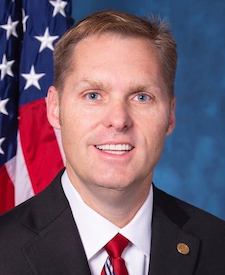
Rep. Michael Guest
Sponsored bills
Drought Assistance Improvement Act This bill modifies access to two Farm Service Agency (FSA) administered programs: the Livestock Forage Disaster Program (LFP) and the Emergency Assistance for Livestock, Honey Bees, and Farm-Raised Fish Program (ELAP). The bill modifies the LFP to allow for one monthly payment when a county has four consecutive weeks of a D2 rating (severe drought) and two payments for eight consecutive weeks of D2. Currently, one payment is available for eight consecutive weeks of D2. (LFP makes payments to eligible livestock producers who have suffered grazing losses on drought-affected pastureland, including cropland planted specifically for grazing.) The bill also expands coverage under ELAP for losses caused by adverse weather or drought. The bill includes under ELAP the loss of a crawfish harvest due to adverse weather or drought. (ELAP provides payments to producers of livestock, honey bees, and farm-raised fish as compensation for losses due to disease, adverse weather, feed or water shortages, or other conditions that are not covered under other programs.) The FSA must establish ELAP documentation standards for (1) collecting data, (2) the production of crawfish, and (3) defining loss conditions due to drought.
Pay Our Border Patrol and Customs Agents Act This bill provides FY2024 appropriations for the salaries and expenses of certain U.S. Customs and Border Protection (CBP) employees who are required to work during a lapse in appropriations (i.e., government shutdown) in FY2024. Specifically, the bill provides appropriations to CBP for the salaries and expenses of agents of the U.S. Border Patrol and officers of the Office of Field Operations who are excepted from furlough (i.e., required to work) during a lapse in discretionary appropriations in FY2024.
Healthy Poultry Assistance and Indemnification Act This bill expands the Animal and Plant Health Inspection Service (APHIS) producer indemnity and compensation program to include compensation for all poultry growers and layers located in an APHIS-determined control area. Currently, APHIS provides indemnity and compensation to producers to remove animals classified as affected, suspect, or exposed to diseases of concern, including highly pathogenic avian influenza (HPAI). An APHIS-determined control area consists of both an infected zone and a buffer zone. Under the bill, APHIS must compensate all owners of poultry growing or laying facilities for flocks of birds that the facility owner was prohibited from growing or laying due to the location of the facility within a control area. This may include facilities that are located in the buffer zones and have non-infected poultry. Further, the bill establishes a new compensation payment formula that requires payments to be based on the owner’s average income from the five most recent flocks. Under the bill, APHIS's compensation determination is final and not subject to judicial or administrative review (other than by the Secretary of Agriculture or a designee).
Maddy summaryHR 5561, the Protecting the Right to Keep and Bear Arms Act of 2023, prevents federal agencies from using emergency declarations to implement gun control measures. It specifically prohibits the President from declaring a national emergency under the National Emergencies Act or the Robert T. Stafford Act for gun control purposes, and stops the Health and Human Services Secretary from declaring a public health emergency under the Public Health Service Act for the same reason. The bill also amends the Stafford Act to explicitly prohibit any emergency-related restrictions on possessing, manufacturing, selling, or transferring firearms, ammunition, ammunition feeding devices, or firearm accessories. This directly affects how federal agencies can respond during emergencies without violating the Second Amendment. The law aims to limit executive actions during emergencies that could restrict gun rights.
Maddy summaryHRES 720 designates the week of September 24-30, 2023 (and annually thereafter) as "Gold Star Families Remembrance Week" to honor families who have lost loved ones in military service. It specifically recognizes the sacrifices of families of fallen service members and veterans, and encourages Americans to observe the week through community service and celebrating the lives of those who died protecting the nation. This resolution is procedural and symbolic, with no new funding, regulations, or policy changes - only a formal designation to honor these families. It directly affects Gold Star families (those with members who died in military service) and the broader public through its call for observance.
Maddy summaryThis bill prohibits federal funding for colleges and universities that require students or staff to get a COVID-19 vaccine to enroll, work, or access services. It directly affects institutions of higher education receiving federal funds, such as those participating in student aid programs. The key provision blocks all federal financial support if an institution enforces such vaccine requirements as a condition of enrollment, employment, or benefits. The law does not ban vaccine mandates outright but ties federal funding to compliance with this prohibition.
Maddy summaryThis bill creates a new exemption from U.S. passport application fees for first responders participating in disaster relief. Specifically, it allows the Secretary of State to waive both passport issuance and execution fees for volunteers working under U.S. government contracts, grants, or agreements to conduct search, rescue, or disaster relief operations within seven days of a natural disaster in a foreign country. The bill does not change existing fee exemptions for military personnel, seamen, or families of fallen service members. It also requires the Secretary of State to report annually on the number of such fee waivers granted to first responders.
Maddy summaryHR 1435, the Preserving Choice in Vehicle Purchases Act, amends the Clean Air Act to restrict states from implementing vehicle emissions rules that limit the sale or use of new gasoline-powered cars. It directly affects states with stricter emissions standards (like California) by adding a new definition that blocks state rules "directly or indirectly" limiting internal combustion engine vehicles as defined in federal regulations as of January 1, 2023. The bill requires the EPA to revoke existing state emissions waivers granted between January 2022 and the bill’s enactment if they don’t comply with this new definition. This creates a concrete federal standard preventing states from advancing policies that could reduce demand for conventional vehicles.
Maddy summaryHR 5481 directs the Secretary of Health and Human Services to create a new Office of Rural Health within the Centers for Disease Control and Prevention (CDC). The office will coordinate CDC research, develop policies (including telehealth solutions), and award grants to address rural health challenges like access to care and health disparities. This bill directly affects rural populations by focusing federal efforts on improving their health outcomes through coordinated CDC initiatives.