

Countering Human Trafficking Act of 2022 This bill provides statutory authority for the Center for Countering Human Trafficking (CCHT) within the Department of Homeland Security (DHS). The CCHT coordinates DHS efforts to combat human trafficking and the importation of goods produced with forced labor. The bill requires the CCHT to develop a strategy to improve the systems and processes used throughout DHS to combat human trafficking and the importation of goods produced with forced labor. The bill transfers the functions and resources of the Blue Campaign (i.e., the national public awareness effort to combat human trafficking) to the CCHT. DHS may also transfer to the CCHT any other component, directorate, or office of the department related to combating human trafficking.
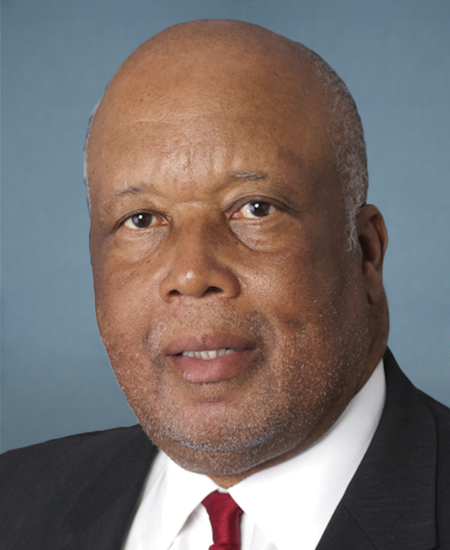
Rep. Bennie G. Thompson
Sponsored bills
Fresh Start Act of 2022 This bill establishes a federal statutory process to expunge records related to certain nonviolent criminal offenses. The bill defines the nonviolent offenses eligible for expungement; it establishes qualifications for an eligible offender; and it sets forth procedures for filing an expungement petition.
Repeal Existing Policies that Encourage and Allow Legal HIV Discrimination Act of 2022 or the REPEAL HIV Discrimination Act of 2022 This bill addresses federal and state laws, policies, and regulations that may burden people living with HIV/AIDS. Specifically, the bill directs the Department of Justice (DOJ), the Department of Health and Human Services (HHS), the Department of Defense (DOD), and the White House Office of National AIDS Policy to initiate a national review of federal (including military) and state laws, policies, regulations, and judicial precedents and decisions regarding criminal and related civil commitment cases involving people living with HIV/AIDS. DOJ must transmit to Congress and make publicly available the results of such review with related recommendations. The White House Office of National AIDS Policy must also develop and publicly release guidance to assist states with handling relevant cases. The office, DOJ, HHS, and DOD must transmit to the President and Congress any proposals necessary to implement adjustments to federal laws, policies, or regulations. This bill shall not be construed to discourage the prosecution of individuals who act with the intent to do harm to another individual by intentionally transmitting HIV.
Supreme Court Ethics Act This bill establishes a new statutory requirement for the Judicial Conference of the United States to issue a judicial code of conduct for judges and justices of U.S. courts, including Justices of the Supreme Court. Currently, the Judicial Conference issues a code of conduct for judges of U.S. courts (but not for Justices of the Supreme Court).
Corey Jones Act This bill establishes a new certification requirement for applicants for grant funds under the Community Oriented Policing Services (COPS) program. Specifically, an applicant for grant funds under the COPS program must certify that no law enforcement agency receiving such funds allows officers to conduct routine traffic stops while wearing plainclothes or while wearing plainclothes and in an unmarked police vehicle.
Drug Policy Reform Act of 2021 or the DPR Act of 2021 This bill transfers federal regulatory authority over controlled substances, eliminates federal penalties for some drug-related offenses, and removes some collateral consequences for certain criminal convictions. A collateral consequence is a penalty (e.g., a restriction on access to a program or service) imposed on an individual in addition to the penalty associated with the sentence. Specifically, the bill transfers regulatory authority over controlled substances from the Department of Justice to the Department of Health and Human Services (HHS). Additionally, the bill directs HHS to establish a commission to determine a benchmark amount of a controlled substance for personal use supply. The bill eliminates federal criminal and civil penalties for simple possession of a controlled substance in an amount equal to or less than the benchmark. Finally, the bill removes the collateral consequences of certain convictions. For example, the bill removes some restrictions on eligibility for federal assistance and benefits for individuals who are convicted of certain drug-related offenses, reinstates the right to vote in federal elections for persons convicted of criminal offenses, and repeals the requirement for states to revoke or suspend driver's licenses of individuals who are convicted of drug offenses as a condition of receiving a full allocation of certain federal grant funds.
Disarm Hate Act The bill expands the categories of persons who are prohibited from receiving or possessing a firearm. Specifically, it prohibits firearm sale or transfer to and receipt, possession, shipment, or transport by a person (1) who has been convicted of a misdemeanor hate crime, or (2) who has received an enhanced hate crime misdemeanor sentence.
Handgun Licensing and Registration Act of 2021 This bill establishes a statutory framework for the licensing and registration of all handguns owned, possessed, or controlled in the United States.
Menstrual Equity For All Act of 2021 This bill expands access to free sanitary napkins and tampons (i.e., menstrual products) in certain locations and for particular groups. It also requires Medicaid to cover menstrual products, as well as liners, cups, and similar items used by individuals with respect to menstruation. Specifically, the bill imposes requirements to make free menstrual products available in federal and state correctional facilities (including facilities that house aliens detained by the Department of Homeland Security) and restrooms in federal buildings that are open to the public. It also establishes a demonstration grant program to support the provision of free menstrual products on campuses of institutions of higher education and permits elementary and secondary schools to use certain grants to provide menstrual products to students. Furthermore, the bill requires employers with at least 100 employees to provide free menstrual products for employees. It also permits the use of certain grants for emergency food and shelter to provide menstrual products to homeless individuals.
Keeping Our Promise Act This bill authorizes issuing visas to certain individuals who were previously refused a diversity immigrant visa or admission into the United States because of certain executive orders or the COVID-19 public health emergency. (Diversity immigrant visas are available to eligible immigrants from countries with relatively low rates of immigration to the United States.) Specifically, this bill applies to individuals who were refused such a visa solely due to certain executive orders from 2017 to 2020, including orders which suspended the entry of individuals from certain countries. The bill also applies to diversity visa applicants who, because of the COVID-19 emergency, were (1) unable to receive a visa interview despite requesting one, or (2) unable to be admitted into the United States despite being approved for a visa. The Department of State must notify each individual covered under this bill of the individual's visa eligibility. To retain eligibility, an individual must respond to the State Department's notice within one year of the notice. An individual may also lose eligibility if the State Department determines that the applicant fails to meet certain requirements. The bill also relaxes certain annual numerical limits for individuals obtaining a visa under this bill. An individual who was a child when initially selected for a visa shall be treated as a child for the purposes of a visa application under this bill.