

Homeland Procurement Reform Act or the HOPR Act This bill directs the Department of Homeland Security (DHS) to ensure that procurement of certain items, such as body armor and other protective gear, meets specified requirements, including that a fraction of procurement funds be used for items manufactured by U.S. small businesses. The bill sets forth requirements for waivers based on a national emergency. DHS shall (1) ensure that covered items are purchased at a fair and reasonable price, and (2) study the adequacy of uniform allowances provided to employees of frontline operational components (i.e., Customs and Border Protection and other listed agencies and entities). DHS must report to Congress with recommendations on how it could procure additional items from domestic sources and bolster the domestic supply chain for specified national security-related items, including personal protective equipment and other items necessary to respond to a pandemic such as that caused by COVID-19.
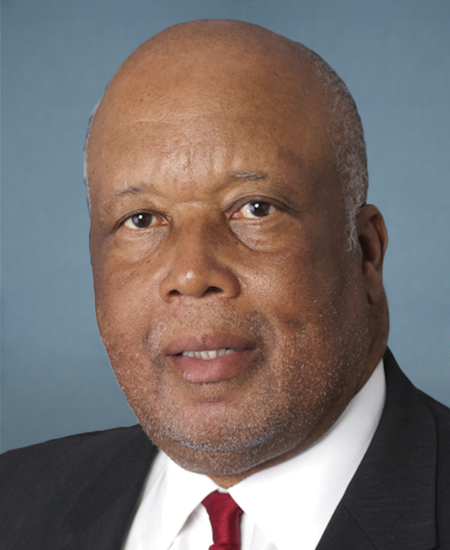
Rep. Bennie G. Thompson
Sponsored bills
Department of Homeland Security Mentor-Protege Program Act of 2022 This bill provides statutory authority for the mentor-protégé program of the Department of Homeland Security (DHS) under which a mentor firm enters into an agreement with a protégé firm to assist the latter to compete for prime contracts and subcontracts of DHS.
Quadrennial Homeland Security Review Technical Corrections Act of 2021 This bill makes numerous changes to the quadrennial homeland security reviews. The quadrennial homeland security review is the Department of Homeland Security's capstone strategy document, which offers recommendations on long-term strategy and priorities for homeland security. Specifically, the changes are related to consultation, prioritization, resources required, deadlines, and documentation.
Minority Entrepreneurship Grant Program Act of 2022 This bill requires the Small Business Administration (SBA) to award grants to create or expand programs at minority-serving institutions that foster, promote, and increase opportunities for minority entrepreneurship and business ownership. The SBA must also establish a Minority Entrepreneurship Advisory Board to develop recommendations regarding how these institutions can better serve minority businesses and entrepreneurs.
Transparency in Lending Act of 2022 This bill requires federal financial supervisory agencies to submit to the Federal Financial Institutions Examination Council specified information regarding an examination of a large financial institution. Specifically, the agency must report on the status of the examination and any findings.
Equity in STD Testing Act This bill provides for coverage, without cost-sharing, of testing for certain sexually transmitted diseases under Medicare Advantage, Medicaid, the Children's Health Insurance Program (CHIP), TRICARE, Department of Veterans Affairs health benefits, and the Indian Health Service.
Food Deserts Act This bill establishes a Department of Agriculture program to provide grants to states for revolving funds to support the establishment and operation of grocery stores in underserved communities. An underserved community is a community that has (1) limited access to affordable, healthy foods, including fresh fruits and vegetables, in grocery retail stores or farmer-to-consumer direct markets; and (2) a high rate of hunger or food insecurity or a high poverty rate. States must use the funds to make loans to support grocery stores in underserved communities, including for opening a store (excluding new construction), or supporting or purchasing an existing store. States may only make loans for grocery stores that meet requirements related to emphasizing unprocessed, healthful foods; providing staple foods and a variety of raw fruits and vegetables; having a plan to keep the foods in stock; charging affordable prices at or below market averages; meeting specified matching requirements using nonfederal funds; and being qualified to operate a store or having partnerships with organizations that provide technical assistance. States must prioritize loan applications from entities that meet criteria related to hiring workers from the underserved community, providing classes or educational information about a healthful diet, sourcing food from local urban farms and gardens, or demonstrating existing supply chain relationships or expertise in the grocery industry.
Lymphedema Treatment Act This bill provides for Medicare coverage of lymphedema compression treatment items. Specifically, the bill provides for coverage of standard and custom fitted gradient compression garments and other approved items that are prescribed by a physician or other specified health care professional to treat lymphedema.
Safeguarding America's Future and Environment Act or the SAFE Act The bill requires the development of an integrated national approach to help fish, wildlife, and plants adapt to extreme weather changes and climate change. Specifically, the bill requires the President to establish an interagency National Fish, Wildlife, and Plants Climate Adaptation Strategy Joint Implementation Working Group. The working group must adopt the 2013 National Fish, Wildlife, and Plants Climate Adaptation Strategy, which addresses the effects of extreme weather and climate change on fish, wildlife, and plants. After the Committee on Earth and Environmental Sciences releases a periodic scientific assessment required under the U.S. Global Change Research Program, the working group must use sound science to review and revise the strategy to incorporate new information and advances in the development of strategies to help fish, wildlife, and plants adapt. Each federal agency must integrate the strategy into agency plans, environmental reviews, and programs. The Department of the Interior must establish a National Climate Change and Wildlife Science Center to assess and develop scientific information, tools, strategies, and techniques to support the working group and other interested parties in addressing the effects of extreme weather and climate change. Interior must establish an Advisory Committee on Climate Change and Natural Resource Sciences to advise the working group.
Maddy summaryHRES 1457 is a symbolic resolution designating the Friday before Memorial Day as "National Poppy Day" to honor veterans. It encourages all U.S. citizens, residents, and visitors to wear a red poppy on that day as a tribute to fallen and serving members of the Armed Forces. The resolution recognizes the poppy's historical significance, originating from World War I poetry and adopted by veterans' organizations to memorialize those who died protecting freedom and support disabled veterans. It does not create new laws or funding but formally supports this observance through congressional endorsement.