

Maddy summaryHR 1831 would award Billie Jean King a Congressional Gold Medal to honor her lifelong advocacy for equal rights in sports and society. The bill directs the Secretary of the Treasury to strike the medal and have it presented by congressional leaders, recognizing her pivotal role in advancing women's equality through tennis (including founding the Women’s Tennis Association and securing equal prize money) and her broader impact on society through initiatives like Title IX advocacy.
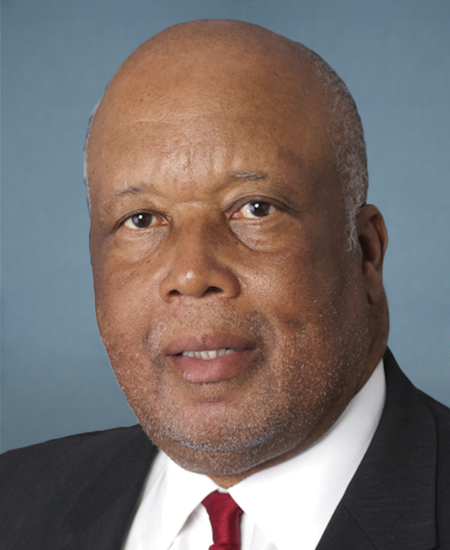
Rep. Bennie G. Thompson
Sponsored bills
Maddy summaryThe Pell Grant Sustainability Act adjusts Federal Pell Grants to keep pace with rising college costs by indexing them annually to inflation. It directly affects low-income undergraduate students who receive Pell Grants, ensuring the maximum award amount increases each academic year based on the Consumer Price Index. The bill replaces previous fixed amounts with a new formula: starting in 2023-2024, grants will be set at $6,895 (or the prior year's amount if higher), then adjusted yearly by the inflation rate. This change aims to restore the grant's purchasing power, which covered 80% of costs in 1974-75 but only 30% by 2020-21.
Maddy summaryThis bill restores access to VA housing loans and educational benefits for Black World War II veterans who were denied GI Bill benefits due to racial discrimination, as well as for their living spouses, children, grandchildren, or direct descendants. It defines eligibility by requiring applicants to certify that their veteran relative was denied GI Bill benefits on racial grounds, with a five-year application window starting from the bill's enactment date. The VA must process these applications within 90 days and report to Congress on the number of recipients and total benefit value within one year. This addresses historical discrimination by creating new pathways to benefits for affected individuals and their families.
Maddy summaryHR 1232, the Fort Pillow National Battlefield Park Study Act, directs the Secretary of the Interior to conduct a study evaluating whether Fort Pillow Historic State Park in Tennessee should become a National Battlefield Park. The study will assess the site's national significance related to the 1864 Civil War massacre where many U.S. Colored Troops were killed after surrendering, and determine the feasibility of designating it as a National Historic Park unit. This bill authorizes a review process but does not create the park or change current status. The study would examine the park's 1,642 acres, museum, and historical resources as part of the evaluation. This procedural step is required before any potential designation as a National Battlefield Park.
Maddy summaryThe Food Deserts Act creates a federal grant program to help establish grocery stores in underserved communities by funding state revolving funds. States receive capitalization grants (up to $150 million for FY2022) to provide low-interest loans to grocery stores that meet specific criteria, such as selling unprocessed, affordable healthy foods and matching 20% of the loan with non-federal funds. Priority is given to stores hiring local workers, offering nutrition education, sourcing from local farms, and having established supply chains. The program directly supports grocery store operators in areas with limited access to fresh food, aiming to improve community health outcomes through increased access to nutritious options.
This resolution recognizes the deadly impact colorectal cancer; acknowledges racial disparities in the impact of colorectal cancer, particularly in the Black community; and encourages actions to address colorectal cancer and those disparities.
Maddy summaryHR 1619 requires schools participating in the National School Lunch Program to provide fluid milk substitutes (like soy or almond milk) upon request by a student or their parent/guardian. The bill removes the previous requirement that substitutions needed a medical authority's written statement for most dietary needs, instead allowing requests based on the student's or parent's request alone. It aligns the definition of acceptable substitutes with current Dietary Guidelines for Americans. This change directly affects students with dietary restrictions, making it simpler for schools to accommodate their needs without extra medical documentation.
Maddy summaryThis bill authorizes a Congressional Gold Medal to honor the "Hello Girls" - female telephone operators who served in the Army Signal Corps during World War I. They provided critical battlefield communications in France (connecting 26 million calls), wore military uniforms, and faced combat risks, but were denied veteran benefits for 60 years due to being classified as civilian contractors. The medal recognizes their pioneering service, devotion, and the decades-long struggle to gain military recognition. The award follows similar recognition for other WWII women veterans and aims to correct the historical injustice they faced.
Incentives for our Nation's Veterans in Energy Sustainability Technologies or the INVEST Act This bill allows the work opportunity tax credit to be used for the hiring of a specified veteran who works in a field of renewable energy. A specified veteran means any veteran who is certified as (1) having received a credential or certification from the Department of Defense of a military occupational specialty or skill in a field of renewable energy or with respect to advanced manufacturing, machinist or welding, or engineering; (2) having completed a vocational degree in a field of renewable energy; or (3) having completed a LEED (Leadership in Energy & Environmental Design) certification with the United States Green Building Council. The Department of the Treasury shall compensate specified U.S. possessions for their losses resulting from this bill.
Maddy summaryHR 1538 creates a new "emerging business enterprise" designation for very small, young businesses (under 5 years old, with fewer than 25 employees or under 10% of industry size standards, and managers earning no more than 200% of average manager salaries). It requires federal agencies to set annual goals for awarding 3% of contracts to these businesses, prioritizing them if goals aren't met. The bill also waives SBA loan fees for eligible businesses and mandates agencies to report their progress to the Small Business Administration and Congress annually. These provisions aim to increase federal contracting opportunities for early-stage small businesses through defined eligibility, agency targets, and financial incentives.