

Maddy summaryHR 8090 establishes a new Climate Coordinating Council within the Department of Homeland Security (DHS) to coordinate climate change efforts across the agency. The council, composed of at least 20 senior DHS officials from offices like FEMA, Customs, Coast Guard, and Immigration, is tasked with identifying climate impacts on DHS operations, developing risk-based strategies, and making recommendations for resource realignment. It must report annually to Congress starting in 2025 on actions taken under the bill, aligning with climate executive orders. The bill directly affects DHS program coordination but does not alter existing policies or directly impact the public.
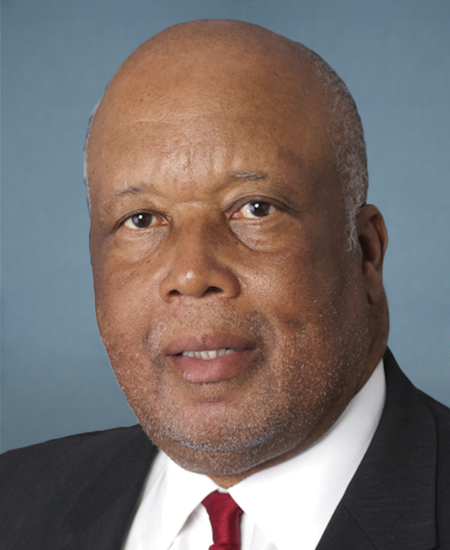
Rep. Bennie G. Thompson
Sponsored bills
Denying Infinite Security and Government Resources Allocated toward Convicted and Extremely Dishonorable Former Protectees Act or the DISGRACED Former Protectees Act This bill removes Secret Service protection from any individual who is convicted and sentenced for a federal or state felony.
Maddy summaryHouse Resolution 1158 recognizes the 82nd anniversary of the establishment of the U.S. Naval Construction Force (Seabees) on March 5, 2024. It honors their dual role in building military infrastructure and fighting in combat since World War II, as well as their global humanitarian efforts including disaster relief and community projects. The resolution expresses gratitude for their service, sacrifices, and contributions to U.S. military operations and international goodwill. As a symbolic measure, it does not create new policies or obligations.
Maddy summaryHR 8061, the Crime Victims Fund Stabilization Act of 2024, ensures stable funding for the Crime Victims Fund by directing certain False Claims Act collections into it from 2024 through 2029. Specifically, it adds a provision requiring that amounts collected under the False Claims Act (excluding whistleblower rewards and government reimbursement for damages) be deposited into the fund during this period. This directly affects crime victims who rely on the fund for services like counseling and emergency aid, as it prevents potential shortfalls in funding. The bill makes a concrete policy change by redirecting specific federal civil penalties into the fund, rather than altering the fund's existing purposes or eligibility rules.
Maddy summaryHR 1083, the Caring for Survivors Act of 2023, increases financial support for surviving spouses of veterans. It amends Title 38 to raise dependency and indemnity compensation from a fixed $1,154 to 55% of the monthly compensation rate under section 1114(j), effective six months after enactment. The bill also modifies eligibility for survivors of veterans who died before 1993, ensuring they receive the greater of their current benefit or the new calculation. Additionally, it reduces the required continuous service rating period for survivors from 10 years to five years when a veteran was totally disabled at death. These changes directly affect surviving spouses, particularly those with veterans who died prior to 1993.
Maddy summaryHRES 1148 is a resolution passed by the U.S. House of Representatives that condemns the Iranian government for supporting terrorism, regional proxy conflicts, and internal suppression of dissent - including its crackdown on protests following Mahsa Amini's death in 2022. It specifically calls for maintaining sanctions against Iran, supporting the Iranian Resistance's Ten-Point Plan (which advocates for a democratic, secular, nonnuclear Iran), and protecting Iranian political refugees in Albania. The resolution also affirms the Iranian people's right to self-determination under international law and urges the U.S. to recognize their struggle for freedom. As a non-binding resolution, it does not create new laws but formally expresses congressional stance.
Maddy summaryHRES 1136 is a non-binding House resolution expressing support for designating April 2024 as "Parkinson’s Awareness Month." It highlights that Parkinson’s disease affects over 1 million people in the U.S. annually, causes significant health impacts, and requires increased research and support. The resolution urges continued funding for Parkinson’s research, recognizes individuals participating in clinical trials, and commends organizations aiding those living with the disease and their caregivers. This resolution has no legal effect but aims to raise public awareness and support for Parkinson’s advocacy efforts.
Maddy summaryThis bill amends the Homeland Security Act of 2002 to strengthen oversight of how the Department of Homeland Security (DHS) handles intelligence information. It requires DHS intelligence personnel to share, retain, and disseminate intelligence in ways that protect privacy rights and civil liberties, as determined by the Chief Privacy Officer and Civil Rights Officer. Key provisions include mandatory training for staff handling intelligence on privacy laws (like the Privacy Act of 1974) and new coordination with DHS’s Intelligence and Analysis Under Secretary to ensure compliance. The bill directly affects DHS intelligence personnel who analyze, review, or disseminate intelligence data.
Maddy summaryHRES 1101 is a non-binding resolution expressing the House of Representatives' support for collaborating with the Congressional Black Caucus to develop a "Black Wealth Agenda." It commits the House to outlining legislative priorities focused on closing the racial wealth gap through key areas like expanding Black entrepreneurship, reforming housing policies, building workforce development programs, and updating the federal minimum wage. The resolution emphasizes addressing systemic barriers in homeownership, education access, employment discrimination, and tax policy to advance economic equity for Black communities. It does not create new laws but directs the House to coordinate with the CBC on policy solutions targeting wealth-building opportunities.
Maddy summaryHR 7770, the Rosie the Riveter Commemorative Coin Act, authorizes the U.S. Mint to produce and sell three commemorative coins honoring women who worked on the U.S. home front during World War II. It specifies $5 gold coins (max 50,000), $1 silver coins (max 400,000), and half-dollar coins (max 750,000), all to be issued between January 1, 2025, and December 31, 2025. Each coin sale includes a surcharge ($35 for gold, $10 for silver, $5 for half-dollar), with all surcharge funds directed to the Rosie the Riveter Trust for maintaining the Rosie the Riveter WWII Home Front National Historical Park and educational programs. The coins will feature designs reflecting the legacy of diverse women workers and must meet specific weight, diameter, and composition standards.