

Give Kids a Chance Act of 2025 This bill expands the Food and Drug Administration’s (FDA’s) authority with respect to research on rare pediatric diseases, including by permitting the FDA to take enforcement action against drug sponsors that fail to satisfy pediatric study requirements and by reauthorizing programs that support pediatric research. Specifically, the bill modifies requirements relating to molecularly targeted pediatric cancer investigations to permit research on new drugs in combination with active ingredients that have already been approved, provided certain conditions are met; permits the FDA to take enforcement action against drug sponsors that fail to comply with pediatric study requirements, if such sponsors demonstrated a lack of due diligence in satisfying the requirement; renews the FDA’s authority to award priority review vouchers to sponsors of new products intended to treat rare pediatric diseases through September 30, 2029; and reauthorizes through FY2027 certain funding for the National Institutes of Health to support priority pediatric research. The bill also provides statutory authority for the FDA’s interpretation of the orphan drug exclusivity period. The bill specifies, consistent with FDA regulations, that the seven-year market exclusivity period for drugs for rare diseases or conditions (i.e., orphan drugs) prohibits the approval of the same drug for the same approved use or indication with respect to the disease or condition. (In Catalyst Pharmaceuticals, Inc. v. Becerra , a court rejected the FDA’s interpretation and held that orphan drug exclusivity extends to all uses or indications for the disease or condition.)
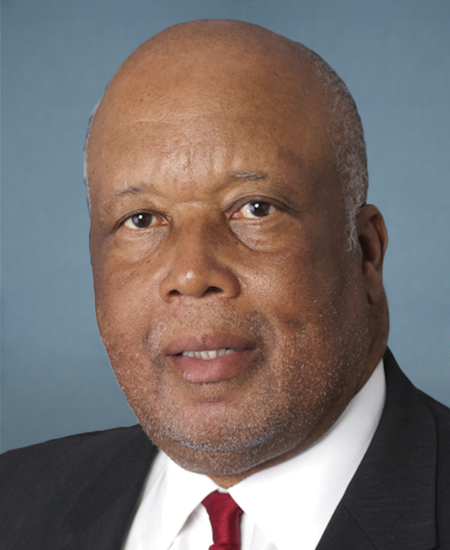
Rep. Bennie G. Thompson
Sponsored bills
Maddy summaryThis bill establishes a federal grant program to improve diabetes care in underserved urban and rural communities. It authorizes the Health Secretary to fund eligible providers - including community health centers, rural clinics, and tribal health departments - to deliver comprehensive services like routine diabetes treatment, prevention education, eye/foot care, and kidney disease management. Grants require providers to offer culturally appropriate care in local languages and conduct community outreach. Funding must be distributed equitably between urban and rural areas, with authorization for fiscal years 2026-2031. The program directly supports patients in medically underserved communities facing barriers to diabetes care.
Maddy summaryHR 6181, the John Lewis Every Child Deserves a Family Act, prohibits child welfare agencies receiving federal funds from discriminating against children, youth, or prospective foster/adoptive parents based on religion, sex (including sexual orientation and gender identity), or marital status. It directly affects LGBTQ youth in foster care - overrepresented at 30% of the system - who face higher risks of trauma, group home placements, and suicide attempts compared to non-LGBTQ peers. Key provisions require agencies to collect data on sexual orientation and gender identity, establish a National Resource Center for LGBTQ youth support, provide cultural competency training, and eliminate discriminatory practices. The law aims to improve safety, permanency, and placement stability by expanding access to family-based care and ensuring equitable services for all children in the system.
Maddy summaryHR 4058 requires the Department of Homeland Security to improve outreach and support for communities receiving homeland security grants. It mandates annual surveys to collect feedback from state, local, Tribal, and territorial governments about grant processes and incorporates that feedback into future funding announcements. The bill also requires the DHS Administrator to provide ongoing technical assistance before, during, and after grants are awarded under two key programs: the Urban Area Security Initiative and the State Homeland Security Grant Program. Additionally, it directs a Comptroller General report on outreach effectiveness after two years and a DHS report on implementation after three years.
Maddy summaryThe Housing Financial Literacy Act of 2025 modifies mortgage insurance premiums for first-time homebuyers who complete approved financial literacy counseling programs. It requires that such counseling be completed before signing a mortgage application or sales agreement. The bill reduces the mortgage insurance premium by 25 basis points (0.25%) below the standard rate established by the Secretary of Housing and Urban Development. This change directly affects first-time homebuyers who participate in qualifying housing counseling programs.
Maddy summaryThis bill establishes a pilot program requiring the Secretary of Defense to partner with certified nonprofit diaper banks to provide free diapers and diapering supplies to military families in need. Covered diaper banks must be nonprofit members of the National Diaper Bank Network with at least five years of experience distributing diapers at no cost. The program will connect these banks directly with military installations to address diaper access gaps, with the National Diaper Bank Network providing technical support and evaluating the pilot's effectiveness. It directly affects military families facing financial barriers to basic necessities like diapers, creating a new federal partnership mechanism for support.
Maddy summaryThe Increasing Access to Mental Health in Schools Act creates a federal grant program to increase the number of mental health professionals (counselors, social workers, and psychologists) in low-income public schools. It provides funding for partnerships between schools serving high percentages of low-income students and graduate institutions that train mental health professionals, aiming to reach recommended staff-to-student ratios (such as 1 counselor per 250 students). The bill also establishes a student loan repayment program for mental health professionals working in these schools, offering up to $200,000 in total repayment over five years. This legislation directly affects low-income school districts and mental health professionals working in those schools, with the goal of improving mental health support for students facing challenges like poverty, homelessness, or trauma.
Maddy summaryThe Global Respect Act (HR 6151) requires the U.S. President to publicly list foreign officials responsible for severe human rights violations against LGBTQI individuals, including torture, prolonged detention, or violence based on sexual orientation or gender identity. It mandates denying visas and entry to listed individuals and requires annual reports on the list's updates and impacts. The bill also directs the State Department to track global violence against LGBTQI people and update annual human rights reports to include discrimination based on sexual orientation or gender identity. These provisions directly affect foreign government officials and entities implicated in such abuses, aiming to increase accountability through U.S. visa restrictions.
Maddy summaryHR 1514 establishes the Mississippi River Basin Fishery Commission within the Department of the Interior to coordinate management of interjurisdictional fisheries across 31 U.S. states, two Canadian provinces, federal agencies, and tribal nations. The Commission oversees six sub-basin management plans, develops strategies to control invasive carp (like bighead and silver carp), and administers grant programs for conservation projects. It provides $30 million annually (2027-2029) and $50 million annually (2030-2032) to fund collaborative efforts, with grants prioritizing projects aligned with the existing MICRA Joint Strategic Plan. The Commission’s authority is nonbinding, requiring consensus among member entities but not overriding state or federal management laws.
Maddy summaryHRES 891 is a ceremonial House resolution supporting the designation of National Rural Health Day, observed annually on the third Thursday of November (November 20, 2025, this year). It recognizes rural health care providers and the challenges rural communities face in accessing care, citing issues like hospital closures and workforce shortages. The resolution does not create new policies, funding, or requirements; it solely expresses the House's support for the day's goals and commitment to improving rural health accessibility. This is a non-binding acknowledgment, not a legislative action with concrete policy changes.