

Accelerating Kids' Access to Care Act This bill requires state Medicaid programs to establish a process through which qualifying out-of-state providers may enroll as participating providers without undergoing additional screening requirements. Among other things, a qualifying provider must (1) serve minors, or adults whose condition began as a minor; and (2) have previously been screened for Medicare participation or for participation in the Medicaid program of the state in which the provider is located.
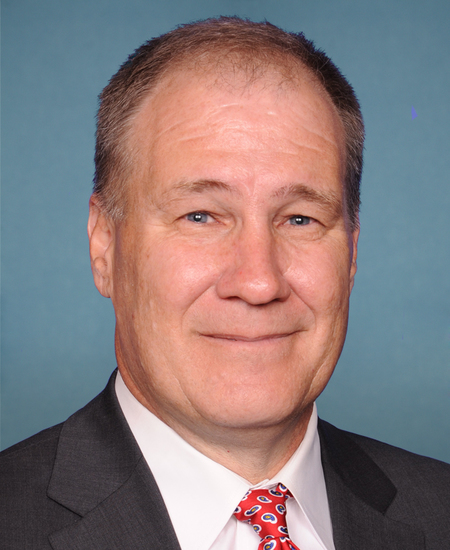
Rep. Trent Kelly
Sponsored bills
National Guard Cybersecurity Support Act This bill authorizes members of the National Guard to perform, at the request of a state and in connection with training or other duty, cybersecurity operations or missions to protect critical infrastructure.
This concurrent resolution commemorates the 30th anniversary of Operation Provide Comfort (the humanitarian operation to defend and deliver aid to Kurdish refugees fleeing attacks by the Hussein regime), and it reaffirms the strong American-Kurdish partnership.
No Taxpayer Funding for the U.N. Population Fund This bill prohibits the use of funds to provide contributions directly or indirectly to the United Nations Population Fund (UNFPA). The UNFPA is a United Nations agency that supports access to sexual and reproductive health services, including voluntary family planning, maternal health care, and sexuality education.
Informed Consent Act This bill establishes new federal criminal offenses related to the performance of abortions and sterilization procedures. First, the bill prohibits knowingly performing an abortion or sterilization procedure without obtaining informed consent. It provides exceptions, including for an abortion or sterilization procedure that is necessary to save a mother whose life is endangered by a physical (but not psychological or emotional) disorder, illness, or condition. An individual who performs a prohibited abortion or sterilization procedure is subject to criminal penalties—a fine, a prison term of up to 10 years, or both. Second, the bill requires federal employees and contractors, as well as employees and contractors of certain federally funded entities, who know about a prohibited abortion or sterilization procedure to report it as soon as possible. An individual who knows about a prohibited abortion or sterilization procedure but fails to report it is subject to a fine, a prison term of up to three years, or both.
Pain-Capable Unborn Child Protection Act This bill establishes a new criminal offense for performing or attempting to perform an abortion if the probable post-fertilization age of the fetus is 20 weeks or more. A violator is subject to criminal penalties—a fine, a prison term of up to five years, or both. The bill provides exceptions for an abortion (1) that is necessary to save the life of the pregnant woman, or (2) when the pregnancy is the result of rape or incest. A physician who performs or attempts to perform an abortion under an exception must comply with specified requirements. A woman who undergoes a prohibited abortion may not be prosecuted for violating or conspiring to violate the provisions of this bill.
Abortion Providers Loan Elimination Act This bill makes abortion providers ineligible to receive a loan under the Paycheck Protection Program, which was established to support small businesses in response to COVID-19. This prohibition shall not apply to hospitals or entities that exclusively provide abortions (1) where the pregnancy is the result of rape or incest, or (2) where the pregnancy endangers the life of the mother. The Inspector General of the Small Business Administration must report on the number of paycheck protection loans made to the Planned Parenthood Federation of America and to other abortion providers.
Woman's Right To Know Act This bill specifies requirements for informed consent that health care providers must obtain before performing an abortion procedure. Providers must present a woman seeking an abortion with an authorization form at least 24 hours before performing the procedure. The form must (1) include specified information concerning gestational age, associated developmental characteristics, and medical risks; (2) disclose penalties that providers may face for failing to obtain the requisite informed consent; and (3) include an affirmation that the individual signing the form understands the information. The form must be signed and witnessed in person and retained in the medical file. Providers do not have to obtain such consent if, in reasonable medical judgment, obtaining it would pose a greater risk of death or substantial physical impairment of a major bodily function, excluding psychological or emotional conditions, of the pregnant woman. The bill also establishes civil penalties for providers who do not comply with these requirements.
Life at Conception Act This bill declares that the right to life guaranteed by the Constitution is vested in each human being at all stages of life, including the moment of fertilization, cloning, or other moment at which an individual comes into being. Nothing in this bill shall be construed to authorize the prosecution of any woman for the death of her unborn child.
No Taxpayer Funding for Abortion and Abortion Insurance Full Disclosure Act of 2021 This bill modifies provisions relating to federal funding for, and health insurance coverage of, abortions. Specifically, the bill prohibits the use of federal funds for abortions or for health coverage that includes abortions. Such restrictions extend to the use of funds in the budget of the District of Columbia. Additionally, abortions may not be provided in a federal health care facility or by a federal employee. Historically, language has been included in annual appropriations bills for the Department of Health and Human Services (HHS) that prohibits the use of federal funds for abortions—such language is commonly referred to as the Hyde Amendment. Similar language is also frequently included in appropriations bills for other federal agencies and the District of Columbia. The bill makes these restrictions permanent and extends the restrictions to all federal funds (rather than specific agencies). The bill's restrictions regarding the use of federal funds do not apply in cases of rape, incest, or where a physical disorder, injury, or illness endangers a woman's life unless an abortion is performed. The Hyde Amendment provides the same exceptions. The bill also prohibits qualified health plans from including coverage for abortions. Currently, qualified health plans may cover abortion, but the portion of the premium attributable to abortion coverage is not eligible for subsidies.