

Maddy summaryHR 3952 limits the flags that can be flown over Department of Veterans Affairs (VA) facilities to just six specific flags: the U.S. flag, any state flag, any federally recognized tribal government flag, the VA department flag, any military branch flag, and the POW/MIA flag. This applies directly to all VA buildings and properties nationwide. The bill explicitly restricts all other flags, including political or commemorative flags, from being displayed on these facilities.
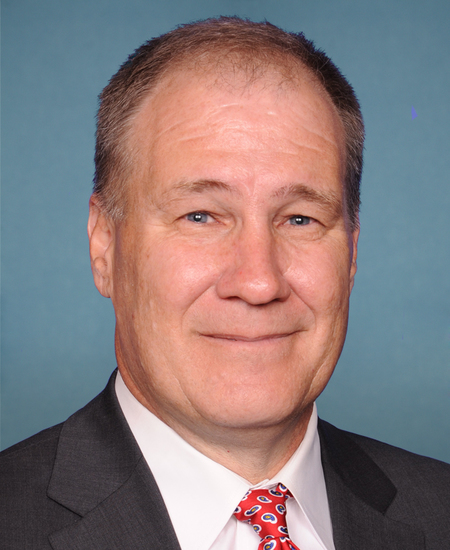
Rep. Trent Kelly
Sponsored bills
This resolution expresses the sense of the House of Representatives that research and promotion boards support efforts to develop new markets and strengthen existing markets via research, education, and promotion.
Maddy summaryHR 4417, the "Ending Agricultural Trade Suppression Act," prevents state and local governments from imposing additional production standards on agricultural products sold across state lines if those standards aren't already required by federal law or the state where the product is grown. It directly affects agricultural producers, distributors, and businesses operating in interstate commerce by allowing them to sue states in federal court to challenge such regulations. The bill creates a private right of action for affected parties to seek court invalidation of the regulations and damages for economic losses, with provisions for preliminary injunctions to halt enforcement during litigation. This aims to reduce regulatory barriers that could hinder the movement of agricultural goods between states.
Maddy summaryHR 4355, the Rural Veterinary Workforce Act, modifies the Internal Revenue Code to exclude certain loan repayment or forgiveness assistance from taxable income. It specifically adds programs under the National Agricultural Research, Extension, and Teaching Policy Act of 1977 and similar state initiatives - designed to boost veterinary services in rural areas - to the list of tax-exempt benefits. This directly affects veterinary students participating in these state or federal programs who work in underserved rural communities. The change takes effect for assistance received in taxable years beginning after December 31, 2023.
This bill increases funding for the Conservation Stewardship Program. This Department of Agriculture program provides financial and technical assistance to agricultural producers to maintain and improve existing conservation systems and to adopt additional conservation activities in a comprehensive manner on a producer's entire operation.
Maddy summaryHR 3425 creates federal grants to community colleges and college consortia with agriculture programs, helping them expand workforce training, education, and research in farming and related fields. The bill prioritizes colleges partnering with local farms for hands-on student training and allows grant funds to cover equipment, faculty development, and apprenticeships. It authorizes $20 million annually from 2024-2029 for these programs and requires a 3-year evaluation report to Congress. The law directly affects community colleges offering agriculture-focused education, aiming to strengthen their capacity to serve students and the agricultural industry.
Maddy summaryThis bill establishes the Forest Conservation Easement Program to protect forest land through conservation easements. It provides federal funding for two types of easements: forest land easements purchased by eligible entities (with federal cost-share assistance) and forest reserve easements acquired directly by the Secretary. The program sets aside 10% of annual funding ($100 million per year from 2024-2028) specifically for beginning, socially disadvantaged, veteran, and limited resource forest landowners. It incorporates existing contracts from the Healthy Forests Reserve Program into the new program without altering their terms.
Maddy summaryHJRES 44 is a congressional resolution seeking to block a 2021 rule by the Bureau of Alcohol, Tobacco, Firearms, and Explosives (ATF). The rule classified firearms with stabilizing braces as "short-barreled rifles," which would have required additional licensing and regulation. This resolution uses a specific legal process (under Title 5, U.S. Code) to formally disapprove the ATF rule, meaning the rule would no longer be in effect. It directly affects firearm owners, manufacturers, and dealers who would have been subject to the rule’s requirements.
Maddy summaryHRES 546 is a symbolic House resolution commemorating the one-year anniversary of the Supreme Court's June 24, 2022, Dobbs v. Jackson Women's Health Organization decision, which overturned Roe v. Wade. The resolution expresses support for the Court's ruling that the Constitution does not guarantee a right to abortion and celebrates the decision's impact on returning abortion policy authority to state legislatures. As a ceremonial resolution, it does not create new laws or directly affect any individuals or policies. The resolution focuses solely on marking the anniversary and affirming the position that unborn life should be protected.
Maddy summaryThis bill renames the U.S. Food for Peace program after Peter O'Brien and makes key changes to how agricultural aid is delivered. It prohibits using cash, food vouchers, or foreign-sourced food for aid (section 2d), requires that at least 50% of annual funds be used for procuring U.S. agricultural commodities (section 2b(5)), and mandates annual reports to Congress on fund usage (section 2b(6)). These changes directly affect U.S. farmers supplying aid and international recipients of food assistance. The bill focuses on strengthening domestic agricultural exports within the Food for Peace program while adding transparency requirements.