

Maddy summaryHRES 955 is a resolution commending Taiwan for its democratic election history and supporting Taiwan's democratic institutions. It recognizes Taiwan's transition to democracy since the late 1980s, including 7 presidential and 9 legislative elections held since then, all deemed free and fair. The resolution specifically expresses support for Taiwan's upcoming January 13, 2024, elections and condemns interference by the Chinese Communist Party. It affirms U.S. commitment to a strong partnership with Taiwan across multiple domains and supports Taiwan's self-defense and liberty. As a procedural resolution, it does not create new law but formally expresses congressional support for Taiwan's democratic development.
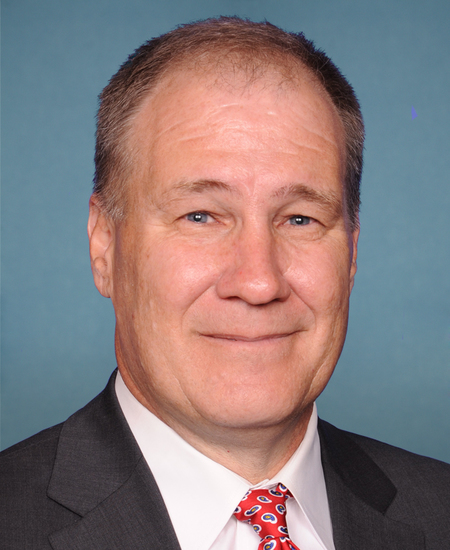
Rep. Trent Kelly
Sponsored bills
Maddy summaryHR 1147, the Whole Milk for Healthy Kids Act of 2023, allows schools participating in the National School Lunch Program to offer whole milk as an option during lunch. It amends the school lunch law to explicitly permit schools to serve flavored and unflavored whole milk alongside reduced-fat, low-fat, and fat-free milk choices for students. The bill also requires the Secretary of Agriculture to adjust meal regulations to account for saturated fat from whole milk, ensuring it doesn't count against meal fat limits. This change directly affects participating schools and the students who receive school lunches, expanding their milk beverage options.
Maddy summaryHR 6734 prohibits the use of federal funds to finalize, implement, or enforce the Bureau of Alcohol, Tobacco, Firearms, and Explosives' (ATF) proposed rule (2022R-17) defining "engaged in the business as a dealer in firearms." This bill directly affects the ATF by blocking funding for this specific regulatory rule, which was proposed in August 2023. The legislation does not create new requirements but prevents federal resources from being used to advance this particular ATF regulation.
Maddy summaryH.J.Res. 66 disapproves a specific rule issued by the Consumer Financial Protection Bureau (CFPB) regarding small business lending under the Equal Credit Opportunity Act (Regulation B). The resolution, if passed, would prevent this CFPB rule from taking effect by declaring it "have no force or effect." The rule in question (88 Fed. Reg. 35150) aimed to clarify how lenders must evaluate small business loan applications under existing equal credit laws. This disapproval directly affects the CFPB's regulatory authority and would block the rule's implementation for small business lenders and financial institutions.
Maddy summaryHR 6459, the "No Abortion Coverage for Medicaid Act," permanently prohibits Medicaid and CHIP funds from covering abortions, except in specific medical circumstances. It directly affects Medicaid recipients and state Medicaid programs by blocking federal funding for abortion services, including travel or lodging to obtain one, and prevents states from using Medicaid demonstration waivers to expand abortion coverage. The bill codifies the existing Hyde Amendment restrictions, ensuring taxpayer dollars cannot pay for abortions except when a pregnancy results from rape or incest, poses a life-endangering physical condition, or involves miscarriage or ectopic pregnancy. This policy change would restrict abortion coverage under Medicaid nationwide, with exceptions limited to the three medical scenarios outlined in the bill.
Maddy summaryThis bill prohibits the use of federal funds to cover abortions or related expenses (like travel or lodging) for unaccompanied immigrant minors. It directly affects unaccompanied alien children, as defined by immigration law, by blocking federal rules or guidance that would facilitate access to abortion services for them. The key provision bans the Health and Human Services Secretary from issuing, implementing, or enforcing any rule that enables such access using taxpayer money. This is a policy change limiting federal funding for abortion-related costs for this specific group, not a general abortion ban.
Maddy summaryThis resolution (HRES 859) is a ceremonial House measure honoring U.S. veterans on Veterans Day 2023. It formally recognizes veterans' service and sacrifice, calling on the American public to observe Veterans Day to acknowledge their role in protecting U.S. freedoms. The resolution does not create new policies, allocate funds, or affect specific groups - it is purely symbolic. It was introduced by 33 bipartisan House members and passed by the House without committee action.
Maddy summaryThis bill would authorize the U.S. government to confiscate Russian sovereign assets held in U.S. jurisdiction and use those funds to support Ukraine's reconstruction and humanitarian needs following Russia's invasion. It prohibits releasing these blocked assets until Russia fully compensates Ukraine or agrees to an international compensation mechanism. The bill establishes a "Ukraine Support Fund" to hold confiscated assets and requires regular congressional reporting on how these funds are allocated for Ukraine's recovery. It also includes provisions for international coordination with allies on sanctions and asset management related to Russia's invasion of Ukraine.
Maddy summaryThe SHIP Act imposes sanctions on foreign entities that knowingly handle Iranian petroleum, targeting those involved in port operations, transportation, refining, or ship-to-ship transfers of Iranian oil. Starting 90 days after enactment, the President must block assets, deny visas, and impose penalties on individuals or companies engaging in these activities, including family members or owners of sanctioned entities. It requires annual reports tracking Iran's oil exports, revenues, and key players like shipping companies and ports. The sanctions terminate if the President certifies Iran has stopped supporting terrorism and dismantled weapons programs.
Maddy summaryHRES 781 is a symbolic resolution expressing the House of Representatives' support for designating October 12, 2023, as "National Loggers Day." It highlights the logging industry's role in creating rural jobs, supporting forest management, and contributing to healthy ecosystems through activities like carbon sequestration and wildfire prevention. The resolution does not create new laws or policies but formally encourages the President to officially recognize the day. It directly affects the logging industry by acknowledging its economic and environmental contributions. The resolution was introduced by multiple representatives and referred to the Committee on Oversight and Accountability.