

Maddy summaryHJRES 164 is a congressional resolution seeking to block a rule issued by the Department of Commerce regarding firearms license requirements. It directly targets the rule published in the Federal Register (89 Fed. Reg. 34680), which would have revised licensing procedures for firearms dealers. If passed, the resolution would prevent this rule from taking effect by invoking the congressional disapproval process under federal law. The bill does not create new regulations but aims to halt an existing rule affecting gun license applicants and dealers.
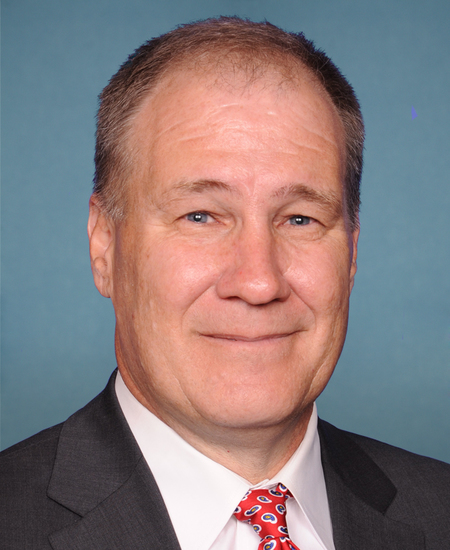
Rep. Trent Kelly
Sponsored bills
Maddy summaryThis bill expands Post-9/11 GI Bill benefits to National Guard members who perform specific full-time duty. It amends eligibility rules to include service on "full-time National Guard duty" (as defined in Title 32) and "active duty" (as defined in Title 32), which previously did not count toward full benefits. The change applies retroactively to service since September 11, 2001, and takes effect one year after enactment. This directly affects National Guard members serving in these specific full-time roles, granting them parity with other veterans for educational benefits.
Maddy summaryHR 8834, the Safeguarding Our Supply Chains Act, creates a Supply Chain Crime Coordination Center within Homeland Security to collect and analyze data on supply chain fraud and theft hotspots, including high-risk transportation routes and retail areas. It also establishes a multi-agency Task Force (including FBI, ICE, state/local law enforcement, and private sector partners) to coordinate efforts targeting organized crime groups stealing cargo, disrupting supply chains, and committing fraud. The Task Force will share intelligence, track theft trends, and work directly with affected businesses to address threats. The bill authorizes $100 million over five years for implementation and requires annual reports to Congress on the Task Force’s effectiveness in reducing these crimes. This law directly affects federal, state, and local law enforcement agencies, transportation and retail businesses, and supply chain operators.
Maddy summaryThis bill rescinds unspent funds from specific federal programs. It targets leftover money from pandemic relief (like the CARES Act and American Rescue Plan) and certain infrastructure initiatives (including education stabilization funds and transportation programs like the Congestion Mitigation Program). The rescission is limited to amounts already allocated for Israel, Ukraine, and Indo-Pacific security supplements under recent appropriations. Unspent funds must be returned to the Treasury, with no new spending created.
Maddy summaryHR 537 authorizes a Congressional Gold Medal to honor 60 diplomats who saved Jewish lives during the Holocaust by issuing visas and passports against their governments' orders, risking expulsion and personal danger. The medal will be presented to the next of kin of these diplomats, alongside representatives from their home countries, and permanently displayed at the United States Holocaust Memorial Museum. The bill also permits the sale of bronze duplicates to cover production costs, with proceeds going to the U.S. Mint. This legislation recognizes the diplomats' humanitarian actions without creating new government programs or altering existing laws.
Maddy summaryHR 8653 authorizes the posthumous award of a Congressional Gold Medal to Major Thomas D. Howie, a U.S. Army officer who died during the Battle of Normandy in WWII. The bill specifies the medal will be presented to his nephew, Tom Howie, or his next of kin, and then permanently displayed at The Citadel Museum. It also permits the U.S. Mint to produce and sell bronze duplicates to cover costs. This is a commemorative measure honoring Major Howie's military service and sacrifice, with no substantive policy changes.
Maddy summaryHR 5403, the CBDC Anti-Surveillance State Act, prohibits the Federal Reserve from issuing or facilitating central bank digital currency (CBDC) directly or indirectly to individuals through financial institutions. It specifically bans Federal Reserve banks from offering digital products to individuals, maintaining individual accounts, or using CBDC for monetary policy implementation. The bill also clarifies that its restrictions do not apply to existing physical cash or private, permissionless digital payment systems. This bill directly affects the Federal Reserve's ability to develop or deploy a government-run digital dollar. The law aims to prevent the Federal Reserve from creating a digital currency that could enable transaction tracking or government oversight of personal financial activity.
Maddy summaryThis resolution (HRES 1252) honors emergency medical services (EMS) personnel across the United States for their critical work. It recognizes their 24/7 service in rural and underserved areas, their role in stabilizing and transporting patients during emergencies, and their dedication to public health care. The resolution specifically expresses appreciation for EMS workers during Emergency Medical Services Week (May 19-25, 2024). As a ceremonial resolution, it contains no new policies, funding, or legal requirements - only symbolic recognition of their contributions.
Maddy summaryHRES 1255 is a non-binding House resolution introduced on May 23, 2024, that calls on all Americans to observe Memorial Day 2024 as a day of remembrance for military personnel who died in service. The resolution specifically honors "the men and women of the Armed Forces who have died in the pursuit of freedom and peace" and urges the public to demonstrate appreciation for their sacrifices. It does not create new laws or policies but serves as a symbolic expression of national gratitude, emphasizing respect for those who died while defending democratic values. The resolution was co-sponsored by multiple House members and aligns with the traditional observance of Memorial Day.
Maddy summaryHR 8474 establishes new, tiered monthly incentive pay rates for military personnel performing explosive ordnance disposal (EOD) duty in the Army, Navy, Marine Corps, Air Force, or Space Force. It provides increased pay based on years of continuous EOD service, ranging from $125 for under 2 years up to $1,000 for 10+ years (with reduced rates after 17 years), and applies to both active duty and reserve component members performing EOD duty under orders. The bill directly affects service members holding EOD duty designators who perform this specialized work on a career basis. The pay rates take effect six months after the bill's enactment, with specific annual thresholds defined in the legislation.