

Maddy summaryThe Election Mail Act (HR 2987) establishes new requirements for handling mail-in ballots in federal elections to improve reliability and accessibility. It requires the Postal Service to process absentee ballots on the same day received, place postmarks indicating mailing dates on ballot envelopes, and treat election mail as first-class mail with free postage for completed ballots. The bill also mandates states to use intelligent mail barcodes on return envelopes, affix specific tags for ballot visibility, and adopt a uniform 7-day deadline for accepting mailed ballots postmarked on or before election day. These changes apply to federal elections, with most provisions taking effect for the 2024 election cycle. The bill includes additional provisions for the Postal Service to consult with Indian Tribes about voting barriers on tribal lands.
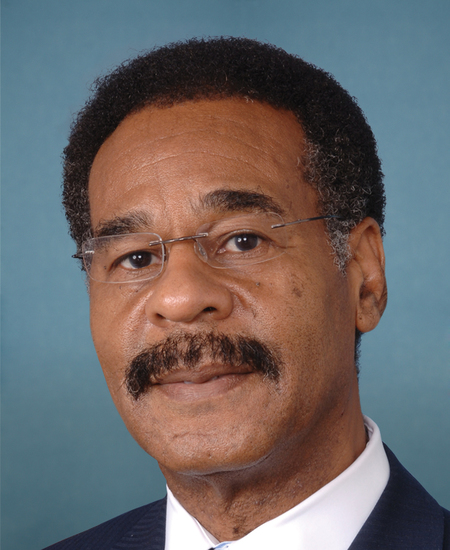
Rep. Emanuel Cleaver
Sponsored bills
Forced Arbitration Injustice Repeal Act of 2023 or the FAIR Act of 2023 This bill prohibits a predispute arbitration agreement from being valid or enforceable if it requires arbitration of an employment, consumer, antitrust, or civil rights dispute.
Maddy summaryHRES 332 is a symbolic House resolution expressing congressional support for Ukraine's victory in its war against Russia. It affirms that U.S. policy should aim for Ukraine to prevail and return to its internationally recognized 1991 borders, with the House declaring that Ukraine's victory must be secured through NATO integration. The resolution also calls for the Russian Federation to pay reparations, global support for Ukraine's rebuilding, accountability for Russian leaders, and justice for victims of wartime crimes. As a non-binding "sense of Congress" resolution (not a law), it does not change U.S. policy but reflects the House's stance on supporting Ukraine.
Performing Artist Tax Parity Act of 2023 This bill modifies the above-the-line tax deduction for the expenses of performing artists (including commissions paid to managers or agents) to provide for a phaseout of such deduction for taxpayers whose adjusted gross income exceeds $100,000 ($200,000 for joint return filers). The $100,000 phaseout threshold is adjusted for inflation annually for taxable years beginning after 2023.
Maddy summaryThis bill changes how incarcerated people are counted in the U.S. census and for congressional redistricting. Starting with the 2030 census, it requires counting individuals in prison based on their last known residence before incarceration, not the location of the prison. This directly affects states that currently count prison populations as residents of the prison location, which distorts local representation. As a result, states must use this new residence data when drawing congressional districts, ensuring representation aligns with where people lived before being incarcerated.
Raise the Age Act of 2023 This bill establishes new restrictions on the sale or transfer of certain semiautomatic firearms to individuals under 21 years of age. Specifically, this bill makes it unlawful for a licensed gun dealer, importer, manufacturer, or collector to sell or deliver a semiautomatic center-fire rifle or semiautomatic center-fire shotgun that has (or has the capacity to accept) an ammunition feeding device with a capacity of more than five rounds to an individual who the licensee knows or has reasonable cause to believe is under age 21. The prohibition does not apply if the individual under age 21 is a full-time law enforcement officer or active-duty member of the Armed Forces. The bill also requires the Federal Bureau of Investigation to report on the operation of its public access line, including a description of information sharing protocols and recommendations for improving such protocols.
Maddy summaryThe Right to Read Act of 2023 defines an "effective school library" as one with certified librarians, adequate resources, and support for digital and information literacy. It requires states and school districts to ensure all students, particularly those in under-resourced schools, have access to such libraries through new reporting requirements and funding mechanisms. The bill provides $500 million annually for literacy programs and mandates biennial data collection on school library resources. It also protects staff from liability for following right-to-read policies and requires school libraries to uphold First Amendment rights by providing diverse reading materials without political bias.
Maddy summaryHR 2848, the Freedom to Move Act, provides $5 billion annually (2024-2028) in federal grants to cities, counties, and transit agencies to implement and improve fare-free public transportation systems. Eligible entities must apply with detailed plans addressing equity gaps, community consultation, and replacing fare enforcement with safety improvements like bus stop accessibility and safer routes. The bill requires grantees to prioritize underserved communities (low-income areas and communities of color) by expanding service frequency, reducing commute times, and improving connectivity to critical services. Grants cover lost fare revenue and costs for operational upgrades, network redesigns, and staff training over a 5-year period. This directly affects local transit systems and their riders, particularly low-income residents, seniors, people with disabilities, and foster care youth.
This resolution affirms that it is U.S. policy to see Ukraine prevail against the Russian invasion and restored to its internationally recognized 1991 borders. The resolution also states that the peace brought by Ukraine's victory must be secured by integrating Ukraine into NATO and other Euroatlantic institutions.
Maddy summaryThe Family Building FEHB Fairness Act (HR 2828) amends the Federal Employees Health Benefits (FEHB) program to add assisted reproductive treatment as a covered benefit for federal employees and their families. It specifically defines these treatments to include procedures like in vitro fertilization, intrauterine insemination, and the preservation of eggs, sperm, or embryos. The bill requires the Office of Personnel Management to include these services under FEHB coverage, expanding access to reproductive care for eligible federal workers. The change would take effect one year after the bill's enactment, directly affecting federal employees enrolled in the FEHB program seeking fertility-related medical services.