

Maddy summaryHRES 375 is a ceremonial resolution supporting National Nurses Week (May 6-12, 2023), recognizing nurses' contributions to healthcare. It does not create new laws or policies but formally acknowledges nurses' roles as frontline caregivers, patient advocates, and key contributors to public health. The resolution encourages the public to observe the week through recognition and activities, highlighting nurses' impact across all healthcare settings. It directly affects the nursing profession by affirming their value, though it has no binding effect on legislation or funding.
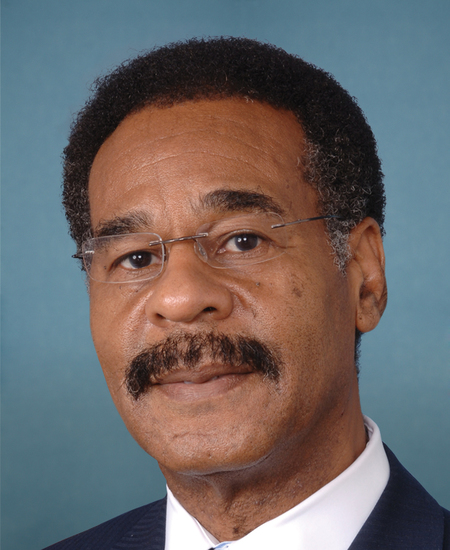
Rep. Emanuel Cleaver
Sponsored bills
Maddy summaryHRES 372 is a non-binding House resolution expressing support for designating May 2023 as "Mental Health Awareness Month." It does not create new laws or allocate funds but formally urges the nation to recognize mental health as a priority. The resolution supports reducing stigma around mental illness, expanding access to mental health services, and emphasizing that mental well-being is as important as physical health. It highlights the need for greater awareness and resources, particularly for youth, veterans, and communities of color facing mental health disparities, but does not mandate any specific policy changes.
Targeting Resources for Equitable Access to Treatment for Long COVID Act or the TREAT Long COVID Act This bill requires the Department of Health and Human Services to award competitive grants to create or expand the capacity of clinics that treat patients with persistent, long-term symptoms following recovery from acute COVID-19 (i.e., Long COVID) and associated conditions. Eligible recipients include federally qualified health centers, rural health clinics, urban Indian health centers, and state and local health departments.
Maddy summaryThe PAST Act of 2023 amends the Horse Protection Act to ban specific devices used to cause pain (soring) in horses at shows, particularly affecting Tennessee Walking Horses, Racking Horses, and Spotted Saddle Horses. It defines prohibited "action devices" (like boots or chains causing friction) and requires licensed, conflict-free inspectors at events to enforce rules. The bill increases penalties for violations to up to $5,000 fines or 3 years in jail, and mandates longer disqualifications for repeat offenses (180 days → 1 year → 3 years). Horse show organizers, exhibitors, and participants must comply with these new inspection and penalty requirements.
Maddy summaryThis bill extends workplace safety protections under the Occupational Safety and Health Act to people working in correctional facilities, including those in prison labor programs, work release, and maintenance roles. It requires states and federal prisons to annually report on safety conditions, injuries, and compliance with safety standards, beginning two years after enactment. The bill also creates $20 million annually in federal grants to help states update their safety laws and enforcement for incarcerated workers. These provisions directly affect incarcerated individuals performing labor in state or federal correctional facilities and the agencies operating them.
Maddy summaryHR 3238, the Affordable Housing Credit Improvement Act of 2023, updates the Low-Income Housing Tax Credit (LIHTC) program to increase the availability of affordable housing across the United States. The bill makes several key changes including increasing state funding formulas, modifying tenant eligibility rules to better serve vulnerable populations (such as domestic violence victims and students), and expanding credit eligibility for projects in rural and Native American communities. Specific provisions raise the credit for properties serving extremely low-income households, clarify rules around tenant income increases, and require housing providers to protect victims of domestic violence. The bill also updates terminology from "low-income" to "affordable" throughout the tax code and enhances program transparency through data sharing requirements. These changes aim to make the LIHTC program more effective at creating and preserving affordable housing units for low-income households nationwide.
Maddy summaryThe Pay Our Correctional Officers Fairly Act adjusts pay for Bureau of Prisons employees currently assigned to the "Rest of U.S." pay locality. It directs that if an employee's worksite is within 200 miles of another pay locality, they will be paid according to the nearest locality with the highest pay rate - replacing the lower "Rest of U.S." rate. This applies to correctional officers and other Bureau of Prisons staff, but excludes employees whose worksite is more than 200 miles from any other locality. The change takes effect 180 days after the bill is enacted.
Maddy summaryThis bill creates federal grants to redevelop blighted shopping centers that meet specific criteria, primarily benefiting local governments and public agencies in communities with underused or failing retail properties. It authorizes grants up to $5 million per project, requiring grantees to contribute over 50% of costs from non-federal sources (like local tax incentives or in-kind contributions), and mandates projects to address blight through revitalization while prioritizing transit-oriented development, affordable housing, and reusing "grayfield" sites. Projects must involve facilities over 20 acres with significant vacancy (e.g., 40+ storefronts where <30% are occupied or major chain store vacancies) and align with Secretary-established priorities. Funding is capped at $50 million annually for fiscal years 2024-2025, with reports tracking grant usage and program effectiveness.
Maddy summaryThis bill requires U.S. public schools to include Asian Pacific American history in all K-12 American history and civics education. It amends the Elementary and Secondary Education Act to mandate that curriculum standards, teacher training, and national assessments explicitly cover this history as part of American history. The policy directly affects students and teachers nationwide by changing how history is taught in public schools. The key mechanism is requiring specific curriculum updates to address gaps in current Eurocentric teaching, ensuring students learn about APA contributions, experiences, and challenges as integral to U.S. history.
Maddy summaryHCONRES 37 is a non-binding congressional resolution expressing that Congress views climate change as an emergency requiring a massive national mobilization. It states that human-caused climate change severely impacts U.S. economic well-being, health, safety, and national security, and urges the President to use existing authorities to accelerate climate action. The resolution does not create new laws or funding but emphasizes the need for urgent, equitable efforts to reduce emissions, address environmental injustice, and support vulnerable communities disproportionately affected by climate impacts. It cites rising global temperatures, extreme weather costs ($165 billion in U.S. disasters in 2022), and the Inflation Reduction Act as context, while clarifying it does not declare an actual national emergency.