

Maddy summaryThis resolution (HRES 443) is a symbolic gesture by the U.S. House of Representatives supporting National Poppy Day, observed on the Friday before Memorial Day. It formally endorses the tradition of wearing red poppies to honor veterans who died serving in the U.S. Armed Forces, referencing the poppy’s historical symbolism from World War I. The resolution encourages all U.S. citizens, residents, and visitors to wear a poppy that day as a sign of appreciation for military service. It does not create new laws, programs, or obligations - it is purely a statement of recognition.
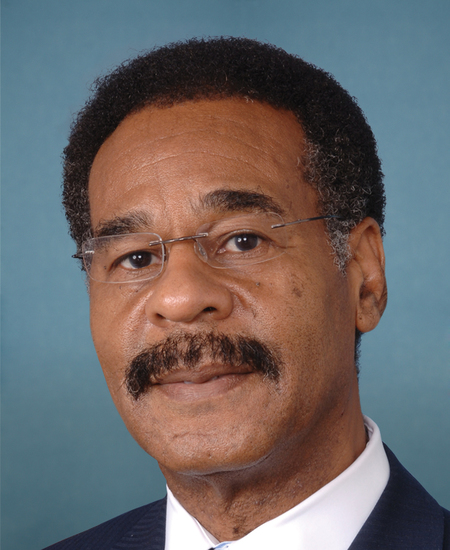
Rep. Emanuel Cleaver
Sponsored bills
Maddy summaryThis bill allows the U.S. Postal Service to ship alcoholic beverages under specific conditions. It enables registered businesses (like wineries, breweries, and retailers) to mail alcohol directly to consumers, provided the recipient is at least 21 with valid ID, the shipment isn’t for resale, and state alcohol taxes are paid upfront. The Postal Service must establish rules for delivery, registration, and verification, while explicitly preserving all existing state, local, or tribal laws governing alcohol sales and shipments. The bill does not override state restrictions on alcohol delivery, and the Postal Service remains liable for violations under state law.
Maddy summaryHRES 439 is a non-binding resolution expressing the House of Representatives' support for keeping the U.S. Postal Service (USPS) as an independent federal agency, not subject to privatization. It highlights USPS's constitutional role, self-sustaining nature (relying on service revenue, not taxpayer funds), and its importance to rural communities, e-commerce, and over 600,000 employees. The resolution urges Congress to take action to preserve USPS's independence, emphasizing that privatization could raise prices, reduce services, and harm the nation's mail infrastructure. As a procedural resolution, it does not change law but formally states the House's position.
Maddy summaryThis bill expands TRICARE coverage to include wigs and treatment for traction alopecia - a type of hair loss caused by tight hairstyles, chemical treatments, or prolonged tension on the hair - directly affecting active-duty military members who develop this condition. It amends military health law to explicitly add "traction alopecia" to coverage for wigs and treatment, and requires the military to issue new grooming guidelines by September 2024 warning service members about the health risks of tight hairstyles, dyes, and chemical products. The key change is broadening existing TRICARE benefits to specifically cover this preventable condition, while mandating education on its causes. This is a policy adjustment to improve health care access for affected service members, not a new benefit.
Maddy summaryHR 3567, the Combating Workplace Discrimination in Correctional Facilities Act of 2023, prohibits forcing incarcerated individuals to participate in work programs and bans retaliation against them for refusing such work. It removes the requirement that prisoners exhaust administrative remedies before filing lawsuits about prison conditions and expands protections under the Civil Rights Act of 1964 to specifically cover "incarcerated workers" in correctional facilities. The bill also mandates that agencies operating correctional facilities provide disability rights notices, implement compliance policies, and submit annual reports on ADA and Rehabilitation Act adherence. These changes directly affect incarcerated workers in federal and contracted correctional facilities by strengthening workplace rights and reducing barriers to legal action.
Maddy summaryThis bill would designate approximately 1.7 million acres of public land in Utah's Colorado Plateau and Great Basin regions as wilderness areas, protecting them from development while preserving traditional uses by Indigenous communities. It establishes specific wilderness areas across Utah's red rock canyons, including the Great Basin Wilderness Areas, Grand Staircase-Escalante Wilderness Areas, and others, with detailed acreage for each designated zone. The bill includes administrative provisions for managing these areas, such as maintaining existing livestock grazing rights, setting road setbacks to protect wilderness character, and reserving water rights for the wilderness areas. This legislation directly affects how the Bureau of Land Management administers public lands in Utah and defines the boundaries for public use of these designated wilderness areas.
Maddy summaryThis resolution expresses the U.S. House of Representatives' support for designating May as "National Bladder Cancer Awareness Month." It does not create new laws or funding but calls on the public, advocacy groups, researchers, and those affected by bladder cancer to promote awareness and support during May. The resolution cites that bladder cancer affects over 800,000 families in the U.S., is among the top diagnosed cancers, and early detection improves survival rates. Its goal is to encourage community activities that raise public knowledge about the disease and support for patients and research.
Maddy summaryThe EVs for All Act of 2023 establishes a Department of Energy grant program to fund electric vehicle (EV) sharing services at public housing projects. Eligible entities - like public housing agencies, local governments, and partner nonprofits - can apply for grants to purchase used EVs, install charging equipment, and run community outreach. Grants prioritize projects in historically marginalized communities with high pollution or limited transportation access, require fair labor practices, and mandate affordable, non-discriminatory charging fees. The program requires grantees to report on usage, emissions reductions, and service costs while ensuring EVs meet domestic content and worker protection standards.
Maddy summaryHR 3523, the Perinatal Workforce Act, provides $15 million annually from 2024 to 2028 to expand and diversify maternity care providers. It directs HHS to issue guidance for states on recruiting diverse providers (including midwives, nurses, and community health workers) and requires grant recipients to prioritize students from racial/ethnic minority groups, implement bias training, and target health professional shortage areas. The bill also mandates annual reporting on workforce diversity and outcomes, and requires a GAO report assessing barriers to equitable access in maternal healthcare. This legislation directly affects hospitals, nursing schools, midwifery programs, and insurers by funding targeted workforce development to address racial disparities in maternal care.
Maddy summaryThe Maternal Vaccination Act amends public health law to specifically target vaccination outreach for pregnant and postpartum individuals and their children, directly affecting public health campaigns and health agencies. It updates existing provisions to include these groups in awareness efforts, requires new activities to increase vaccination rates - particularly among racial and ethnic minority communities - and increases annual funding from $15 million to $17 million for fiscal years 2024-2028. Key mechanisms include revising language in the Public Health Service Act to explicitly cover pregnant/postpartum individuals in campaign descriptions and adding a new requirement (Section 317(k)(1)(E)(vii)) to address vaccination equity. The bill focuses on concrete policy changes to expand access and awareness, not on predicting outcomes.