

Maddy summaryThis bill establishes procedures for handling requests to dismiss criminal prosecutions against the President. It requires the Attorney General to submit a sworn statement confirming whether a dismissal request came from the President or their direction, and mandates that courts consider evidence of bad faith before granting such dismissals. A three-judge court must hear these cases, and the Justice Department's Inspector General must report to Congress if they find a dismissal was requested by the President. The bill directly affects the President, Attorney General, courts, and Justice Department oversight mechanisms during presidential criminal cases.
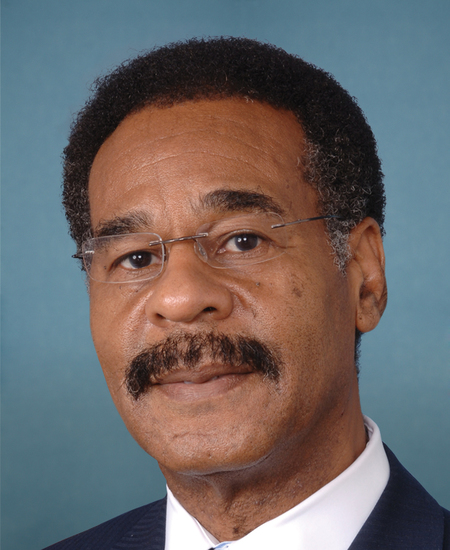
Rep. Emanuel Cleaver
Sponsored bills
Maddy summaryHCONRES 131 is a symbolic resolution recognizing the wage gap between Latina women and White, non-Hispanic men in the U.S. workforce. It highlights that Latina women working full-time earn 58 cents for every dollar earned by White, non-Hispanic men, with an average lifetime earnings loss of over $1.2 million. The resolution designates October 3, 2024, as "Latina Equal Pay Day" to draw attention to this disparity, citing Bureau of Census data showing the gap has persisted for decades. It does not create new laws or policies but formally acknowledges the economic impact on Latina women and their families.
Maddy summaryThis resolution designates September 2024 as "National Polycystic Kidney Disease Awareness Month" to raise public awareness and understanding of polycystic kidney disease (PKD), a genetic condition affecting approximately 500,000 people in the U.S. It encourages the public, healthcare providers, and organizations to support the month through activities like events and education to highlight PKD's impact on individuals and families. The resolution does not create new laws or funding but serves as a symbolic gesture to promote research, care, and support for those living with PKD, which is a leading cause of kidney failure.
Maddy summaryThis resolution formally censures Representative Glen Clay Higgins (LA-03) for a September 25, 2024, social media post containing racist remarks and false claims about Haitians. The bill requires Higgins to appear in the House chamber to receive the censure, with the resolution publicly read by the Speaker. It specifically references his post describing Haiti as "the nastiest country," falsely accusing Haitians of eating pets, and labeling them "slapstick gangsters and thugs." The censure is a formal disciplinary action by the House, not a policy change.
Maddy summaryHR 9835, the Sexual Abuse Services in Detention Act, authorizes federal funding to provide emotional support services for individuals who have experienced sexual abuse while in detention. It creates three key mechanisms: (1) $10 million annually for grants to nonprofit providers collaborating with correctional facilities to deliver crisis counseling, safety planning, and resources; (2) $5 million annually for training grants to help correctional staff understand and support survivors; and (3) a $2 million annual national resource center to share best practices and training materials. The bill directly affects incarcerated survivors of sexual abuse and the facilities holding them, requiring services to be provided by specialized nonprofits with correctional experience. Funding is authorized for fiscal years 2024-2029, supplementing existing programs without replacing them.
Maddy summaryHR 1719, the Honoring Our Fallen Heroes Act of 2023, establishes a presumption that certain cancers diagnosed in public safety officers (like police and firefighters) are work-related if linked to their duties. It defines 22 specific cancers (including lung, mesothelioma, and WTC-related cancers) as "exposure-related," allowing officers or their families to receive benefits without proving direct work connection, provided they were diagnosed within 15 years of leaving active service. The bill also creates a process for adding new cancers to the list based on scientific evidence, requiring the Bureau to review petitions and make decisions within 180 days. This applies to deaths or disabilities occurring on or after January 1, 2023, directly affecting officers who developed covered cancers during service.
Maddy summaryHCONRES 130 is a symbolic concurrent resolution commending state and local governments that treat reproductive rights as human rights following the *Dobbs* decision. It recognizes efforts by cities like Austin, Texas, and Montgomery County, Maryland, to expand abortion access and condemn criminalization of pregnancy outcomes. The resolution affirms that reproductive rights are human rights, urges states to repeal restrictive laws, and references U.S. obligations under international human rights treaties. As a non-binding resolution, it does not create new laws or alter existing policies.
Maddy summaryHRES 1495 designates September 2024 as "Sickle Cell Disease Awareness Month" to raise public education about sickle cell disease (SCD), which affects approximately 100,000 people in the U.S., predominantly in African American communities. The resolution urges the Department of Health and Human Services to address access barriers for SCD treatments in Medicare and Medicaid, calls for increased National Institutes of Health research funding, and proposes forming a federal interagency cabinet to coordinate SCD policy. It also encourages public events during September to highlight early detection, treatments, and preventative care for SCD complications. As a symbolic resolution, it does not create new laws but directs federal agencies to prioritize equitable access and research for SCD.
Maddy summaryHRES 1494 is a non-binding resolution recognizing that air pollution and extreme heat disproportionately threaten maternal and infant health for pregnant Latinas in the U.S., citing systemic inequities that place them at higher risk than other groups. It expresses the House's sense that equitable interventions - such as bilingual air quality alerts, community air monitoring, expanded cooling access, and culturally tailored health education - must be rapidly developed to address these vulnerabilities. The resolution specifically calls for actions like improving heat guidelines at health facilities serving pregnant women and increasing access to affordable cooling solutions in Latino neighborhoods. As a statement of congressional opinion, it does not create new laws but aims to guide future policy and resource allocation.
Maddy summaryHRES 1499 is a symbolic resolution expressing concern about rising book bans in U.S. schools and libraries, citing PEN America data showing over 10,000 individual book bans in public schools between July 2023 and June 2024 - more than double the previous year. It highlights how bans disproportionately target books featuring LGBTQ+ themes, racial history, and marginalized voices (like *The Handmaid’s Tale*, *Maus*, and *Fry Bread*), while emphasizing students’ First Amendment rights to access diverse materials. The resolution calls on school districts and libraries to follow established best practices for handling book challenges and to protect students’ right to read widely, including works reflecting diverse perspectives. As a non-binding resolution, it does not create new law but urges local education entities to uphold free expression.