

Maddy summaryHR 3011 allows the U.S. Postal Service to mail alcoholic beverages under specific conditions, primarily affecting licensed alcohol businesses (like wineries, breweries, and retailers) that register with the USPS. The bill requires shipments to be for personal use only (not resale), include age verification (21+ with ID), and comply with state delivery rules. It explicitly states that state, local, or tribal laws prohibiting alcohol shipments remain in effect and cannot be overridden by this federal law. The USPS must create regulations to implement these rules, and states can sue the USPS for violations under local alcohol laws.
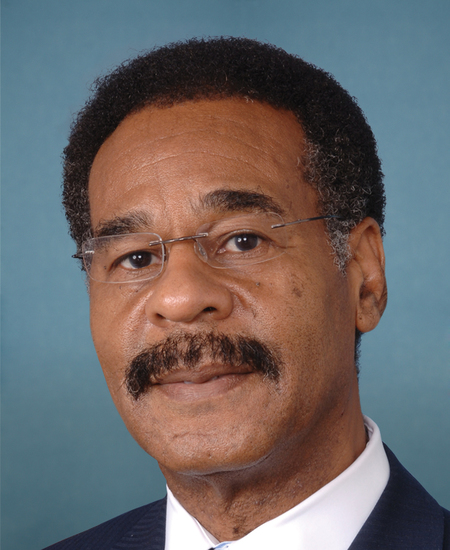
Rep. Emanuel Cleaver
Sponsored bills
Maddy summaryThe TREES Act of 2025 establishes a federal grant program to fund tree planting projects that reduce residential energy consumption. Eligible entities - including local governments, tribes, nonprofits, and power providers - can apply for grants covering 90% of project costs, with $50 million authorized annually from 2026-2030 to plant at least 300,000 trees yearly. Priority is given to projects targeting neighborhoods with high energy burdens (households spending a large share of income on energy bills), low tree canopy cover, senior or child populations, and low-income areas. Projects must include community engagement and local hiring, focusing on shade/wind protection to lower home energy use. The program aims to cut residential energy costs through strategic urban forestry, with all funding and implementation details defined in the bill text.
Maddy summaryHRES 341 is a symbolic House resolution expressing support for Earth Day, not a substantive bill. It urges the President to issue an Earth Day proclamation, encourages Americans to address environmental challenges (like climate change and litter), and calls for rejoining the Paris Agreement - though these are non-binding recommendations with no legal force. The resolution references historical environmental legislation (like the Clean Air Act) but does not create new policies, allocate funds, or change regulations. It directly affects no specific group, as it solely serves to affirm environmental values through symbolic recognition. (Note: The document header incorrectly lists "Federal Water Pollution Control Act" as the bill text, but this is a formatting error; the actual resolution is about Earth Day.)
Hot Foods Act of 2025 This bill expands the Supplemental Nutrition Assistance Program (SNAP) to permit the use of SNAP benefits to purchase hot foods or hot food products ready for immediate consumption.
Maddy summaryThis bill increases the federal tax credit for rehabilitating historic buildings. It raises the standard credit rate from 20% to 30% for qualifying small projects (with a $3.75 million expenditure cap) and further increases the cap to $5 million for projects in rural areas. The bill also allows taxpayers to transfer all or part of this credit to another taxpayer, creating a new market for the credit. These changes apply to properties placed in service after the bill's enactment date. The bill directly affects developers and owners of historic properties seeking tax incentives for rehabilitation projects.
Maddy summaryHR 2948, the Safer Neighborhoods Gun Buyback Act of 2025, authorizes $360 million annually from 2025-2027 to fund gun buyback programs across the country. The bill creates a grant program for states, local governments, tribal governments, and eligible gun dealers to collect firearms from individuals using "smart prepaid cards" that cannot be used to purchase guns. Participants would pay 125% of a gun's market value (with possible increases for modified weapons) and must destroy all collected firearms and ammunition within 30 days. The program requires criminal background checks on all collected weapons and prohibits reselling any guns obtained through the initiative, with a new federal criminal provision making it illegal to use these cards for firearm transactions.
Maddy summaryHR 2910, the Youth Workforce Readiness Act of 2025, establishes a federal grant program to fund community-based organizations in creating after-school and out-of-school-time workforce readiness programs for youth aged 6-18. The bill authorizes $100 million annually (2026-2030) to support activities like career pathway planning, paid work experiences (including apprenticeships), occupational skill training aligned with local job needs, and employer partnerships. It directly affects eligible youth - particularly those in underserved communities - and requires grantees to coordinate with schools, employers, and local workforce boards, while mandating youth councils to advise on program design. The program emphasizes measurable outcomes, including improved school attendance, skill development, and transitions to postsecondary education or employment.
Maddy summaryThis resolution (HRES 331) is a non-binding House of Representatives statement supporting National Youth HIV/AIDS Awareness Day. It urges state/local governments and schools to recognize the day and promotes inclusive HIV education in curricula, including information on pre-exposure prophylaxis (PrEP). The resolution calls for removing outdated HIV criminalization laws, expanding youth-friendly healthcare access (including confidential testing and treatment without parental consent), and supporting existing programs like the Ryan White HIV/AIDS Program. It specifically highlights the disproportionate impact of HIV on young Black gay and bisexual men and advocates for reducing stigma to improve health outcomes for youth living with HIV.
Maddy summaryHR 2880 provides due process protections for federal employees who are promoted to career positions (in the competitive service, excepted service, or Senior Executive Service) and serve under a probationary period. It requires these employees to be covered by existing federal employment laws, including special protections for Department of Veterans Affairs staff. The bill also allows employees removed from such positions between January 20, 2025, and the law's enactment to be reinstated to their former or equivalent role with backpay. Political appointees are excluded from these protections and reinstatement provisions.
Climate Change Financial Risk Act of 2025 This bill addresses climate change risk and its potential impact on the financial system. The Federal Reserve Board must develop financial risk analyses relating to climate change for certain large nonbank financial companies and bank holding companies. Specifically, these entities must be evaluated every two years on whether they have the capital necessary to absorb financial losses that would arise under several different climate change risk scenarios. In response to the results of the evaluation, entities must develop and submit for approval a climate risk resolution plan. The plan must include a capital policy with respect to climate risk planning and targets to remedy identified vulnerabilities. If the plan is not approved, the entity’s ability to make capital distributions is restricted. The bill also establishes the Climate Risk Scenario Technical Development Group to provide recommendations to the board regarding climate change risk scenarios, and determine the financial and economic risks of these scenarios. The board must develop a survey to assess (1) the ability of other large financial institutions to withstand each scenario, (2) which surveyed entities have activities in geographical areas or industries that are significantly exposed to the impacts of climate change, and (3) how these surveyed entities plan to adapt to risks presented in each scenario.