

Cover Outstanding Vulnerable Expansion-eligible Residents Now Act or the COVER Now Act This bill establishes a demonstration program to allow local governments to provide health benefits to the Medicaid expansion population in states that have not expanded Medicaid. Under the program, local governments may provide coverage for individuals who are newly eligible for Medicaid under the Patient Protection and Affordable Care Act (i.e., the Medicaid expansion population) for a maximum of 10 years, or until their respective states expand Medicaid. The bill provides a 100% federal matching rate for the first three years of program participation. The bill prohibits states from taking certain actions against participating localities, such as withholding funding, increasing taxes, or restricting provider participation. States that violate these requirements are subject to certain funding penalties.
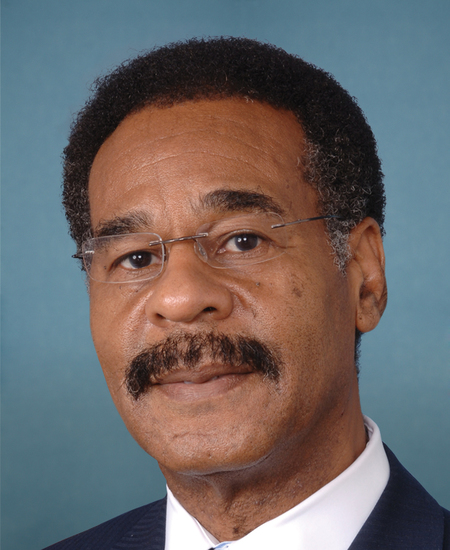
Rep. Emanuel Cleaver
Sponsored bills
Work Without Worry Act This bill modifies eligibility for Social Security Disability Insurance (SSDI) benefits for individuals who have a disability that began before age 22. Under current law, these individuals may obtain SSDI benefits based on the work record of a retired, disabled, or deceased parent. However, an individual with earnings after age 22 that exceed a specified monetary limit (i.e., constitute substantial gainful activity) permanently loses eligibility for such benefits. This bill allows individuals to retain eligibility for such benefits regardless of the amount of earnings after age 22. Additionally, individuals who apply for SSDI benefits on a parent's record and also independently qualify for Social Security benefits on their own record will receive the larger of the two benefit amounts.
American Renewable Energy Act of 2021 This bill establishes an annual renewable energy standard for retail electricity suppliers through 2030. Under the standard, the suppliers must (1) increase their renewable energy generation each year by specified amounts, and (2) generate at least 70% renewable electricity by 2030.
This bill repeals the Authorization for Use of Military Force Against Iraq Resolution of 2002.
This resolution recognizes the historical significance to the nation of Juneteenth Independence Day (commemorating the end of slavery in the United States).
Shark Fin Sales Elimination Act of 20 21 This bill addresses the sale of shark fins and the inclusion of rays and skates in the Seafood Traceability Program. The Seafood Traceability Program has data reporting and recordkeeping requirements at the time of entry for imported fish or fish products entered into U.S. commerce. The bill makes it illegal to possess, buy, or sell shark fins or any product containing shark fins, except for certain dogfish fins. A person may possess a shark fin that was lawfully taken consistent with a license or permit under certain circumstances. Penalties are imposed for violations under the Magnuson-Stevens Fishery Conservation and Management Act. The Department of Commerce must revise its regulations to include rays and skates as species that are subject to the Seafood Traceability Program.
Federal Building Clean Jobs Act of 2021 This bill establishes additional energy-efficiency requirements and programs for federal buildings, with a particular focus on reducing energy and water consumption and greenhouse gas emissions by FY2030 through partnerships with the private sector. Specifically, the bill requires federal agencies to reduce the following for their facilities by FY2030: average building energy intensity (by at least 25%, relative to FY2018); average potable water consumption intensity (by 54%, relative to FY2007); industrial, landscaping, and agricultural water consumption (by 20%, relative to FY2018); and specified categories of greenhouse gas emissions (by at least 40%, relative to FY2018). Federal agencies must also implement retrofit projects that reduce the energy consumption of their facilities by at least 35%. Additionally, the General Services Administration, the Department of Defense, the Department of Homeland Security, and the Department of Veterans Affairs must develop plans that ensure that at least 50% of certain facilities offer zero-emission vehicle charging or fueling by December 31, 2030. The bill directs agencies to work with the private sector through partnerships and financing opportunities in order to implement the bill's requirements. The bill also makes several other changes relating to federal building standards and related authorities, including (1) requiring lessors (i.e., property owners) to disclose data on the utility consumption of leased spaces; (2) requiring federal agencies to assess and mitigate area flood risks, based on climate science; and (3) authorizing long-term contracts for federal purchases of renewable energy.
Puerto Rico Statehood Admission Act This bill establishes a process for the admission of Puerto Rico into the union as a state, on an equal footing with all other states, based on a majority vote of the people of Puerto Rico.
Strengthening and Amplifying Vaccination Efforts to Locally Immunize All Veterans and Every Spouse Act or the SAVE LIVES Act This bill authorizes the Department of Veterans Affairs (VA) to furnish a COVID-19 (i.e., coronavirus disease 2019) vaccine to covered individuals during the COVID-19 public health emergency. Under the bill, covered individuals are veterans who are not eligible to enroll in the VA health care system; specified veterans who are eligible for hospital care, medical services, and nursing home care abroad; beneficiaries who are eligible for care due to a specified disability or death of a veteran; family caregivers of veterans who are participating in the VA's Program of Comprehensive Assistance for Family Caregivers; caregivers of veterans participating in the VA's Program of General Caregiver Support Services; caregivers of veterans participating in the VA's Medical Foster Home Program, Bowel and Bladder Program, Home Based Primary Care Program, or Veteran Directed Care Program; and the spouses of veterans. The VA must prioritize the vaccination of (1) veterans who are enrolled in the VA health care system, (2) veterans who fail to enroll but receive hospital care and medical services for specified disabilities in their first 12 months of separation from service, and (3) caregivers accompanying such prioritized veterans. Under the bill, the VA is authorized to determine the timing for offering a vaccine to the spouse of a veteran.
College Athlete Right to Organize Act This bill establishes collective bargaining rights for college athletes. Specifically, the bill amends the National Labor Relations Act to (1) define college athlete employee as an employee of an institution of higher education if the individual receives direct compensation from the institution and such compensation requires participation in intercollegiate sports, and (2) include public institutions as employers within the context of intercollegiate sports. The National Labor Relations Board (NLRB) must consider the colleges within an athletic conference as part of a bargaining unit with which college athletes can negotiate. The NLRB shall have jurisdiction over all institutions of higher education within the context of intercollegiate athletics regarding collective bargaining and representation matters and labor disputes. The bill prohibits any agreements, such as scholarship agreements, that waive the right of athletes to collectively bargain.