This concurrent resolution condemns violence and threats of violence against historically Black colleges and universities (HBCUs) and reaffirms the federal government's commitment to combating violence against HBCU students, faculty, and staff.
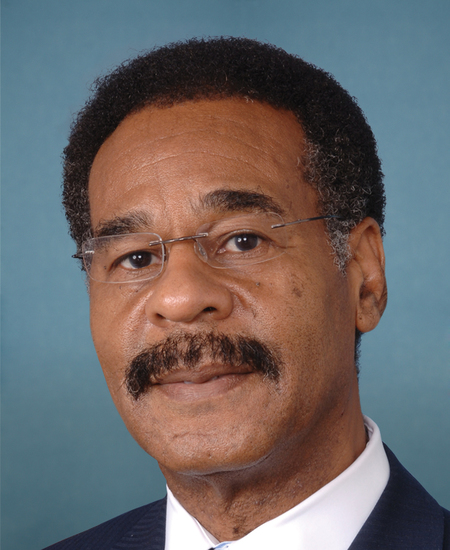
Rep. Emanuel Cleaver
Sponsored bills
Hospital Inpatient Services Modernization Act This bill extends the Acute Hospital Care at Home Program under Medicare until two years after the end of the COVID-19 public health emergency (the program allows hospitals to treat certain patients from emergency departments or inpatient hospital beds at home during the emergency period). It also requires an evaluation of this program and the Hospital Without Walls program (the program allowed hospitals to transfer patients to outside facilities, such as hotels, to continue treatment during the emergency period).
Green Postal Service Fleet Act of 2022 This bill prohibits the U.S. Postal Service from carrying out the contract with Oshkosh Defense for the procurement of postal delivery vehicles unless each purchase is at least 75% electric or zero-emission vehicles.
This resolution condemns the terrorist attack on Congregation Beth Israel in Colleyville, Texas, on January 15, 2022. It also expresses support for the affected community, commends the actions of law enforcement and emergency responders, and reaffirms a commitment to combat hate, bigotry, anti-Semitism, and violence against Jewish Americans.
Job Protection Act This bill reduces from 12 months to 90 days the employment period required for employees (including federal employees) to become eligible for family and medical leave. Additionally, the bill makes the family and medical leave requirements applicable to all employers (currently, the requirements apply to employers with 50 or more employees).
Choice in Affordable Housing Act of 2022 This bill establishes programs and grants to incentivize landlord participation in the Housing Choice Voucher program (i.e., Section 8 tenant-based housing assistance). The bill authorizes the Department of Housing and Urban Development (HUD) to provide one-time incentive payments to landlords, security deposit payments, bonuses to public housing agencies that employ landlord liaisons, and amounts for other recruitment purposes. Additionally, the bill allows dwelling units to meet Housing Choice Voucher program inspection requirements by satisfactory inspection through participation in other housing programs. Landlords not yet participating in a low-income housing assistance program may request inspection by a public housing agency to determine whether the dwelling meets requirements prior to selection by a tenant. Finally, HUD must expand the use of an alternative method of calculating fair market rent for purposes of the Housing Choice Voucher program.
Women's Health Protection Act of 2021 This bill prohibits governmental restrictions on the provision of, and access to, abortion services. Specifically, governments may not limit a provider's ability to prescribe certain drugs, offer abortion services via telemedicine, or immediately provide abortion services when the provider determines a delay risks the patient's health. Furthermore, governments may not require a provider to perform unnecessary medical procedures, provide medically inaccurate information, comply with credentialing or other conditions that do not apply to providers whose services are medically comparable to abortions, or carry out all services connected to an abortion. In addition, governments may not (1) require patients to make medically unnecessary in-person visits before receiving abortion services or disclose their reasons for obtaining such services, or (2) prohibit abortion services before fetal viability or after fetal viability when a provider determines the pregnancy risks the patient's life or health. The bill also prohibits other governmental measures that are similar to the bill's specified restrictions or that otherwise single out and impede access to abortion services, unless a government demonstrates that the measure significantly advances the safety of abortion services or health of patients and cannot be achieved through less restrictive means. The Department of Justice, individuals, or providers may bring a lawsuit to enforce this bill, and states are not immune from suits for violations. The bill applies to restrictions imposed both prior and subsequent to the bill's enactment.

This resolution supports the designation of a National FFA Week. It also (1) recognizes the important role of the National FFA Organization (Future Farmers of America) in developing the next generation of leaders who will change the world, and (2) celebrates 70 years of the National FFA Organization's membership magazine.
Autism Family Caregivers Act of 2022 This bill establishes a pilot program to provide training for caregivers on improving health and other outcomes for children with autism spectrum disorder and other developmental disabilities or delays. To carry out the program, the Health Resources and Services Administration (HRSA) must award grants to, among other eligible entities, health systems and nonprofits to provide the training. HRSA must also establish a national center to provide technical assistance to grant recipients and to evaluate the program.
Ensuring Diversity in Community Banking Act This bill establishes and revises provisions related to minority depository institutions, community development financial institutions, and impact banks. The bill (1) expands the definition of minority depository institutions to include women-owned banks, and (2) establishes impact banks as depository institutions with total assets less than $10 billion and where a certain total dollar value of loans are extended to low-income borrowers. The bill establishes a program allowing minority depository institutions and impact banks to receive deposits from certain Department of the Treasury accounts through designated custodial entities. It also establishes the Minority Bank Deposit Program to prioritize the use of minority depository institutions to the maximum extent possible to serve the financial needs of federal departments and agencies. Federal banking agencies must issue rules allowing new minority depository institutions and impact banks three years to meet capital requirements.