

Homeland Security Capabilities Preservation Act This bill directs the Federal Emergency Management Agency (FEMA) to submit to Congress a plan to make federal assistance available to certain urban areas that previously received Urban Area Security Initiative funding to preserve homeland security capabilities related to acts of terrorism. In developing the plan, FEMA must survey urban areas that did not receive grant funding related to preventing, preparing for, protecting against, and responding to acts of terrorism in the current fiscal year that (1) are at risk of being reduced or eliminated without such assistance, or (2) received funding in the current fiscal year but not in at least one of the six preceding fiscal years. The plan must (1) establish eligibility criteria for urban areas to receive federal assistance, (2) identify annual funding levels for such assistance in accordance with the survey, and (3) consider a range of approaches to make such assistance available to such urban areas.
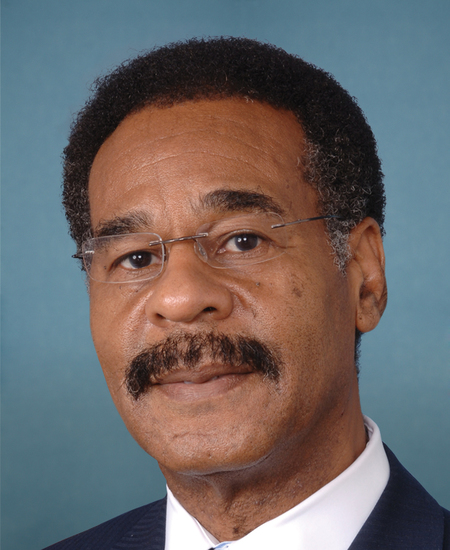
Rep. Emanuel Cleaver
Sponsored bills
Lymphedema Treatment Act This bill provides for Medicare coverage of lymphedema compression treatment items. Specifically, the bill provides for coverage of standard and custom fitted gradient compression garments and other approved items that are prescribed by a physician or other specified health care professional to treat lymphedema.
Keeping Ecosystems Living and Productive Act or the KELP Act This bill directs the National Oceanic and Atmospheric Administration (NOAA) to award grants to carry out projects related to the conservation, restoration, or management of kelp forest ecosystems. NOAA shall award grants for projects that address greatest relative regional declines in kelp forest ecosystems; focus on, among other things, long term ecosystem resilience, kelp forest seeding and connectivity, or urchin removal and other actions to reestablish trophic structure; or are identified by federal or state restoration and management plans as focal areas for recovery of kelp forests and associated species.
Driftnet Modernization and Bycatch Reduction Act This bill addresses certain driftnet fishing. Driftnet fishing is a method of fishing in which a gillnet composed of a panel or panels of webbing, or a series of such gillnets, is placed in the water and allowed to drift with the currents and winds for the purpose of entangling fish in the webbing. Currently, the use of large-scale drift gillnets with a total length of 2.5 kilometers or more is prohibited in the United States.The bill expands the definition of large-scale driftnet fishing to prohibit the use of gillnets with a mesh size of 14 inches or greater. This expanded prohibition does not apply within the U.S. exclusive economic zone for five years. The Department of Commerce must conduct a transition program to facilitate the phase out of large-scale driftnet fishing and to promote the adoption of alternative fishing practices that minimize the incidental catch of living marine resources. Commerce must award grants to program participants. Further, the North Pacific Fishery Management Council may recommend and Commerce may approve regulations to collect fees from charter vessel operators that guide recreational anglers who harvest Pacific halibut.
Prevent All Soring Tactics Act of 2022 or the PAST Act of 2022 This bill addresses the practice of soring horses. The soring of horses includes various actions taken on horses' limbs to produce higher gaits that may cause pain, distress, inflammation, or lameness. Specifically, the bill expands soring regulation and enforcement at horse shows, exhibitions, sales, and auctions, including by establishing a new system for inspecting horses for soring. In addition, the bill increases penalties for violations.
Disaster and Emergency Pricing Abuse Prevention Act This bill makes it unlawful to sell, or offer for sale, an essential good or service at an unconscionably excessive price during, or in anticipation of, a natural disaster, pandemic, or state of emergency.
Maddy summaryHRES 1457 is a symbolic resolution designating the Friday before Memorial Day as "National Poppy Day" to honor veterans. It encourages all U.S. citizens, residents, and visitors to wear a red poppy on that day as a tribute to fallen and serving members of the Armed Forces. The resolution recognizes the poppy's historical significance, originating from World War I poetry and adopted by veterans' organizations to memorialize those who died protecting freedom and support disabled veterans. It does not create new laws or funding but formally supports this observance through congressional endorsement.
Affordable Electric Vehicles for America Act of 2022 This bill extends until after 2025 the requirement that final assembly of vehicles occur within North America for purposes of the clean vehicle tax credit.
This concurrent resolution expresses opposition to the application of criminal laws to pregnancy outcomes and affirms that people deserve access to high-quality health care without fear of reprisal or punishment.
Maddy summaryHJRES 53 proposes a constitutional amendment to ban slavery and involuntary servitude as a criminal punishment. Currently, the 13th Amendment to the U.S. Constitution permits such punishments for crimes, creating a legal loophole. If ratified by 3/4 of state legislatures, this amendment would eliminate that exception nationwide, making it unconstitutional to impose forced labor or slavery as part of criminal sentences. The change would directly affect all states' criminal justice systems, particularly prison labor practices, by prohibiting these punishments for any offense.