

Veterans 2nd Amendment Protection Act This bill prohibits the Department of Veterans Affairs (VA) from transmitting certain information to the National Instant Criminal Background Check System (NICS) utilized by licensed importers or dealers of firearms. Specifically, the bill prohibits the VA from transmitting personally identifying information of a veteran or a beneficiary to the NICS solely on the basis that such veteran or beneficiary has an appointed fiduciary to manage their benefits, unless there is an order or finding of a judicial authority that such veteran or beneficiary is a danger to themselves or others.
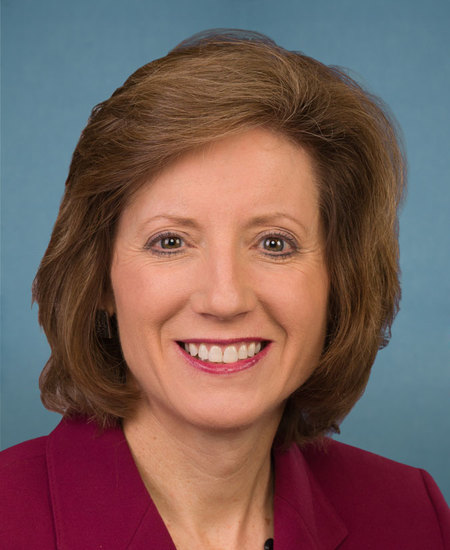
Rep. Vicky Hartzler
Sponsored bills
Protecting Gold Star Spouses Act of 20 21 This bill provides interim appropriations for the Coast Guard Retired Serviceman's Family Protection and Survivor Benefits Plans if a bill providing appropriations for the plans has not been enacted before the fiscal year begins. The bill provides the appropriations at the rate of operations and under the terms and conditions provided by the most recent law making full-year appropriations for the plans. The appropriations provided by this bill are not available after a bill is enacted that (1) provides appropriations for the plans, or (2) provides appropriations for the Coast Guard without funding the plans.
This resolution condemns Iranian state-sponsored terrorist attacks against U.S. citizens and officials and Iranian dissidents and expresses support for the people of Iran who are engaged in legitimate and peaceful protests against the Iranian regime.
This resolution condemns the Chinese government's decision to hide the emergence and spread of COVID-19 (i.e., coronavirus disease 2019) within China. It also calls for an investigation by public health officials from the United States and other affected countries into how China's actions contributed to the global COVID-19 pandemic.
Resident Physician Shortage Reduction Act of 2021 This bill increases the number of residency positions eligible for graduate medical education payments under Medicare for qualifying hospitals, including hospitals in rural areas and health professional shortage areas. Current law provides for an increase of up to 200 positions per fiscal year beginning in FY2023, with a total increase of 1,000 positions; each hospital may receive up to 25 additional positions. The bill provides for an additional increase of 2,000 positions per fiscal year from FY2023-FY2029; during this period, each hospital may receive up to 75 additional positions in total under the bill and current law. Additionally, one-third of the positions that are made available under the bill must be allocated to hospitals that are already operating above applicable resident limits. The bill also requires the Government Accountability Office to report on strategies to increase the diversity of the health professional workforce, including with respect to representation from rural, low-income, and minority communities.
This resolution requires the chair of a House committee to administer a specific oath to any witness appearing before the committee. Currently, a committee chair is only authorized to administer an oath.
This bill directs the Department of State to include additional information in its annual reports concerning Taiwan's participation at the World Health Organization's World Health Assembly (WHA) as an observer. The report shall describe changes and improvements to the State Department's plan to support Taiwan's observer status at the WHA, following any meetings at which Taiwan did not participate under such status. (China has opposed Taiwan's participation in the WHA.)
Expanded Telehealth Access Act This bill permanently allows audiologists, physical therapists, occupational therapists, speech-language pathologists, and other providers designated by the Centers for Medicare & Medicaid Services (CMS) to provide telehealth services under Medicare. Currently, the CMS is authorized to waive requirements for Medicare telehealth services during the public health emergency relating to COVID-19, and it has done so to allow all providers that are otherwise eligible to furnish in-person services under Medicare to also furnish telehealth services.
Success for Rural Students and Communities Act of 2021 This bill establishes a grant program through which the Department of Education may award funds to eligible partnerships to support rural postsecondary education and economic growth and development in rural communities. A grant recipient must be a partnership whose members represent at least three designated types of organizations, specifically (1) a local educational agency or educational service agency serving a rural area, (2) an institution of higher education (IHE), (3) a regional economic development entity, or (4) a rural community-serving organization with demonstrated success supporting rural students in accessing higher education and attaining degrees. A grant recipient must use awarded funds to carry out no fewer than two specified activities, namely (1) improving postsecondary enrollment rates for rural secondary school students, (2) increasing enrollment and completion rates of rural nontraditional students in degree programs at IHEs, (3) creating or strengthening academic programs at rural-serving IHEs to prepare graduates to enter into high-need occupations in the regional and local economies, or (4) generating local and regional economic development that creates employment opportunities for rural students with postsecondary degrees.
Veteran Suicide Prevention Act This bill requires the Department of Veterans Affairs (VA) to complete a review of the deaths of all covered veterans who died by suicide during the five-year period preceding the enactment of this bill. Covered veterans are those who received VA hospital care or medical services during the five-year period preceding the death of the veteran. The VA shall report on the results of the review and make such report publicly available.