

Protecting Kids from Candy-Flavored Drugs Act This bill establishes enhanced criminal penalties for certain federal drug offenses involving the manufacture or distribution of candy-flavored controlled substances or similar products for minors. Specifically, the bill imposes enhanced criminal penalties for a federal drug offense that involves manufacturing, creating, distributing, dispensing, or possessing with intent to distribute a controlled substance listed in schedule I or II that is combined with a candy or drink, marketed to appear similar to a candy or drink, or modified by flavoring or coloring to appear similar to a candy or drink. To be subject to an enhanced penalty, the individual must have knowledge or reasonable cause to believe that the controlled substance will be distributed, dispensed, or sold to an individual who is under 18 years of age.
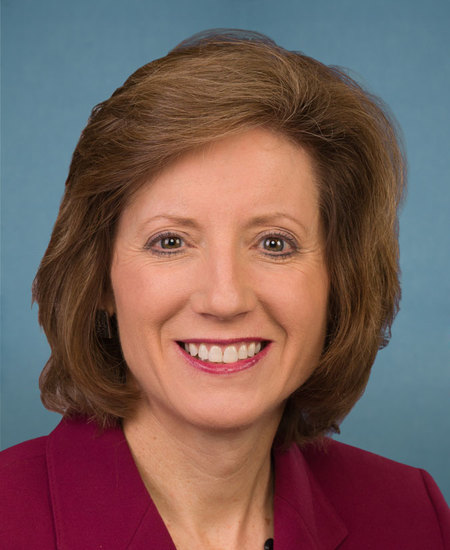
Rep. Vicky Hartzler
Sponsored bills
Protecting Pain-Capable Unborn Children from Late-Term Abortions Act This bill establishes a new criminal offense for performing or attempting to perform an abortion if the probable gestational age of the fetus is 15 weeks or more. A violator is subject to criminal penalties—a fine, a prison term of up to five years, or both. The bill provides exceptions for an abortion (1) that is necessary to save the life of the pregnant woman, or (2) when the pregnancy is the result of rape or incest. A physician who performs or attempts to perform an abortion under an exception must comply with specified requirements. A woman who undergoes a prohibited abortion may not be prosecuted for violating or conspiring to violate the provisions of this bill.
Protect Children's Innocence Act This bill places restrictions on the provision of gender affirming care. Gender affirming care includes performing surgery, administering medication, or performing other procedures for the purpose of changing the body of an individual to correspond to a sex that differs from the individual's biological sex. Specifically, the bill makes it a felony to perform any gender affirming care on a minor and it permits a minor on whom such care is performed to bring a civil action against each individual who provided the care. Additionally, the bill prohibits the use of federal funds for gender affirming care or for health insurance that covers such care. Such care may not be provided in a federal health care facility or by a federal employee. The bill also prohibits qualified health plans from including coverage for gender affirming care. Further, plans that include coverage for such care are not eligible for federal subsidies. Finally, the bill prohibits institutions of higher education from offering instruction in gender affirming care. It also makes any non-U.S. national ( alien under federal law) who performs gender affirming care on a minor deportable and inadmissible to the United States. The restrictions under this bill do not apply to the provision of care under certain circumstances such as when an individual does not have normal sex chromosome structure, sex steroid hormone production, or sex steroid hormone action.
Promoting Free and Fair Elections Act This bill prohibits federal agencies from using funds made available for salaries and expenses to solicit or enter into agreements with nongovernmental organizations to conduct voter registration or voter mobilization activities on the agency's property or website. The bill also requires federal agencies to delay carrying out certain activities pursuant to Executive Order 14019 (which established requirements for expanding access to voter registration and election information) until various conditions are met, such as the agency submitting reports to Congress.
Protecting America from IRGC Terrorists Act This bill adds questions to certain visa, permanent residence, and naturalization applications concerning an applicant's association with the Islamic Revolutionary Guard Corps.
Shall Not Be Infringed Act This bill repeals the Bipartisan Safer Communities Act, which was signed into law on June 25, 2022. The act makes various changes to federal firearms laws, including to expand background check requirements, broaden the scope of existing restrictions, and establish new criminal offenses. The act also reauthorizes, funds, and supports various programs, grants, and activities to promote access to behavioral and mental health services, enhance school safety and security initiatives, and address gun violence in communities.
Sanctioning Supporters of Slave Labor Act This bill expands existing sanctions on foreign individuals and entities responsible for human rights abuses (e.g., such as torture or forced labor) against members of Muslim minority groups or other persons in the Xinjiang Uyghur Autonomous Region in China. Specifically, this bill requires sanctions on foreign individuals and entities that knowingly (1) provide material support to the parties subject to the existing sanctions for human rights abuses in Xinjiang, or (2) engage in a significant transaction relating to such human rights abuses.
Secure Every School and Protect Our Nation’s Children Act or the STOP II Act This bill reauthorizes and supports various grants to enhance school safety and security initiatives. It also provides statutory authority for the federal clearinghouse of school safety resources. (The clearinghouse identifies and publishes best practices and recommendations for school safety for use by state and local educational and law enforcement agencies, institutions of higher education, health professionals, and the public.)
Traveler's Gun Rights Act This bill allows an individual who does not have a physical residence in a state to use the address for a private mailbox or post office box maintained by that individual for purposes of obtaining a firearm from a federally licensed dealer.
Hotels for Heroes Act of 2022 This bill requires public lodging establishments to waive any minimum age requirements to obtain accommodation for members of the Armed Forces who present a valid identification card and seek to obtain accommodation while under military orders or on authorized military leave. A knowing violation of this requirement is punishable by fine.