

Return Excessive Migrants and Asylees to International Neighbors in Mexico Act of 2021 or the REMAIN in Mexico Act of 2021 This bill requires the Department of Homeland Security (DHS) to implement the Migrant Protection Protocols as outlined in the January 25, 2019, memo titled Policy Guidance for Implementation of the Migrant Protection Protocols . (The protocols generally required aliens who are not clearly admissible, including those seeking asylum, arriving by land along the U.S.-Mexico border to be returned to Mexico while their immigration proceedings are pending, rather than remain in the United States. On January 21, 2021, DHS stopped applying the protocols to newly-arrived individuals.)
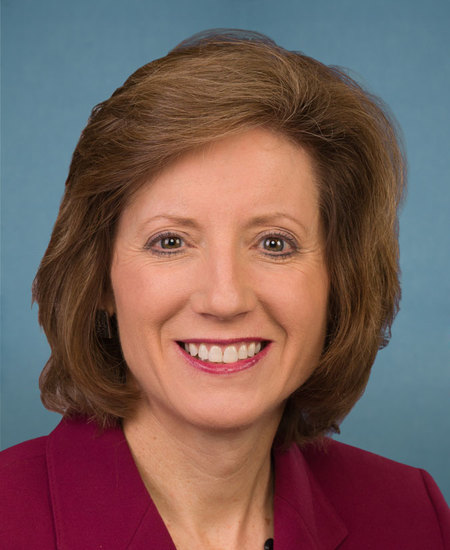
Rep. Vicky Hartzler
Sponsored bills
Pain-Capable Unborn Child Protection Act This bill establishes a new criminal offense for performing or attempting to perform an abortion if the probable post-fertilization age of the fetus is 20 weeks or more. A violator is subject to criminal penalties—a fine, a prison term of up to five years, or both. The bill provides exceptions for an abortion (1) that is necessary to save the life of the pregnant woman, or (2) when the pregnancy is the result of rape or incest. A physician who performs or attempts to perform an abortion under an exception must comply with specified requirements. A woman who undergoes a prohibited abortion may not be prosecuted for violating or conspiring to violate the provisions of this bill.
PFC Joseph P. Dwyer Peer Support Program Act This bill requires the Department of Veterans Affairs (VA) to establish the PFC Joseph P. Dwyer Peer Support Program to make grants to eligible entities for peer-to-peer mental health programs for veterans. Eligible entities include (1) a nonprofit organization that has historically served the mental health needs of veterans; (2) a congressionally chartered veteran service organization; or (3) a state, local, or tribal veteran service agency, director, or commissioner. The VA shall establish an advisory committee to create appropriate program standards.
Woman's Right To Know Act This bill specifies requirements for informed consent that health care providers must obtain before performing an abortion procedure. Providers must present a woman seeking an abortion with an authorization form at least 24 hours before performing the procedure. The form must (1) include specified information concerning gestational age, associated developmental characteristics, and medical risks; (2) disclose penalties that providers may face for failing to obtain the requisite informed consent; and (3) include an affirmation that the individual signing the form understands the information. The form must be signed and witnessed in person and retained in the medical file. Providers do not have to obtain such consent if, in reasonable medical judgment, obtaining it would pose a greater risk of death or substantial physical impairment of a major bodily function, excluding psychological or emotional conditions, of the pregnant woman. The bill also establishes civil penalties for providers who do not comply with these requirements.
Defending Against Imitations and Replacements of Yogurt, milk, and cheese to Promote Regular Intake of Dairy Everyday Act or the DAIRY PRIDE Act This bill prohibits the sale of any food that uses the market name of a dairy product (such as milk , yogurt , or cream cheese ) unless the food (1) is the milk of a hooved animal, (2) is derived from such milk, or (3) contains such milk as a primary ingredient.
Life at Conception Act This bill declares that the right to life guaranteed by the Constitution is vested in each human being at all stages of life, including the moment of fertilization, cloning, or other moment at which an individual comes into being. Nothing in this bill shall be construed to authorize the prosecution of any woman for the death of her unborn child.
No Taxpayer Funding for Abortion and Abortion Insurance Full Disclosure Act of 2021 This bill modifies provisions relating to federal funding for, and health insurance coverage of, abortions. Specifically, the bill prohibits the use of federal funds for abortions or for health coverage that includes abortions. Such restrictions extend to the use of funds in the budget of the District of Columbia. Additionally, abortions may not be provided in a federal health care facility or by a federal employee. Historically, language has been included in annual appropriations bills for the Department of Health and Human Services (HHS) that prohibits the use of federal funds for abortions—such language is commonly referred to as the Hyde Amendment. Similar language is also frequently included in appropriations bills for other federal agencies and the District of Columbia. The bill makes these restrictions permanent and extends the restrictions to all federal funds (rather than specific agencies). The bill's restrictions regarding the use of federal funds do not apply in cases of rape, incest, or where a physical disorder, injury, or illness endangers a woman's life unless an abortion is performed. The Hyde Amendment provides the same exceptions. The bill also prohibits qualified health plans from including coverage for abortions. Currently, qualified health plans may cover abortion, but the portion of the premium attributable to abortion coverage is not eligible for subsidies.
Protecting Military Installations from Foreign Espionage Act This bill places restrictions on the purchase of certain property by a foreign person who is owned or controlled by, is acting for or on behalf of, or receives subsidies from Russia, China, Iran, or North Korea. Specifically, the Committee on Foreign Investment in the United States must review a purchase or lease by, or a concession to, any such foreign person of private or public real estate in the United States that is within (1) 100 miles of a military installation; or (2) 50 miles of a military training route, special use airspace, a controlled firing area, or a military operations area. Further, the Department of Defense and the Department of Transportation may not issue final determinations regarding specified projects (e.g., energy projects) that involve a transaction under review by the committee until the committee concludes its action.
School Lunch Affordability Act of 2021 This bill provides that only school food authorities with a negative balance in the nonprofit school food service account on June 30 of the year preceding the previous school year are required to establish a price for paid lunches using the formula specified under current law (known as Paid Lunch Equity requirements).
Chiropractic Medicare Coverage Modernization Act of 2021 This bill expands Medicare coverage of chiropractic services to include all services provided by chiropractors, rather than only subluxation corrections through manual manipulation of the spine.