

Accelerating Access to Critical Therapies for ALS Act This bill establishes grant programs to address neurodegenerative diseases, such as amyotrophic lateral sclerosis (also known as ALS or Lou Gehrig's disease), and contains other related provisions. The Department of Health and Human Services (HHS) shall award grants to eligible entities for scientific research utilizing data from expanded access to investigational ALS treatments for individuals who are not otherwise eligible for clinical trials. The Food and Drug Administration (FDA) shall award grants to public and private entities to cover the costs of research and development of drugs that diagnose or treat ALS and other rare neurodegenerative diseases. HHS shall also establish the Public-Private Partnership for Neurodegenerative Diseases between the National Institutes of Health, the FDA, and at least one eligible entity (generally, an institution of higher education or a nonprofit organization). The partnership shall support the development and regulatory review of drugs that address ALS and other rare neurodegenerative diseases. The FDA shall publish on its website a five-year action plan for fostering the development of drugs that improve or extend the lives of people living with rare neurodegenerative diseases. The Government Accountability Office must report to Congress about the grants provided under this bill, including an analysis of the impact of such grants on research and development of treatments for ALS.
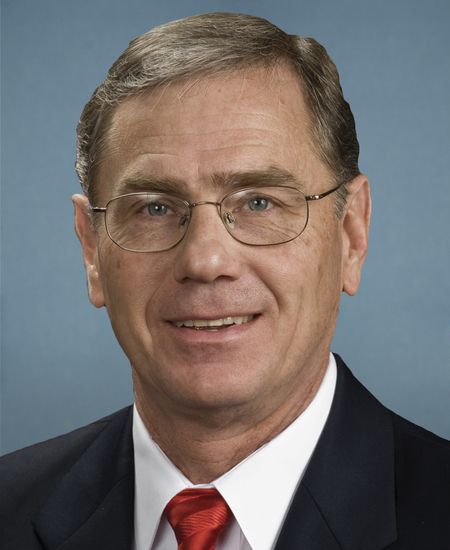
Rep. Blaine Luetkemeyer
Sponsored bills
This concurrent resolution expresses the sense of Congress that tax-exempt fraternal benefit societies provide critical benefits to the people and communities of the United States and their work should continue to be promoted.
This bill posthumously provides for the award of a Congressional Gold Medal in commemoration of the 13 service members who died on August 26, 2021, while stationed at Hamid Karzai International Airport in Afghanistan.
FDIC Board Accountability Act This bill revises provisions related to the board of directors of the Federal Deposit Insurance Corporation. Specifically, the bill removes the director of the Consumer Financial Protection Bureau from the board as a voting member and requires the appointment of an individual with demonstrated primary experience working in or supervising small depository institutions. Further, the bill limits the term length of a board member to twelve years.
Employee Retention Tax Credit Reinstatement Act This bill provides for a reinstatement of the employee retention tax credit through 2021. The credit was established to compensate employers whose businesses were negatively impacted by the COVID-19 pandemic for wages paid to their employees.
Conscience Protection Act of 2021 This bill provides statutory authority for certain protections for health care providers that refuse to participate in abortions based on religious beliefs or other convictions. Health care providers include individual professionals, medical facilities, health insurance organizations, and social services providers that refer clients to health care services. The federal government and entities that receive federal funding for health-related activities, including state and local governments, may not discriminate against a health care provider that refuses to be involved in, or provide coverage for, abortions. Currently, similar requirements apply to various related activities, including certain employment or personnel decisions (the Church Amendments), abortion services training (the Coats-Snowe Amendment), qualified health plans offered through health insurance exchanges, and annual appropriations bills for the Department of Health and Human Services (HHS) and other federal agencies (the Weldon Amendment). The HHS Office for Civil Rights must investigate complaints of this kind of discrimination. Furthermore, HHS may terminate or reduce HHS funding for health-related activities if a person or entity fails to comply with nondiscrimination requirements. Additionally, the Department of Justice or any entity adversely affected by such discrimination may bring a civil action to obtain appropriate relief. A plaintiff does not need to seek or exhaust administrative remedies before bringing the action. A plaintiff may also bring an action, including one for money damages, against a governmental entity. In many cases, principles of sovereign immunity shield states and some localities from these kinds of actions.
Maddy summaryHRES 815 is a symbolic resolution introduced in the U.S. House of Representatives on November 18, 2021. It expresses congressional support for National Rural Health Day, which recognizes the importance of rural health care and celebrates providers serving rural communities. The resolution highlights challenges like hospital closures and access barriers faced by rural health facilities but does not create new laws or funding. It simply affirms commitment to improving rural health care accessibility through policy, without specifying concrete changes. As a procedural resolution, it has no binding effect on legislation or funding.
This bill prohibits the Small Business Administration from directly making a loan under the 7(a) Program, which authorizes loans and loan guaranties to small businesses that meet certain requirements.
Bureau of Consumer Financial Protection-Inspector General Reform Act of 2021 or the CFPB-IG Act of 2021 This bill establishes a separate Office of Inspector General for the Consumer Financial Protection Bureau (CFPB). Currently, such oversight of the CFPB is combined with the Office of Inspector General for the Board of Governors of the Federal Reserve System.
Fairness for Federal Contractors Act of 2021 This bill prohibits executive agencies from requiring contractors to receive a COVID-19 vaccination. The bill also requires the Government Accountability Office to study the degree to which Executive Order 14042 (Ensuring Adequate COVID Safety Protocols for Federal Contractors) caused disruptions to federal contracts, supply chains, and transportation systems.