Make Energy Affordable Act This bill requires the President to report on the rising energy prices. In addition, the President must provide updates on residential energy price trends, impacts of energy prices on low-income households, and actions by federal agencies to mitigate energy price increases.
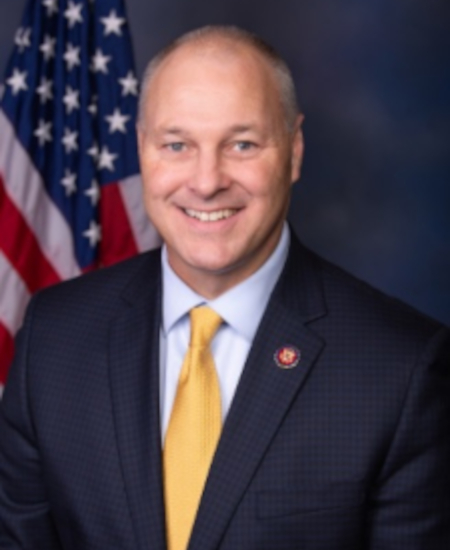
Rep. Pete Stauber
Sponsored bills
This concurrent resolution expresses the sense of Congress that tax-exempt fraternal benefit societies provide critical benefits to the people and communities of the United States and their work should continue to be promoted.
This bill posthumously provides for the award of a Congressional Gold Medal in commemoration of the 13 service members who died on August 26, 2021, while stationed at Hamid Karzai International Airport in Afghanistan.
Maddy summaryHRES 855 is a symbolic resolution passed by the U.S. House of Representatives to support designating the first week of December 2022 as "National United States Miners Week." It does not create new laws or policies but formally recognizes miners' contributions to the economy and supply chains. The resolution highlights miners' role in providing critical minerals and coal, supporting over 500,000 jobs, and securing domestic resources for everyday products. It directly affects miners and their communities by offering a formal, non-binding acknowledgment of their work. This is a procedural resolution with no concrete policy changes or funding implications.
This resolution recognizes the importance of Christmas symbols and traditions. The resolution (1) disapproves of attempts to ban references to Christmas, and (2) supports the use of these symbols and traditions by those who celebrate Christmas.
Chronic Wasting Disease Research and Management Act This bill directs the Department of Agriculture (USDA) to address chronic wasting disease afflicting deer, elk, and moose populations. Specifically, the bill directs USDA to establish a program to research and manage the disease. Under the program, USDA must offer to enter into agreements with state or tribal wildlife agencies and departments of agriculture, institutions of higher education, and research centers to support research on the transmission of, resistance to, and diagnosis of the disease. In addition, USDA must offer to enter into agreements with such agencies and departments to support state and tribal efforts to develop and implement management strategies that address the disease. USDA must also develop and maintain materials to inform the public on chronic wasting disease and techniques to help prevent the spread of the disease. In addition, USDA must solicit public feedback on potential updates and improvements to standards of the chronic wasting disease herd certification program.

This bill prohibits the Department of Defense (DOD) from taking specified actions against a member of the National Guard based on whether the member has received a COVID-19 vaccine. Specifically, DOD may not (1) involuntarily discharge or discipline the member, (2) withhold pay or benefits from the member, or (3) prohibit the member from participating in training or using equipment.
Critical Infrastructure Manufacturing Feasibility Act This bill requires the Department of Commerce to study and report on products that are in high demand across the critical infrastructure sectors. Critical infrastructure sectors are those whose assets, systems, and networks are vital to national security, the economy, public health or safety, or any combination of those matters. The study must (1) identify the products in high demand across those sectors that are being imported due to manufacturing, material, or supply chain constraints; and (2) analyze the costs, benefits, and feasibility of manufacturing those products in the United States.
Eliminating Global Market Distortions to Protect American Jobs Act of 2021 This bill addresses unfair trade practices by making various changes to U.S. antidumping and countervailing duty law. Antidumping provides relief to U.S industries and workers that are materially injured or threatened with injury due to imports of like products sold in the U.S. market at less than fair value, while countervailing duty provides such relief from imports of products subsidized by a foreign government or public entity. Specifically, the bill establishes a process for successive antidumping and countervailing duty investigations. Successive investigations may be concurrent (an ongoing investigation of the same product from different countries) or recently completed (not more than two years before the date of the initiation of the successive investigation). Further, the bill establishes a time line for the Department of Commerce to issue determinations in successive investigations. Among other provisions, the bill authorizes Commerce to apply countervailing duty law to subsidies provided by a foreign government or public entity to a company operating in a different country, use another method for calculating the cost of production in specific circumstances, and require importers to provide a certification that the imported merchandise is not subject to an antidumping or countervailing duty order. Additionally, the bill establishes procedures for Commerce to conduct circumvention inquiries, including by specifying the deadlines for preliminary and final determinations. The bill repeals the Softwood Lumber Act of 2008, which addresses the importation of softwood lumber and softwood lumber products.
This resolution supports (1) reducing congestion at high-volume coastal ports and expanding options for importing and exporting goods, and (2) the potential for more international container ship traffic through the Saint Lawrence Seaway and Great Lakes ports. The resolution also expresses support for Great Lakes and inland waterway ports and their current and future role in international trade commerce.