

Maddy summaryHR 7477, the CERTS Tax Exemption Act, ensures that grants provided under the Coronavirus Economic Relief for Transportation Services Act are tax-free for eligible transportation service providers. The bill directly affects companies and organizations providing transportation services that receive these specific federal grants. Key provisions state that grant amounts cannot be counted as taxable income, deductions related to grant-funded costs cannot be denied, and tax attributes (like basis increases) must be treated as tax-free for partnerships and S corporations. This change simplifies tax treatment for recipients by preventing unintended tax liabilities on relief funds.
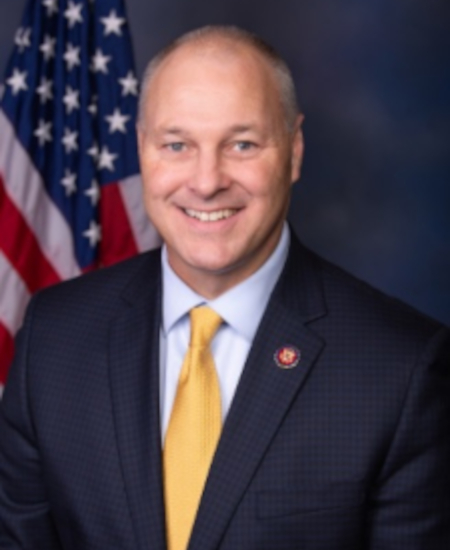
Rep. Pete Stauber
Sponsored bills
Volunteer Driver Tax Appreciation Act of 2022 This bill increases the mileage rate for the charitable use of an automobile (14 cents per mile) to the standard business mileage rate (58.5 cents per mile in 2022).
Law Enforcement Education Grant Program Act of 2022 This bill establishes a grant program through which the Department of Education may award grants to eligible students attending institutions of higher education to pursue careers in law enforcement. A grant recipient must agree to serve as a full-time law enforcement officer for at least four years within eight years after completing the grant recipient's course of study. If the grant recipient completes less than the required years of service, the scholarship must be treated as a Federal Direct Unsubsidized Stafford Loan that is subject to repayment.
Ensuring Lasting Smiles Act This bill requires private health insurance plans to cover diagnosis and treatment of congenital anomalies and birth defects, such as reconstructive services and items. Coverage must include services and items that functionally improve, repair, or restore any body part that is medically necessary for normal bodily functions or appearance, as determined by the treating physician. Coverage limits and cost-sharing requirements for such services and items may not be more restrictive than those applicable to all medical and surgical benefits under the plan.
Supply Chain Disruptions Relief Act This bill modifies the treatment of liquidations of new motor vehicle inventory as qualified LIFO (last in first out accounting method) inventory. It allows new motor vehicle dealers to elect to wait until the end of 2025 to replace their inventory for purposes of determining income attributable to the sale of such inventory during 2020 and 2021.
Small Business Regulatory Reduction Act This bill requires the Small Business Administration to ensure that for each fiscal year the cost to small businesses of the administration's rulemaking (including the modification or repeal of a rule) is not greater than zero. The administration also must report on any regulations issued by other federal agencies that have an impact on small businesses.
Unleashing American Energy Act This bill requires a minimum amount of oil and gas lease sales a year on certain submerged lands of the Outer Continental Shelf (OCS) and limits delays on federal oil and gas leases on such lands. Specifically, this bill requires the Department of the Interior to annually conduct a minimum of two region-wide oil and gas lease sales in each of the following regions of the OCS: (1) the Gulf of Mexico region in the Central Gulf of Mexico Planning Area and the Western Gulf of Mexico Planning Area, and (2) the Alaska region. In addition, the bill requires the President to obtain congressional approval before delaying federal oil and gas leases on the OCS.
Strategy to Secure Offshore Energy Act This bill modifies requirements for the National Outer Continental Shelf Oil and Gas Leasing Program, including by specifying that the program must be updated on a five-year basis and setting a minimum number of annual lease sales for the program.
Restore Onshore Energy Production Act This bill requires the Department of the Interior to immediately resume sales of oil and gas leases in accordance with applicable onshore mineral leasing laws and specifies a minimum number of sales that Interior must conduct in each state where there is land available for oil and gas leasing. The bill also prohibits the President from taking actions to cancel, delay, or otherwise impede federal processes related to energy mineral leasing without congressional approval.
Energy Permitting Certainty Act This bill requires the Department of the Interior to process applications for permits to drill under a valid oil or gas lease even if there are any pending civil actions, provided that the civil actions do not directly affect or involve the application or underlying lease.