

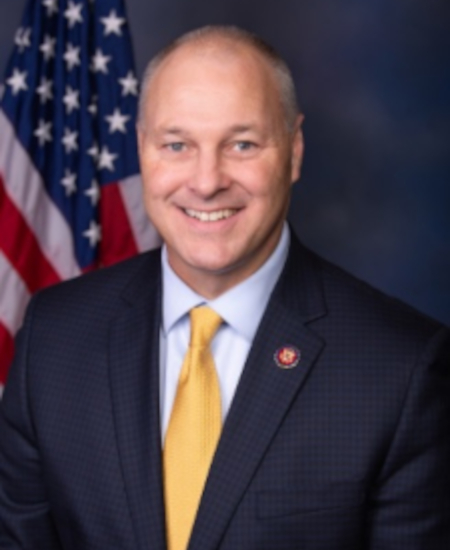
Photo of Pete Stauber
R United States House · District 8 · Minnesota On the 2026 ballot

Rep. Pete Stauber

Compare
Total votes
2,837
all sessions
Attendance
97%
96 missed
Near the chamber average
With party
94%
of cast votes
Near the chamber average
Bipartisan score
3%
crosses aisle rarely
Near the chamber average
Sponsored
1,097
bills & resolutions
Near the chamber average
Committees
9
assignments
1,097 bills and resolutions

Sponsored bills

Total
1,097
Primary
75
Co-sponsor
1,022
This page
1,097
matching current filters
Co-sponsor HR 1245
In committee · United States House · Co-sponsor
Grizzly Bear State Management Act of 2023

Maddy summaryThis bill mandates the U.S. Secretary of the Interior to reissue a 2017 rule that removed grizzly bears in the Greater Yellowstone Ecosystem from the federal endangered species list, within 180 days of the bill's enactment. It directly affects grizzly bear management in that ecosystem by reinstating state-led management authority previously established under the 2017 rule. The key provision requires the rule's reissuance without any legal challenges, explicitly stating the action "shall not be subject to judicial review."

In committee Sep 20, 2023 1 co-sponsor
Co-sponsor HR 5577
In committee · United States House · Co-sponsor
FACE Act Repeal Act of 2023

Maddy summaryHR 5577, the FACE Act Repeal Act of 2023, would repeal a federal law (Section 248 of Title 18, U.S. Code) that made it a crime to block access to abortion clinics or threaten clinic staff. This repeal would remove criminal penalties for obstructing access to clinics, affecting abortion providers, clinic staff, and individuals attempting to access or block clinic entrances. The bill specifically targets the repeal of this prohibition, applying to prosecutions pending or initiated after the law's enactment. It does not change other abortion-related laws or create new policies.

In committee Sep 19, 2023 1 co-sponsor
Co-sponsor HR 3200
In committee · United States House · Co-sponsor
Gateway Community and Recreation Enhancement Act

Maddy summaryThe Gateway Community and Recreation Enhancement Act (HR 3200) helps communities near federal recreation areas - like national parks and forests - manage tourism impacts. It requires the Interior and Agriculture Secretaries to assess local needs (such as housing shortages and infrastructure demands) and provide financial or technical assistance to businesses (e.g., hotels, campgrounds) to support sustainable visitation. The bill also establishes a unified system for tracking annual visitor numbers, launches a pilot program for real-time visitation data at 20+ recreation sites, and mandates a digital version of national park passes by January 2024. These changes directly affect gateway communities, federal land managers, and tourism businesses, aiming to distribute visitor traffic more evenly and improve data transparency.

In committee Sep 19, 2023 1 co-sponsor
Co-sponsor HR 1435
Passed · United States House · Co-sponsor
Preserving Choice in Vehicle Purchases Act

Maddy summaryHR 1435, the Preserving Choice in Vehicle Purchases Act, amends the Clean Air Act to restrict states from implementing vehicle emissions rules that limit the sale or use of new gasoline-powered cars. It directly affects states with stricter emissions standards (like California) by adding a new definition that blocks state rules "directly or indirectly" limiting internal combustion engine vehicles as defined in federal regulations as of January 1, 2023. The bill requires the EPA to revoke existing state emissions waivers granted between January 2022 and the bill’s enactment if they don’t comply with this new definition. This creates a concrete federal standard preventing states from advancing policies that could reduce demand for conventional vehicles.

Passed Sep 18, 2023 1 co-sponsor
Co-sponsor HR 1450
Passed · United States House · Co-sponsor
Treating Tribes and Counties as Good Neighbors Act

Maddy summaryThis bill amends existing law to allow Indian tribes, alongside counties and state governors, to retain and use funds from timber sales under "good neighbor agreements" for forest restoration projects. It directly affects tribes, counties, and state agencies participating in these agreements, which involve collaborative forest management on federal lands. The key change lets tribes keep timber sale revenue to fund restoration work under their agreements, just as counties and governors can. The bill does not create new programs but adjusts who can access these funds. It applies to projects initiated after 2018 or on or after the bill's enactment date.

Passed Sep 18, 2023 1 co-sponsor
Co-sponsor HR 5455
In committee · United States House · Co-sponsor
Collision Avoidance Systems Act of 2023

Maddy summaryHR 5455, the Collision Avoidance Systems Act of 2023, allows automakers to install pulsating light systems as rear-end collision avoidance technology on new vehicles. The bill requires the Secretary of Transportation to issue new regulations within 180 days updating Federal Safety Standard 108 to include performance-based rules for these systems. Specifically, it defines a "pulsating light system" as a high-mounted brake light that flashes rapidly (up to 4 times for no more than 1.2 seconds) before switching to steady light, with a 5-second lockout period after braking stops. This directly affects vehicle manufacturers who must comply with the updated safety standards for brake lights.

In committee Sep 15, 2023 1 co-sponsor
Co-sponsor HR 5437
In committee · United States House · Co-sponsor
Protecting Infrastructure Investments for Rural America Act

Maddy summaryHR 5437, the Protecting Infrastructure Investments for Rural America Act, modifies federal transportation grant rules to better support small rural communities. It redefines "small community" as areas outside urbanized zones with 5,000 or fewer residents (down from 20,000) and requires at least 5% of annual program funds to support projects in these areas. The bill increases federal funding for eligible projects in small communities from 80% to 90% of costs and mandates that projects must improve economic development or quality of life for residents. This directly affects rural towns and villages with populations under 5,000 seeking highway, road, bridge, or tunnel improvements.

In committee Sep 14, 2023 1 co-sponsor
Co-sponsor HR 3152
Passed · United States House · Co-sponsor
Fight CRIME Act

Maddy summaryHR 3152, the "Fight CRIME Act," aims to maintain international restrictions on Iran's missile-related activities by requiring diplomatic efforts to extend these restrictions before they expire in October 2023. The bill mandates annual reports detailing U.S. diplomatic strategies, potential impacts of expiration, and measures to deter missile technology transfers to Iran. It establishes sanctions against foreign individuals or entities that knowingly support Iran's missile or drone programs, including asset freezes and visa restrictions. These sanctions apply regardless of whether UN restrictions remain in effect after their expiration, directly affecting foreign entities involved in these activities.

Passed Sep 13, 2023 1 co-sponsor
Co-sponsor HR 5344
In committee · United States House · Co-sponsor
Jobs in the Woods Act

Maddy summaryThe Jobs in the Woods Act creates a federal grant program to train workers for forestry jobs in rural communities. It provides competitive grants (ranging from $500,000 to $2 million) to eligible groups like states, tribes, nonprofits, or schools for career training programs in forestry operations and products. Priority is given to projects addressing aging workforces, youth engagement through school partnerships, and job placement. The program is funded at $10 million annually from 2024 through 2028, targeting low-income rural areas with populations under 50,000.

In committee Sep 5, 2023 1 co-sponsor
Co-sponsor HR 5266
In committee · United States House · Co-sponsor
Interdiction of Fentanyl in Postal Mail at Federal Prisons Act

Maddy summaryThis bill requires the Bureau of Prisons to develop and implement a strategy for scanning all incoming mail at federal prisons to stop fentanyl and other synthetic drugs from entering facilities. It directs the Bureau to evaluate existing scanning technology within 180 days and submit a detailed plan to Congress within 90 days, including how to provide digital copies of mail to inmates within 24 hours and physical copies within 30 days (if safe). The strategy must achieve 100% mail scanning capacity at all federal prisons, prioritize high-security facilities, and include a budget proposal for fiscal years 2024-2026. This directly affects federal prisons, inmates, and Bureau employees by changing mail processing procedures to enhance safety and reduce staffing burdens from manual mail checks.

In committee Aug 25, 2023 1 co-sponsor
Showing 581 to 590 of 1,097 bills
Previous 1 … 58 59 60 … 110 Next