

Blind Americans Return to Work Act of 2025 This bill requires the Social Security Administration to carry out a demonstration project during which blind Social Security Disability Insurance (SSDI) beneficiaries receive reduced benefits commensurate with income above certain thresholds. Under current law, only individuals who earn under a specified monthly income, known as the substantial gainful activity (SGA) threshold, are considered disabled and thereby eligible for SSDI benefits. For blind workers, this limit is $2,700 per month in 2025. SSDI beneficiaries may earn beyond the SGA threshold for a limited period of time, known as the trial work period , before their benefits are suspended and ultimately terminate. The bill establishes a 20-year demonstration project during which individuals who are entitled to SSDI benefits by reason of blindness and who earn above the SGA threshold continue to receive benefits at an amount gradually reduced commensurate with their earnings beyond a specified amount. During this period, blind workers’ SSDI benefits must be reduced by $1 for every $2 that a worker earns above the sum of (1) the SGA threshold, and (2) the worker’s expenses reasonably attributable to their work. The SGA threshold may not be used to determine whether an individual is disabled during this period, and blind workers’ SSDI benefits may not be terminated due to work-related earnings. The trial work period also must not apply. After 10 years, affected beneficiaries may opt out of the modified benefits structure.
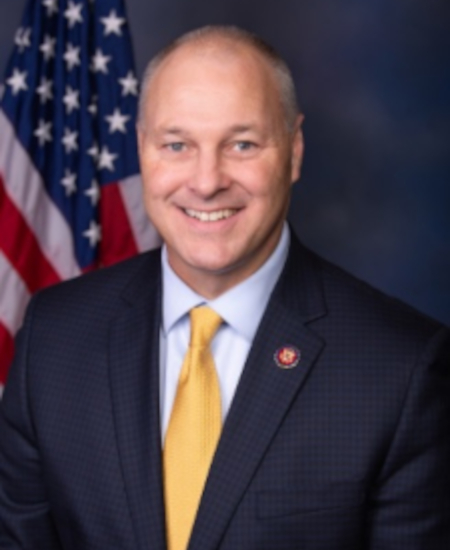
Rep. Pete Stauber
Sponsored bills
Maddy summaryThe Laken Riley Act expands mandatory detention for immigrants convicted of certain property crimes like burglary, theft, or shoplifting by adding these offenses to existing immigration detention criteria. It requires the federal government to issue detainers for such individuals and take custody if not detained by local authorities. The bill also grants state attorneys general standing to sue federal officials in federal court if they believe immigration enforcement actions (like releasing detained immigrants) cause the state financial harm exceeding $100. This creates new legal pathways for states to challenge federal immigration decisions through expedited lawsuits.
Maddy summaryThe HALT Fentanyl Act (HR 27) creates a new category of Schedule I controlled substances for "fentanyl-related substances" defined by specific chemical modifications to fentanyl. This law directly affects researchers, medical professionals, and law enforcement by expanding the legal definition of fentanyl-related substances to include many structurally similar compounds. Key provisions include streamlined registration processes for research on these substances, allowing researchers to conduct studies with expedited procedures if related to FDA-approved drug development or government-funded research. The bill requires the Attorney General to issue implementing rules within six months and includes penalties for violations involving these substances.
Maddy summaryHCONRES 8 is a non-binding congressional resolution urging the U.S. President to end the current "One China Policy" and recognize Taiwan as an independent country. It specifically calls for resuming normal diplomatic relations (including appointing ambassadors), negotiating a bilateral free trade agreement with Taiwan, and advocating for Taiwan's full membership in international organizations like the UN and WHO. The resolution argues that Taiwan has maintained democratic governance and independence for over 70 years, separate from the People's Republic of China. This resolution does not change U.S. law but expresses Congress's position on foreign policy toward Taiwan.
Maddy summaryHR 1046, the Marc Fischer Memorial Act, requires the Bureau of Prisons to implement digital mail scanning technology at all federal prisons to detect fentanyl and other synthetic drugs in inmate mail. It mandates a strategy within 90 days of an evaluation, including 100% scanning of all mail, digital copies of mail to inmates within 24 hours, and physical mail delivery within 30 days for non-contaminated items. The bill directly affects federal prison staff, inmates, and the Bureau of Prisons by aiming to reduce drug-related overdoses and alleviate staff workload tied to mail processing. Implementation must be completed within three years, with annual reports tracking detected drugs and strategy efficiency. The legislation focuses on concrete technological and procedural changes to enhance safety, referencing a successful pilot program at two facilities.
Maddy summaryThis bill rescinds a 2023 federal withdrawal of lands in Minnesota's Superior National Forest, allowing mining operations to resume. It requires the Secretary to complete environmental reviews for mine plans within 18 months (or 6 months for supplements) and reissues canceled mineral leases with 20-year terms plus automatic 10-year renewals. The bill directly affects mining companies operating in the forest, particularly those with canceled leases or rejected applications since 2021. It mandates issuance of new permits for surface use related to mining and prohibits judicial review of these reissued leases.
Fair Access to Banking Act This bill places restrictions on certain banks, credit unions, and payment card networks if they refuse to do business with a person who complies with the law. Restrictions include prohibiting the use of electronic funds transfer systems and lending programs, termination of an institution's depository insurance, and specified civil penalties. Banks and other specified financial institutions are allowed to deny financial services to a person only if the denial is justified by a documented failure of that person to meet quantitative, impartial, risk-based standards established in advance by the institution. This justification may not be based upon reputational risks to the institution. The bill establishes the right for a person to bring a civil action for a violation of this bill.
Maddy summaryHR 1007, the Antisemitism Awareness Act of 2025, clarifies how the Department of Education enforces Title VI of the Civil Rights Act of 1964 to address discrimination against Jewish individuals. It requires the Department to consider the International Holocaust Remembrance Alliance (IHRA) definition of antisemitism when investigating complaints involving discrimination based on actual or perceived Jewish ancestry or ethnic characteristics. This affects Jewish students and communities in K-12 schools and colleges receiving federal funding, as it ensures antisemitism is assessed under existing civil rights protections. The bill does not create new laws but specifies that the IHRA definition - already used by the Department since 2018 - must be applied in Title VI enforcement cases.
Maddy summaryHR 943, the "No User Fees for Gun Owners Act," bans states and local governments from requiring insurance, taxes, or user fees as conditions for owning, buying, or selling firearms. It specifically prohibits these fees for firearm manufacture, importation, acquisition, transfer, or continued ownership, except for general sales taxes applied equally to all goods. The bill amends federal law to prevent states from imposing such conditions on gun ownership or commerce, while allowing standard sales taxes to apply uniformly. This directly affects gun owners, dealers, and manufacturers by removing mandatory fees tied to firearm transactions. The law does not restrict general sales taxes but eliminates state-specific fees as a prerequisite for firearm-related activities.
Silencers Help Us Save Hearing Act or the SHUSH Act This bill removes silencers from regulation under certain federal statutes governing the sale, transfer, and possession of firearms. Specifically, it removes silencers from the list of firearms subject to regulation (i.e., registration and licensing requirements) under the National Firearms Act (NFA). Additionally, it excludes a muffler or silencer from the list of firearms subject to regulation (e.g., background check requirements) under the Gun Control Act of 1968 (GCA). Finally, the bill does the following: preempts state or local laws that tax or regulate firearm silencers, specifies that a person who lawfully acquires or possesses a silencer under provisions of the GCA meets the registration and licensing requirements of the NFA, eliminates mandatory minimum prison terms for a crime of violence or drug trafficking offense in which a defendant uses or carries a firearm equipped with a silencer or muffler, and permits active and retired law enforcement officers to carry a concealed silencer.