

Maddy summaryHR 3881, the "Stop Dangerous Sanctuary Cities Act," denies certain federal grants to states or localities that restrict sharing immigration status information or comply with federal immigration detainers. Specifically, it defines "sanctuary jurisdictions" as those with policies prohibiting cooperation with federal immigration enforcement requests (under Sections 236/287 of the Immigration and Nationality Act). The bill blocks recipients from receiving Economic Development Administration grants and Community Development Block Grants if they are deemed a sanctuary jurisdiction. Local officials complying with federal detainers gain legal protections, including immunity from lawsuits, while jurisdictions violating the law face mandatory return of funds. The policy takes effect October 1, 2025.
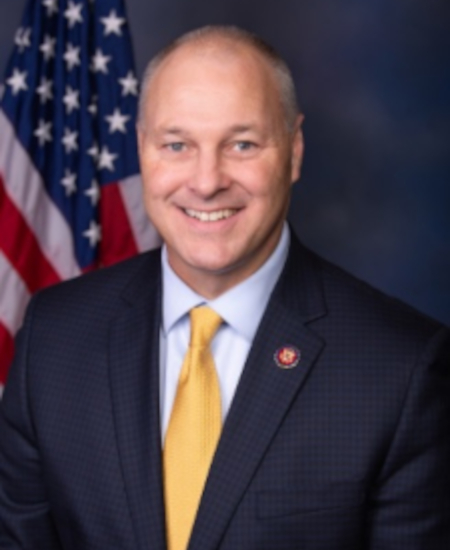
Rep. Pete Stauber
Sponsored bills
Maddy summaryHR 589, the FACE Act Repeal Act of 2025, would repeal a federal law (Section 248 of Title 18, U.S. Code) that prohibited obstructing access to reproductive health care facilities through physical means, intimidation, or violence. This repeal would eliminate the federal criminal penalty for such conduct, meaning federal prosecutors could no longer charge individuals under this specific law. The bill applies to all pending or future federal prosecutions related to these actions. It does not affect state laws that may still regulate access to reproductive health care facilities.
Maddy summaryHRES 481 is a symbolic resolution condemning recent antisemitic attacks in the U.S., specifically referencing the June 1, 2025, Boulder, Colorado, assault on a Jewish community gathering and other incidents like the May 2025 Washington, D.C., embassy shooting. It formally recognizes a pattern of violence targeting Jewish individuals and institutions, including attacks during religious events. The resolution calls on law enforcement to thoroughly investigate and prosecute such incidents and urges elected officials to publicly oppose antisemitism and politically motivated violence. As a non-binding resolution, it does not create new laws or allocate funding but serves to affirm congressional stance against antisemitism.
Maddy summaryHR 1634, the *ThinkDIFFERENTLY About Disability Employment Act*, requires the Small Business Administration (SBA) to partner with the National Council on Disability to improve employment opportunities for people with disabilities. It directs the SBA to assist individuals with disabilities in becoming entrepreneurs or finding jobs at small businesses, while also helping small businesses hire them and address accessibility needs. The SBA must establish memoranda of understanding for these activities, conduct outreach, and submit a detailed report to Congress within two years on progress and future plans. The bill uses existing SBA resources without authorizing new funding, focusing on coordination and reporting to expand employment pathways.
Maddy summaryHR 1621, the Entrepreneurs with Disabilities Reporting Act of 2025, requires the Small Business Administration (SBA) to submit a detailed report to Congress within 180 days of the bill's enactment. The report must assess challenges faced by entrepreneurs with disabilities in starting and running businesses, describe current SBA resources and outreach efforts, identify deficiencies in support, and provide recommendations for legislative improvements. This bill directly affects the SBA’s reporting obligations and does not authorize new funding (as stated in Section 2(b)). It focuses on gathering data to inform future policy, without creating new programs or altering existing ones. The summary covers the bill’s specific requirements for the SBA’s report, not potential outcomes.
Maddy summaryHJRES 98 is a non-binding joint resolution designating June as "Life Month" to promote awareness of the value of human life. It expresses support for protecting unborn life, references the Dobbs v. Jackson decision, and urges policymakers to defend "the sanctity of human life" through legislation. The resolution does not create new laws, alter funding, or impose requirements - its purpose is solely symbolic recognition. It was introduced by multiple representatives and referred to relevant committees for consideration.
Maddy summaryThis resolution establishes a House select committee to investigate claims about President Biden's cognitive and physical health decline and whether information was concealed from the public. The committee will specifically examine his cancer diagnosis, roles of administration figures (including Vice President Harris and Jill Biden), media coverage of his health, and classified document handling. It cannot pass laws but must issue a final report by December 31, 2025, detailing findings and recommendations. The committee's work is limited to fact-finding through hearings and evidence gathering, not policy-making.
Maddy summaryThis bill (HR 3586) modifies federal transit funding rules to allow transit agencies to make advance payments for new buses without requiring manufacturers to provide a performance bond. It sets strict limits: agencies may pay no more than 20% of the total bus purchase price upfront, and must have a signed contract with the manufacturer, preaward approval, and meet other existing requirements. The bill directly affects transit agencies receiving federal funds under Title 49 for bus purchases. It changes how agencies can structure payments but does not alter funding amounts or create new financial obligations. The key change is removing the performance bond requirement while imposing a 20% cap on advance payments.
Maddy summaryHR 3598, the Deescalation Drone Pilot Program Act of 2025, establishes a federal pilot program to test nonlethal drones for law enforcement during active shooter events. The program, managed by the FAA, will review nonlethal devices (like sound emitters or cameras) for drones, develop training and safety protocols, and assess effectiveness in indoor scenarios to increase officer safety. It requires drones to be manufactured in the U.S. and mandates a report to Congress within 3 months of the pilot's conclusion, followed by rulemaking to create a formal approval process for law enforcement use. The bill directly affects Federal, State, local, and Tribal law enforcement agencies responding to active shooter events as defined by the legislation.
Maddy summaryHR 3608, "Connor’s Law," requires commercial motor vehicle operators (like truck and bus drivers) to read and speak English well enough to converse with the public, understand English traffic signs, respond to officials, and complete reports. The bill adds this language requirement to existing federal safety rules for commercial drivers. Drivers found noncompliant with this rule would face an "out of service" order, meaning they cannot operate their vehicle until they meet the requirement. This directly affects commercial drivers operating in the U.S. under federal safety regulations.