

Maddy summaryThe Neighborhood Homes Investment Act creates a new tax credit for developers who build or rehabilitate affordable homes in distressed communities. The credit is calculated as the lesser of (1) the difference between development costs and sale price, (2) 40% of development costs, or (3) 32% of the national median home price. It applies only to homes sold to qualified homeowners with income up to 140% of area median income in designated "qualified census tracts" (areas with high poverty rates, low median home values, and low median family income). Developers must meet quality standards and repay the credit if the home is sold within 5 years of the affordable sale. This credit aims to address the "value gap" that prevents housing development in distressed communities by incentivizing affordable home construction and rehabilitation.
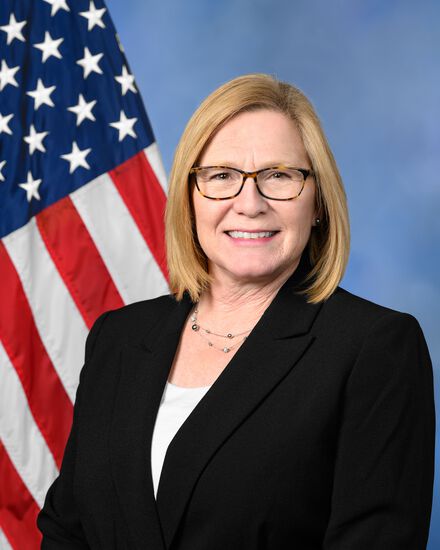
Rep. Michelle Fischbach
Sponsored bills
Maddy summaryThis bill repeals a restriction that previously prevented individuals from rolling over funds directly from their Individual Retirement Accounts (IRAs) to donor-advised funds (DAFs) for charitable giving. It directly affects IRA account holders who wish to make tax-advantaged charitable contributions through DAFs. The key provision amends the Internal Revenue Code to remove the specific language barring such rollovers, allowing these transfers to occur without triggering taxable distributions. The change becomes effective after the bill's enactment, streamlining a pathway for donors to support charities via DAFs using IRA assets.
Safeguard American Voter Eligibility Act or the SAVE Act This bill requires individuals to provide documentary proof of U.S. citizenship when registering to vote in federal elections. Specifically, the bill prohibits states from accepting and processing an application to register to vote in a federal election unless the applicant presents documentary proof of U.S. citizenship. The bill specifies what documents are considered acceptable proof of U.S. citizenship, such as identification that complies with the REAL ID Act of 2005 that indicates U.S. citizenship. Further, the bill (1) prohibits states from registering an individual to vote in a federal election unless, at the time the individual applies to register to vote, the individual provides documentary proof of U.S. citizenship; and (2) requires states to establish an alternative process under which an applicant may submit other evidence to demonstrate U.S. citizenship. Each state must take affirmative steps on an ongoing basis to ensure that only U.S. citizens are registered to vote, which shall include establishing a program to identify individuals who are not U.S. citizens using information supplied by certain sources. Additionally, states must remove noncitizens from their official lists of eligible voters. The bill allows for a private right of action against an election official who registers an applicant to vote in a federal election who fails to present documentary proof of U.S. citizenship. The bill establishes criminal penalties for certain offenses, including registering an applicant to vote in a federal election who fails to present documentary proof of U.S. citizenship.
Maddy summaryThis bill, HR 2102 (Major Richard Star Act), allows veterans with combat-related disabilities to receive both full military retired pay and veterans' disability compensation simultaneously, without the previous offset that reduced retired pay. It directly affects veterans already eligible for both benefits due to combat-related injuries, removing the requirement that their retired pay be reduced by the disability compensation amount. The key provision amends Title 10 and Title 38 to eliminate the offset rule (sections 5304 and 5305 of Title 38) for these veterans. The change applies to payments starting after the bill’s enactment date, effective for all qualifying veterans. This is a policy change to increase financial support for affected veterans, not a new benefit.
Maddy summaryHR 2586, the Reentry Act of 2025, amends Medicaid rules to allow incarcerated individuals to receive Medicaid coverage during the 30 days immediately before their release from prison or jail. This directly affects people leaving correctional facilities, ensuring they can access health care as they transition back into communities. The bill requires a report within 18 months analyzing current health care standards in prisons, the number of people who would gain coverage, and current discharge practices to improve Medicaid enrollment for newly released individuals. The report will also assess how to better connect people with community health services and addiction treatment after release.
Maddy summaryThe SAFETY Act of 2025 defines "common names" for agricultural products and food items (such as "Parmesan" for cheese, "Chardonnay" for wine, or "Bologna" for sausage) to protect U.S. producers' ability to use these terms in international markets. It requires the Agriculture Secretary and U.S. Trade Representative to negotiate agreements with other countries that secure the continued use of these common names on product labels and in exports. The bill provides specific examples of common names and establishes criteria for determining them, including customary market use and alignment with international standards like the Codex Alimentarius. This law directly affects U.S. agricultural exporters who rely on familiar product names to compete globally.
Maddy summaryThe Farm to Fly Act of 2025 amends agricultural programs to include sustainable aviation fuel (SAF) as a qualifying biofuel, directly affecting U.S. farmers, agricultural producers, and the aviation industry by creating new market opportunities. It defines SAF with specific requirements - meeting ASTM standards, not derived from palm oil or petroleum, and achieving at least a 50% lifecycle greenhouse gas emissions reduction compared to jet fuel. The bill mandates the Secretary of Agriculture to lead a new collaboration initiative focusing on advancing SAF development through partnerships with farmers, rural economic support, and public-private partnerships. Additionally, it expands existing manufacturing assistance programs to include SAF production, aiming to strengthen domestic energy security and grow markets for agricultural feedstocks.
Maddy summaryThe Freedom from Unfair Gun Taxes Act of 2025 would prohibit states and local governments from imposing taxes on the sale of firearms, ammunition, or firearm parts during interstate or foreign commerce. This bill directly affects state tax policies and manufacturers or dealers selling these items across state lines. It explicitly states that the bill does not change the existing federal tax on firearms and ammunition that funds wildlife conservation programs. The key provision bans state-level taxes for these sales in interstate transactions while preserving current federal funding mechanisms.
Maddy summaryHR 2477, the Portable Ultrasound Reimbursement Equity Act of 2025, would amend Medicare rules to require equal reimbursement for portable ultrasound transportation and setup services as is currently provided for portable X-ray services. This change directly affects Medicare beneficiaries needing portable ultrasound exams and healthcare providers (like mobile clinics) who offer these services. The bill mandates that Medicare pay separately for portable ultrasound transportation and setup in the same way and to the same extent as portable X-ray services, using similar supplier requirements as existing regulations. The policy change would take effect for services provided on or after January 1, 2027.
Maddy summaryHR 2423, the Unfair Tax Prevention Act, amends the U.S. tax code to modify how the base erosion tax applies to certain foreign-owned businesses. It directly affects foreign-controlled entities operating under specific foreign tax systems that impose taxes based on ownership chains, such as those linked to foreign corporations. Key provisions include treating these entities as "applicable taxpayers" for tax purposes, changing a deadline from December 31, 2025, to the bill's enactment date, and counting 50% of their cost of goods sold as a tax benefit while excluding certain other tax rules. The changes apply to taxable years beginning after the bill becomes law.