

Maddy summaryThis bill helps new car dealers affected by pandemic-era supply chain disruptions by changing tax rules for inventory sales. It allows dealers using LIFO accounting to treat certain sales of unsold vehicles (liquidations) between March 2020 and December 2021 as "qualified" for tax purposes. Dealers can defer recognizing income from these sales and have until 2026 to replace the sold vehicles before potential tax adjustments apply. The provision specifically targets dealers who couldn't replenish inventory during the supply chain crisis.
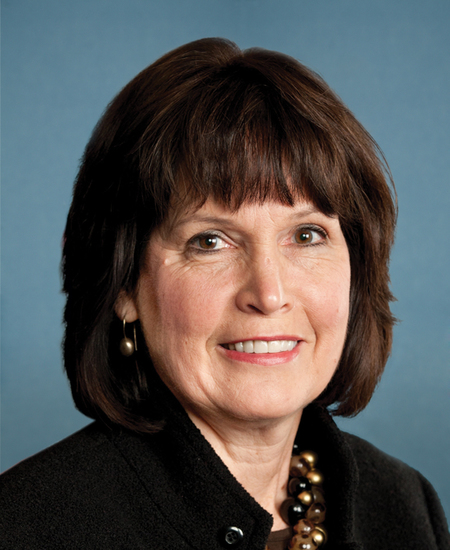
Rep. Betty McCollum
Sponsored bills
Maddy summaryHR 694, the Job Protection Act, expands access to family and medical leave under the FMLA by reducing eligibility requirements. It lowers the required employment period from 12 months to 90 days for most workers and removes the 50-employee threshold, requiring all employers (including small businesses with one or more employees) to provide leave. Federal, presidential, and congressional employees also see their eligibility thresholds reduced to 90 days. The bill directly affects millions of private-sector workers and small businesses nationwide by making existing leave protections more widely available. It makes no changes to leave duration or pay, only to who qualifies and which employers must comply.
Maddy summaryHR 660, "Ethan's Law," requires gun owners in homes where minors (under 18) or individuals prohibited from owning firearms under federal/state law reside to store firearms securely. It makes unsecured storage unlawful if a minor or prohibited person could access the firearm, with fines of $500 per violation and enhanced penalties (up to 5 years in prison) if injury or death occurs. The bill also establishes a federal grant program to help states implement similar secure storage laws and provides funding incentives for states that already have such laws in place.
Restoring Judicial Separation of Powers Act This bill revises the federal statutory framework that confers appellate jurisdiction to courts. Among the changes, the bill grants the U.S. Court of Appeals for the D.C. Circuit—not the Supreme Court—jurisdiction over direct appeals from final decisions of three-judge panels, and appeals by certiorari and certified questions. The bill also establishes a 13-judge multi-circuit panel and grants it jurisdiction over any case in which the United States or a federal agency is a party, or a case concerning constitutional interpretation, statutory interpretation of federal law, or the function or actions of an executive order. Finally, the bill specifies that whenever an action before a federal court seeks injunctive relief barring the enforcement of a federal law, statute, regulation, or order against a nonparty, the court shall, upon a motion of a party, transfer the action to the U.S. Court of Appeals for the D.C. Circuit.
Maddy summaryThis bill prohibits the possession, sale, or transfer of most large-capacity ammunition magazines (holding more than 15 rounds) for the general public, while exempting law enforcement officers (including campus security officers), retired officers, and certain licensed entities like nuclear facility security. It requires new magazines manufactured after enactment to have serial numbers and manufacturing dates, and allows federal grant funds to support buy-back programs for these devices. Existing owners of such magazines lawfully possessed before the law's enactment are exempt from the prohibition. The law applies to devices not already covered under current exemptions for law enforcement, nuclear security, and retired officers.
Maddy summaryThis bill requires all ammunition sales to occur in person with identity verification, banning online or mail-order purchases for unlicensed individuals. It adds new licensing requirements for ammunition dealers and modifies existing firearm laws to explicitly include ammunition in sales, shipping, and recordkeeping rules. Licensees must report bulk sales of over 1,000 rounds to unlicensed buyers within one business day. The law directly affects ammunition sellers (both licensed and unlicensed) and buyers, making online ammunition transactions impossible without in-person verification.
Identifying Mass Shooters Act This bill requires the National Institute of Justice (NIJ) to report to Congress on the content patterns used by mass shooters through online platforms and social media channels. Additionally, the bill directs the NIJ to solicit applications for research grants on any items for further study that are identified in the report. Finally, the bill requires the NIJ to submit findings and federal legislative recommendations to Congress.
Maddy summaryHR 507 (HUMBLE Act) prohibits former members of Congress from lobbying their former colleagues for two years after leaving office, denies House members access to facilities like dining rooms and parking upon leaving office, and bans current House members from owning stocks or serving on for-profit boards. It requires all congressional travel to use coach-class accommodations (with limited exceptions), with this rule applying to fiscal year 2024 and beyond. The bill also reduces pay for House members if a Speaker isn’t elected by the first day of a new Congress, with this provision specifically applying to the 119th Congress and future sessions. These changes target conflicts of interest and procedural delays through concrete policy restrictions.
This resolution commends the role of the U.S. government in improving access to quality, inclusive education, and improved learning outcomes for the poorest and most marginalized children and adolescents around the world. It calls on the Department of State and the U.S. Agency for International Development to use all diplomatic, humanitarian, and developmental means to promote access to such quality education.
Maddy summaryHR 286, the Health Care Providers Safety Act of 2023, provides federal grants to healthcare providers to improve security at their facilities. The bill authorizes the Secretary to fund security services and physical/cyber security enhancements, including video surveillance, data privacy measures, and structural improvements. These grants directly help healthcare facilities, personnel, and patients by addressing safety concerns. The law specifies that funds must be used for necessary security costs to ensure safe access to healthcare services. It does not create new mandates but offers financial support for security upgrades.