

Maddy summaryThe Outdoors for All Act establishes a federal grant program to fund outdoor recreation projects in underserved communities. It authorizes the Secretary of the Interior to award grants to eligible entities (like states, cities, tribal organizations, or nonprofits) for acquiring land, developing parks, or renovating outdoor facilities in qualifying urban areas (population 25,000+ or tribal lands) or low-income communities (where 30%+ of residents have incomes at or below 80% of local median income or 200% of the federal poverty line). Grants require a 100% cash or in-kind match (with limited waivers), prohibit funding for indoor facilities or maintenance, and prioritize projects enhancing park access, engaging youth, creating jobs, or improving environmental benefits like reducing urban heat islands. The program mandates annual reporting and focuses on concrete community outcomes rather than speculative results.
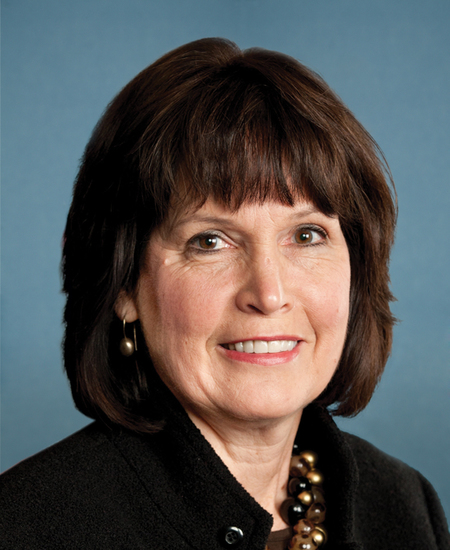
Rep. Betty McCollum
Sponsored bills
Bipartisan Ban on Congressional Stock Ownership Act of 2023 This bill prohibits Members of Congress and their spouses from owning or trading stocks, bonds, commodities, futures, or any other form of security. Each current Member must divest within 180 days after the bill is enacted and each new Member must divest within 180 days after becoming a Member. However, Members and their spouses have 5 years to divest from specified complex investment vehicles. The bill does not apply to certain investments, such as investments in widely held investment funds that are diversified and do not present a conflict of interest and investments held in government employee retirement plans. A Member or spouse who violates the bill may be subject to a fine of up to $50,000 for each violation. The bill permits a Member or spouse who is required to divest property under the bill to avoid recognizing gain for income tax purposes from the sale of that property to the extent that the Member or spouse purchases permitted bonds or diversified investment funds within 60 days of the divestiture.
Maddy summaryHR 1654, the DEPOSIT Act, imposes a new tax on certain bank executives' bonuses and stock profits when their bank fails and the FDIC becomes conservator or receiver. It specifically targets executives who earned over $250,000 (adjusted for excluded profits) in the year before their bank's failure and received bonuses within 60 days prior to the FDIC takeover or sold bank stock within that same period. The tax adds 90% of bonus profits and 100% of stock profit amounts to the executive's regular income tax. All revenue generated from this tax will be directed to the Deposit Insurance Fund, which protects bank deposits.
Maddy summaryThis bill authorizes a Congressional Gold Medal to honor the "Hello Girls" - female telephone operators who served in the Army Signal Corps during World War I. They provided critical battlefield communications in France (connecting 26 million calls), wore military uniforms, and faced combat risks, but were denied veteran benefits for 60 years due to being classified as civilian contractors. The medal recognizes their pioneering service, devotion, and the decades-long struggle to gain military recognition. The award follows similar recognition for other WWII women veterans and aims to correct the historical injustice they faced.
Maddy summaryThe Tribal Nutrition Improvement Act of 2023 expands eligibility for federal school meal programs to include children enrolled in an Indian tribe or with at least one parent who is enrolled in an Indian tribe. It adjusts reimbursement rates for schools near reservations and establishes a pilot program allowing tribal entities to operate meal programs (like school lunches and summer feeding) with reimbursements structured as if they were state agencies. The pilot will fund 10 tribal organizations for up to two years with grants between $10,000 and $100,000 annually, targeting schools and early childhood programs on or near reservations. This directly affects Native American children and tribal schools participating in the pilot.
Maddy summaryThe SVB Act (HR 1602) repeals Title IV of the 2018 Economic Growth, Regulatory Relief, and Consumer Protection Act, which had relaxed banking regulations. It directly affects banks previously subject to those relaxed rules, particularly smaller institutions that benefited from the 2018 changes. The bill’s key mechanism is restoring the pre-2018 regulatory framework, reversing the specific provisions that eased oversight. This returns banking oversight to the structure that existed before the 2018 law took effect, without creating new rules.
This resolution expresses support for the designation of Pi Day. (Pi is an irrational number that equals the ratio of the circumference of a circle to its diameter; it is a fundamental mathematical constant and central in mathematics, science, and engineering.)
Maddy summaryThe Paycheck Fairness Act (HR 17) strengthens equal pay protections by amending the Fair Labor Standards Act. It prohibits pay discrimination based on sex, pregnancy, childbirth, sexual orientation, gender identity, and sex characteristics. The bill modifies employer defenses for pay differences to require demonstration that any disparity is job-related, consistent with business necessity, and accounts for the entire pay differential. It also prohibits employers from relying on wage history when making hiring decisions or setting pay, enhances penalties for violations, and requires the EEOC to collect compensation data disaggregated by sex, race, and national origin.
Maddy summaryHCONRES 22 is a symbolic resolution recognizing the persistent gender pay gap in the U.S., documenting that women earn significantly less than men across racial groups (e.g., Black women earn 67 cents for every dollar earned by White men). It highlights the economic impact of this disparity, noting women lose over $958 billion annually in wages and face barriers like occupational segregation and workplace harassment. The resolution does not create new laws or policies but formally acknowledges the issue and reaffirms Congress’s commitment to addressing the gap. It references specific Equal Pay Days (e.g., March 14 for all women) to underscore the time women must work to earn what men did the previous year.
Maddy summaryHRES 215 is a symbolic resolution recognizing Nowruz, the ancient Persian New Year celebrated by over 300 million people worldwide, including Iranian Americans. It acknowledges Nowruz’s 3,000-year cultural history, its themes of renewal and human rights, and expresses appreciation for Iranian Americans’ contributions to U.S. society. The resolution has no binding policy impact but formally supports the holiday’s observance and the values of freedom and tolerance it embodies.