

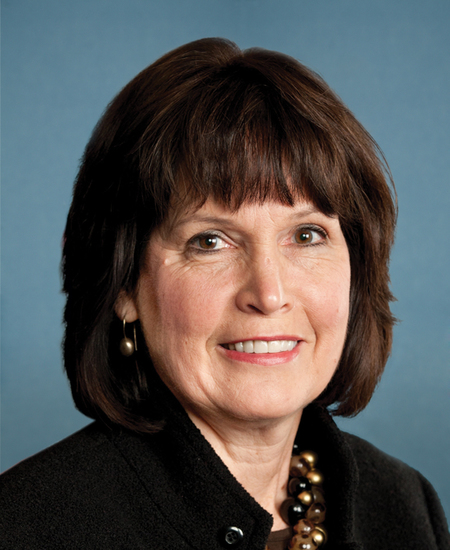
Photo of Betty McCollum
D United States House · District 4 · Minnesota On the 2026 ballot

Rep. Betty McCollum

Compare
Total votes
2,837
all sessions
Attendance
99%
18 missed
Near the chamber average
With party
98%
of cast votes
Higher than 97% of chamber peers
Bipartisan score
1%
crosses aisle rarely
Lower than 97% of chamber peers
Sponsored
1,529
bills & resolutions
Near the chamber average
Committees
3
assignments
1,529 bills and resolutions

Sponsored bills

Total
1,529
Primary
42
Co-sponsor
1,487
This page
1,529
matching current filters
Co-sponsor HR 1788
In committee · United States House · Co-sponsor
Goldie’s Act

Maddy summaryHR 1788, the "Goldie’s Act," strengthens USDA enforcement of the Animal Welfare Act. It requires annual inspections of all regulated animal businesses (like dealers, research facilities, and exhibitors) and mandates immediate, humane confiscation of animals suffering due to violations, while prohibiting owners from destroying animals during this process. The bill increases civil penalties to $10,000 per violation, requires hearing panels including veterinarians, and mandates that penalties consider business size and violation severity. It also requires USDA to share violation records with local animal control within 24 hours.

In committee Apr 25, 2023 1 co-sponsor
Co-sponsor HR 1763
In committee · United States House · Co-sponsor
Military Family Nutrition Act of 2023

Maddy summaryThe Military Family Nutrition Act of 2023 amends the Food and Nutrition Act to exclude a military member's basic housing allowance (BAH) from income calculations when determining eligibility for nutrition assistance programs like SNAP. This change directly affects military families who receive BAH as part of their housing benefit but currently have that allowance counted as income, potentially disqualifying them from food assistance. The key provision adds a specific exclusion for BAH paid to or on behalf of uniformed service members under Title 37, U.S. Code. As a result, military families will have their housing costs subtracted from their income for program eligibility, making it easier for them to qualify for nutrition support.

In committee Apr 25, 2023 1 co-sponsor
Co-sponsor HR 1721
In committee · United States House · Co-sponsor
Healthy H2O Act

Maddy summaryThe Healthy H2O Act establishes a federal grant program to help rural households and facilities improve drinking water quality by covering costs for point-of-use or point-of-entry water treatment systems, filter replacements, and related services. It directly assists eligible end users in rural areas - including homeowners, renters, child-care facilities, and small residential property owners - who have tested water containing health contaminants like lead, arsenic, or PFAS, while prioritizing private well users and limiting assistance to households with income below 150% of the median nonmetropolitan household income. Grants can fund certified treatment systems, installation by qualified professionals, maintenance, and water quality testing, administered by the Department of Agriculture with $10 million annually from 2024-2028. The program requires annual reports to Congress on progress, barriers to safe water access, and trends in treatment technology use to inform future improvements.

In committee Apr 25, 2023 1 co-sponsor
Co-sponsor HR 1705
In committee · United States House · Co-sponsor
A. Donald McEachin Environmental Justice For All Act

Maddy summaryThis bill establishes a comprehensive framework to address environmental justice by requiring federal agencies to identify and address disproportionately adverse environmental and health effects on communities of color, low-income communities, and Tribal and Indigenous communities. It creates a White House Environmental Justice Interagency Council to coordinate federal efforts, mandates that agencies develop environmental justice strategies, and requires consideration of cumulative impacts in permitting decisions for pollution sources. The bill also establishes grant programs for environmental justice communities, creates training requirements for federal employees, and includes specific provisions for safer cosmetics and economic revitalization in fossil fuel-dependent communities. These provisions aim to ensure fair treatment and meaningful involvement of all people in environmental decision-making processes, directly affecting federal agencies and communities disproportionately burdened by environmental hazards.

In committee Apr 25, 2023 1 co-sponsor
Co-sponsor HR 2803
In committee · United States House · Co-sponsor
Armenian Genocide Education Act

Maddy summaryThe Armenian Genocide Education Act (HR 2803) establishes a Library of Congress program to support U.S. schools in teaching about the Armenian Genocide of 1915-1923. The program will develop educational resources, provide teacher training, and maintain an online resource center to help schools incorporate accurate historical information into curricula. It prioritizes schools without existing Armenian Genocide education programs, with $2 million authorized annually for five years. The Librarian of Congress will report yearly on the program’s activities to Congress.

In committee Apr 24, 2023 1 co-sponsor
Co-sponsor HR 2547
In committee · United States House · Co-sponsor
Special Diabetes Program for Indians Reauthorization Act of 2023

Maddy summaryThis bill reauthorizes $150 million annually in federal funding for diabetes prevention and treatment programs serving American Indian and Alaska Native communities, extending the existing program through fiscal year 2028. It directly affects tribal health programs and Native American communities by ensuring continued access to critical diabetes care services. The key provision adds a new funding allocation of $150 million per year for 2024-2028 to the Public Health Service Act, with funds remaining available until fully spent. This maintains current program levels without altering eligibility or service requirements.

In committee Apr 21, 2023 1 co-sponsor
Co-sponsor HR 2573
In committee · United States House · Co-sponsor
To express the Sense of Congress with respect to Federal preemption of State restrictions on dispensing medication abortion, and for other purposes.

This bill expresses the sense of Congress that (1) medication abortion is appropriately approved and regulated under federal law, and (2) federal law preempts any in-person dispensing requirements or telehealth restrictions with respect to medication abortion under state law.

In committee Apr 21, 2023 1 co-sponsor
Co-sponsor HRES 315
In committee · United States House · Co-sponsor
Expressing support for honoring Earth Day, and for other purposes.

This resolution urges (1) the President to issue a proclamation recognizing Earth Day; and (2) governments and people to continue building upon the Paris Agreement and other efforts to ensure that future generations inherit a livable, sustainable, and ecologically rich planet.

In committee Apr 20, 2023 1 co-sponsor
Co-sponsor HR 2784
In committee · United States House · Co-sponsor
No Child Left Inside Act of 2023

Maddy summaryThe No Child Left Inside Act of 2023 provides federal funding to states for implementing environmental literacy plans in K-12 education. It authorizes grants for states to support partnerships between schools and environmental organizations to create outdoor learning opportunities, integrate environmental education into curricula, and provide teacher professional development. The bill prioritizes funding for high-need schools and requires states to develop plans that include field experiences, assessment of student environmental literacy, and strategies to improve academic achievement. A separate pilot program funds residential outdoor school programs that connect classroom learning to real-world environmental experiences. States receiving funds must report annually on program implementation and outcomes to ensure accountability.

In committee Apr 20, 2023 1 co-sponsor
Co-sponsor HR 2760
In committee · United States House · Co-sponsor
Dignity for Detained Immigrants Act

Maddy summaryThe Dignity for Detained Immigrants Act establishes new standards for Department of Homeland Security detention facilities, requiring them to meet or exceed the American Bar Association's Civil Immigration Detention Standards. The bill mandates annual, unannounced inspections by the DHS Inspector General, public reporting on facility compliance, and a phased-out timeline for private detention facilities (phasing out by 3 years after enactment). It prohibits solitary confinement for all detainees, requires community-based alternatives to detention for vulnerable individuals, and mandates detailed public reporting on facility conditions, staffing, and detainee demographics. The legislation directly affects all immigrants held in DHS custody, including children, vulnerable persons, and primary caregivers, with specific protections for these groups in detention procedures.

In committee Apr 20, 2023 1 co-sponsor
Showing 791 to 800 of 1,529 bills
Previous 1 … 79 80 81 … 153 Next