

Maddy summaryThis bill requires federal agencies to incorporate bird-safe design features in public buildings during construction, acquisition, or major renovations (over 50% facade alteration). It mandates the General Services Administration to develop and update a design guide with strategies like specialized glass, lighting modifications, and maintenance practices to reduce bird collisions. The guide must be shared with all federal agencies and include input from bird conservation experts. Exemptions apply to historic sites, the White House, Supreme Court, and Capitol complex. Annual reports on compliance and bird fatality assessments must be submitted to Congress.
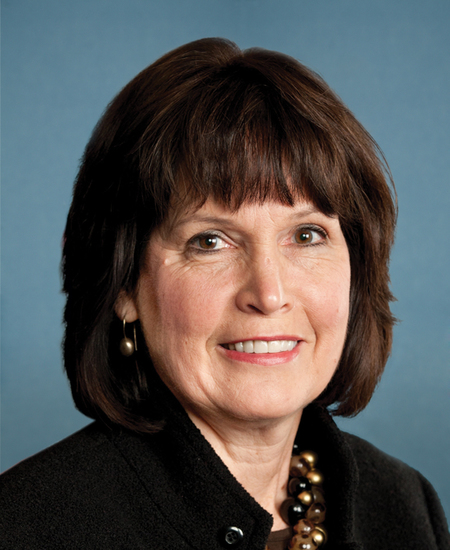
Rep. Betty McCollum
Sponsored bills
Maddy summaryThe Barriers to Suicide Act of 2023 establishes a federal grant program to fund evidence-based suicide deterrents on bridges. The Transportation Secretary will award competitive grants to states or local governments for installing proven safety measures like nets or barriers, prioritizing areas with high suicide rates, with federal funding covering up to 80% of project costs. The bill also mandates a study by the Comptroller General to assess effective deterrents for non-bridge structures (e.g., buildings) and report findings within one year. It authorizes $10 million annually for 2024-2028 to support these initiatives. The law directly affects bridge safety planning for state and local agencies seeking federal assistance.
Maddy summaryThe Universal School Meals Program Act of 2023 would establish a universal school meals program providing free breakfast and lunch to all children enrolled in participating schools, regardless of family income. Key provisions include eliminating income-based eligibility requirements for school breakfast and lunch programs, setting specific reimbursement rates ($2.80 for breakfast and $4.63 for lunch with annual inflation adjustments), and prohibiting schools from collecting debt for unpaid meals or "shaming" students. The bill also replaces references to "free or reduced price" with "economically disadvantaged students" in related laws and establishes new methods for identifying children from low-income backgrounds. This legislation would directly affect all public schools participating in the National School Lunch Program and School Breakfast Program.
Maddy summaryThis bill removes a barrier for college students seeking food assistance by amending the SNAP program rules. It directly affects students enrolled at least half-time in recognized colleges or training programs, who were previously automatically ineligible unless they met separate requirements. The key change eliminates the prior restriction (in section 6(e)) that barred most higher education students from SNAP, allowing them to qualify under the new provision in section 3(m)(5)(F). The changes take effect January 2, 2024.
Maddy summaryHRES 459 is a resolution expressing the House of Representatives' support for designating June 2, 2023, as "National Gun Violence Awareness Day" and June 2023 as "National Gun Violence Awareness Month." It encourages the public to wear orange, promote gun safety awareness, and discuss community safety measures during this time, particularly highlighting the summer months when gun violence often increases. The resolution references statistics on gun violence deaths and pays tribute to victims like Hadiya Pendleton, but does not create new laws or impose requirements.
Maddy summaryHR 3713 creates federal grants to fund comprehensive school-based mental health programs for students in grades K-12, including those in Bureau of Indian Education schools. It requires partnerships between schools and community mental health providers to deliver trauma-informed, culturally appropriate services addressing suicide risk, grief, violence, and trauma exposure. The bill authorizes $300 million annually (2024-2027) for these programs, mandating privacy protections under HIPAA and FERPA, and requires annual reporting on program effectiveness.
Reward Work Act This bill prohibits issuers from purchasing their own securities on a national exchange. The bill also requires one-third of an issuer's board of directors to be elected by employees in order for the issuer to be allowed to register securities.
Maddy summaryThis bill amends the Older Americans Act to better serve LGBTQI older adults (defined as lesbian, gay, bisexual, transgender, queer, intersex individuals, and those living with HIV) by adding specific definitions and creating new support structures. It establishes an Office of LGBTQI Inclusion within the Administration on Aging, led by a Director and Assistant Director, to coordinate services, advocate for this community, and collect data on their challenges. The bill also creates a National Resource Center on LGBTQI Aging to provide training and resources to organizations serving LGBTQI older adults and requires data collection on discrimination against them in long-term care settings. These changes aim to improve access to culturally competent services and address the unique needs of LGBTQI older adults through concrete policy updates.
Maddy summaryHRES 439 is a non-binding resolution expressing the House of Representatives' support for keeping the U.S. Postal Service (USPS) as an independent federal agency, not subject to privatization. It highlights USPS's constitutional role, self-sustaining nature (relying on service revenue, not taxpayer funds), and its importance to rural communities, e-commerce, and over 600,000 employees. The resolution urges Congress to take action to preserve USPS's independence, emphasizing that privatization could raise prices, reduce services, and harm the nation's mail infrastructure. As a procedural resolution, it does not change law but formally states the House's position.
Maddy summaryHR 3610, the Neighbors Not Enemies Act, repeals specific sections (4067-4070) of the Alien Enemies Act of 1798 from U.S. law. This bill removes the legal authority allowing the president to detain or deport non-citizens during wartime based on that historical statute. The repeal directly affects the federal legal framework governing emergency powers over non-citizens, eliminating a provision dating to the Quasi-War with France. The bill makes no new policy changes but formally removes this outdated legal mechanism from the U.S. Code.