

Maddy summaryThe Affordable Housing Credit Improvement Act of 2025 would reform the Low-Income Housing Credit program, which provides tax credits to developers of affordable housing. It would increase state allocations based on population with annual cost-of-living adjustments, modify tenant eligibility rules to allow higher income limits for some residents, and add protections for domestic violence victims in housing. The bill would simplify rules for rural and Native American housing projects, clarify credit eligibility requirements, and require greater transparency in program administration. These changes would directly affect developers, property owners, and low-income tenants in housing projects that receive LIHC tax credits.
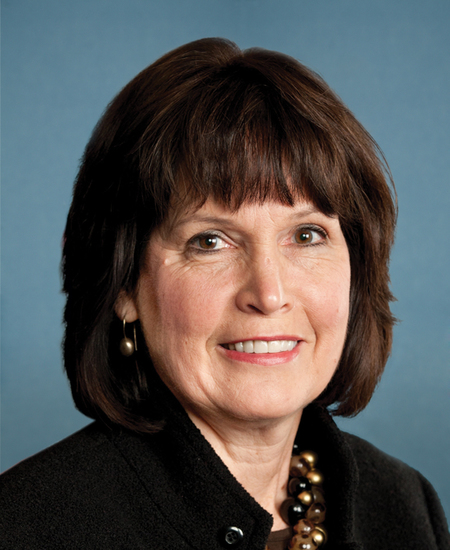
Rep. Betty McCollum
Sponsored bills
Maddy summaryHR 2729, the "Carnivals are Real Entertainment Act," creates a new temporary work visa category for carnival and circus workers. It directly affects mobile entertainment providers (like traveling carnivals, circuses, and affiliated food/game concession services) and their workers who perform essential tasks such as transporting, assembling, operating, and maintaining rides and equipment at seasonal fairs and festivals. The bill amends immigration law to define "mobile entertainment workers" as those entering temporarily for functions integral to these operations, subject to labor program requirements similar to other temporary work visas. It requires the Departments of Homeland Security and Labor to issue implementing rules within one year of enactment.
Maddy summaryHRES 297 is a non-binding resolution expressing the House of Representatives' support for fair compensation, benefits, and working conditions for paraprofessionals (like instructional assistants) and education support staff (including bus drivers, cafeteria workers, and clerical staff) in schools. It specifically calls for livable wages, job security, access to affordable health care, paid leave, and meaningful input in school policies for these workers. As a resolution, it does not create new laws or mandate changes but serves as a symbolic statement highlighting these workers' needs. The resolution directly addresses the concerns of over 3 million school support staff facing issues like underpayment, lack of benefits, and job instability.
Maddy summaryThe No Tax Breaks for Union Busting Act would deny tax deductions for employers who spend money to influence employees' decisions about union activities, such as union elections or collective bargaining. It defines "labor organization activities" broadly to include union elections, labor disputes, and collective actions. The bill requires employers to report such spending on tax returns and prevents them from deducting these expenses from taxable income. This would apply to employers using tactics like captive audience meetings, outside consultants, or other efforts to sway workers' union decisions. The policy aims to remove tax incentives for employers to interfere with workers' rights under labor law.
Maddy summaryHR 2672, the Religious Workforce Protection Act, extends temporary nonimmigrant status for religious workers whose applications for permanent residency (green cards) are delayed due to visa backlogs. It directly affects religious workers (such as pastors or missionaries) who are principal or derivative beneficiaries of pending immigrant petitions under specific visa categories, allowing them to maintain their work status beyond the usual 5-year limit while their green card applications are processed. Key provisions include granting extensions until a final decision is made on their adjustment of status application, modifying rules to allow limited job flexibility for these workers, and exempting them from a 1-year foreign residence requirement if they left the U.S. due to the prior 5-year cap. The bill aims to prevent religious workers from losing their legal status during lengthy immigration processing.
Maddy summaryThe Tax Fairness for Workers Act (HR 2671) would allow certain employees to deduct work-related expenses directly from their gross income. Specifically, it creates an above-the-line deduction for union dues (amending IRC Section 62(a)(1)) and reinstates a deduction for other out-of-pocket work costs like uniforms or tools (amending IRC Section 67(g)), effective for 2025 tax years. This directly affects union members and workers with significant job-related expenses who previously could not deduct these costs. The bill removes the prior limitation that barred these deductions, making them available without needing to itemize. The policy change simplifies tax filing for affected workers by treating these expenses as deductible business costs.
Maddy summaryThis bill, HR 2253 (Puppy Protection Act of 2025), sets new federal standards for commercial dog dealers who sell puppies to the public. It requires specific housing sizes based on dog size (e.g., 12-30 square feet per dog), daily exercise in safe outdoor areas, clean water and nutritious food twice daily, and annual veterinary exams including dental checks. The bill also limits breeding frequency (max 2 litters in 25 months), sets age minimums for breeding (18 months for small dogs, 2 years for large dogs), and mandates health screenings to prevent genetic diseases. These requirements apply directly to commercial dealers, with final regulations to be issued within 18 months of enactment.
Maddy summaryThis bill, HR 2102 (Major Richard Star Act), allows veterans with combat-related disabilities to receive both full military retired pay and veterans' disability compensation simultaneously, without the previous offset that reduced retired pay. It directly affects veterans already eligible for both benefits due to combat-related injuries, removing the requirement that their retired pay be reduced by the disability compensation amount. The key provision amends Title 10 and Title 38 to eliminate the offset rule (sections 5304 and 5305 of Title 38) for these veterans. The change applies to payments starting after the bill’s enactment date, effective for all qualifying veterans. This is a policy change to increase financial support for affected veterans, not a new benefit.
Federal Firearm Licensee Act This bill establishes new security requirements and expands recordkeeping and reporting requirements for federally licensed dealers, importers, and manufacturers of firearms (i.e., federal firearms licensees, or FFLs). The bill also broadens the authority of the Bureau of Alcohol, Tobacco, Firearms and Explosives (ATF) to administer federal firearms laws and enforce violations. Specifically, bill requires FFLs to implement and comply with a plan to secure their business premises, conduct quarterly physical checks of their business inventories, maintain video surveillance of the area where firearms are sold or transferred, and initiate firearms-related background checks for employees. Additionally, the bill requires FFLs to report to the ATF any inventory firearm that is lost, stolen, or unaccounted for and to notify the ATF about default-proceed transactions (i.e., allowable firearm transfers to an unlicensed person prior to the completion of a background check when the submitted background check remains incomplete after three business days). Finally, the bill removes limits on the ATF's authority to conduct activities related to the administration of federal firearms laws. It enhances the ATF's inspection authority, including by removing the limit on the number of annual compliance inspections (currently, one), requiring inspections of high-risk FFLs, and authorizing an additional 650 investigators. Finally, the bill directs the ATF to deny an application for a federal firearms license if it would endanger public safety or if the applicant is unlikely to comply with the law.
Maddy summaryHR 2624, the HUMBLE Act, is a multi-provision bill targeting conduct by current and former congressional members. It prohibits former Senators and Representatives from lobbying Congress for one year after leaving office (Section 2), restricts official travel to coach-class airline seating for all congressional staff (Section 3), and bans House Members from owning individual corporate stocks (Section 5). The bill also eliminates benefits like access to House facilities for former Members (Section 4), ends automatic pay raises for Congress (Section 6), and forbids House Members from serving on for-profit boards (Section 7). These changes apply to current Members and take effect in 2026 or 2027, directly affecting congressional staff, former lawmakers, and current representatives.